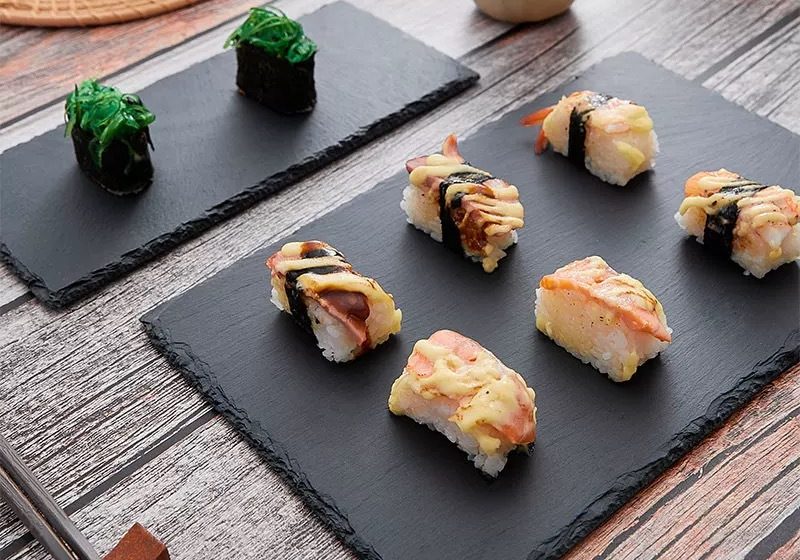

A chef in a Tokyo sushi bar places a single piece of otoro on a black slate plate. The pink of the fish rises out of the dark stone like a jewel emerging from velvet. The white rice catches the overhead light. The green wasabi, placed just off-centre, feels deliberate. The plate contributed nothing to this picture except darkness, stillness, and weight. And that is exactly why it works.
For the last decade, the world’s most ambitious kitchens have been replacing white porcelain with slate. Not because slate is trendy — though it is — but because a dark, matte surface is the single most effective tool a chef has for making food look more expensive than it is. At $9.90 per plate, that tool is now on your table.
The science of food presentation on dark surfaces
The human eye perceives colour relative to what surrounds it. A strawberry on a white plate looks red. The same strawberry on a black slate plate looks incarnadine. The dark ground pushes the visual system to amplify the colour of the object. This is not opinion. This is the same principle that makes a diamond look brighter on black velvet, and the same principle that made Caravaggio’s still-lifes leap out of a dark canvas.
Chefs have always known this intuitively. The classic French brigade serves filet mignon on a dark reduction sauce not just for taste but because the dark pool of sauce makes the pink centre of the meat read as more vivid. Slate does the same thing without the sauce. The plate itself is the reduction.
Why Michelin-starred kitchens use slate
Walk through the plated-dessert stations of a three-star kitchen and you will count slate on at least half the passes. The reasons are practical, not theatrical:
First, temperature. A chilled slate plate can hold a cold appetiser at 4°C for the duration of a tasting-menu course. The thermal mass of the stone absorbs ambient heat rather than letting the food warm. Warm the same slate in a low oven for ten minutes and it will keep a hot dish above 50°C through the entire service.
Second, texture. A sauce drizzled on slate stays exactly where the chef drizzled it. Porcelain is too smooth — the sauce spreads. Wood is too absorbent — the sauce disappears. Slate has just enough micro-texture to hold a line of reduction or a trail of olive oil without letting it slide.
Third, silence. A kitchen at full service is a loud place — pans, orders, timers. But on the pass, where the chef plates each dish, there is a zone of quiet concentration. A slate plate landing on the pass makes a soft, thick sound. It lands with authority. It does not clatter or ring. The sound tells the kitchen: this plate has arrived.
The Japanese connection: stone plates in kaiseki
Japan has been serving food on stone for centuries. The kaiseki tradition — Japan’s haute cuisine — uses rough-textured ceramic, lacquered wood, and occasionally natural stone as plating surfaces. The choice of plate depends on the season, the dish, and the mood the chef is trying to create. A dark stone plate in summer suggests coolness. The same plate in winter, warmed, suggests a hearth.
Our slate plate honours that tradition without imitating it. It is not an antique Japanese ishi-zara (stone dish). It is a modern, hand-cut piece of slate made in the same spirit — the spirit of letting the stone be the stone. The kaiseki chef who uses a slate plate knows that the plate changes the food. The home cook who uses the same plate at the dinner table learns it within one meal.
Four dishes that were made for slate
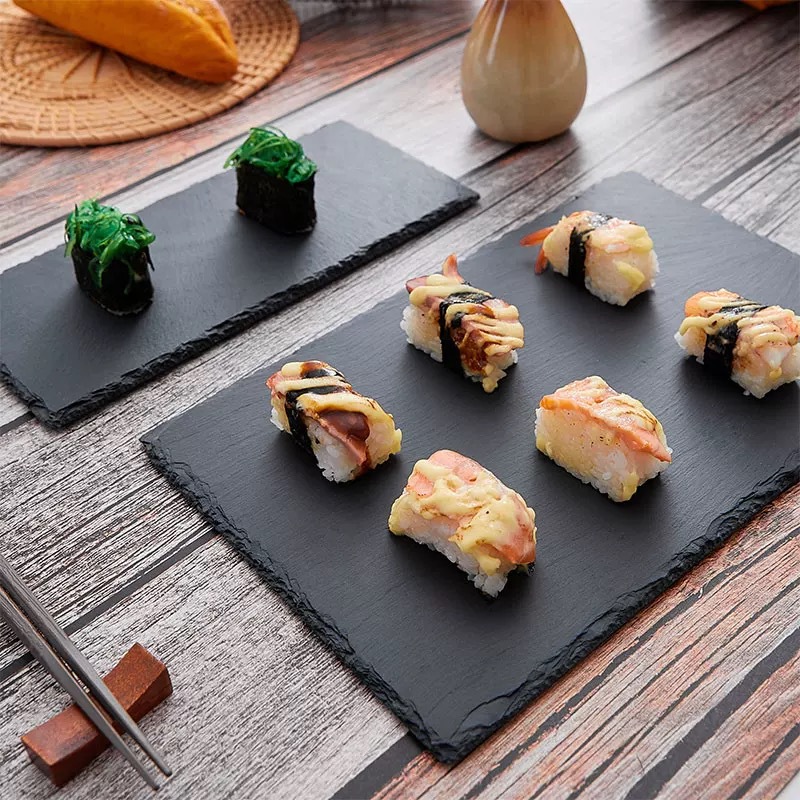
Nigiri sushi. Three pieces of nigiri on a slate plate. The fish, coloured against the dark stone, is visible from across the room. The rice grains are sharp. The wasabi is a vivid green dot. This is the simplest thing you can do with slate, and the most effective.
Rare steak. Slice the steak against the grain. Fan the slices across the slate. The pink of the interior, the seared brown of the exterior, and the juice that pools in the centre — all of it against black. A pinch of flake salt scattered across the top catches the candlelight. Your guests will take a photo before they pick up their forks.
Cheese board. A wedge of Brie, a chunk of aged Gouda, a small pile of walnuts, a drizzle of honey. The slate is dark. The cheese is pale. The honey catches the light. You do not need a separate cheese board. The slate plate is the cheese board.
Tea service. One slate plate. One ceramic teapot. Two handleless cups. A tiny clay jar of loose-leaf oolong placed to the side. The dark stone under the white ceramic makes the tea set appear to float above the table. Pour the water. The first steep’s colour is visible as a golden wash across the white interior of the cup. The plate holds the whole ceremony in a single rectangle.
Our process: how a slab becomes a plate
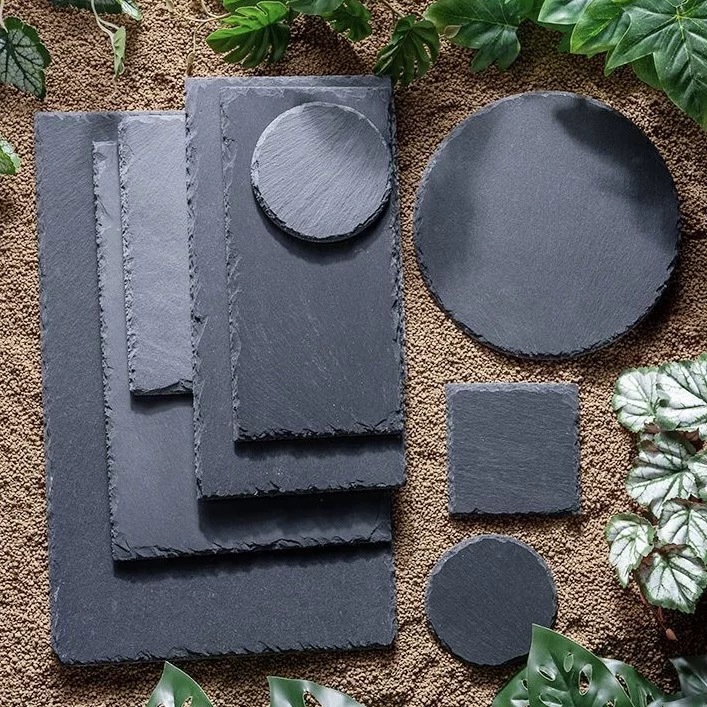
The slate slab arrives at our workshop at roughly 30×30cm and 3cm thick. We do not use a waterjet — the high-pressure water would shatter the stone along unpredictable fracture lines. Instead, we scribe and split, the same way a stonemason would have split roofing slate two hundred years ago. The cleaved face becomes the top surface. The rough back is ground flat with a diamond pad so the plate sits without wobbling.
The edges are softened by hand with a small angle grinder and a sequence of diamond pads, from 50-grit to 400-grit. The final edge is smooth to the finger but visibly irregular — you can see the chisel marks if you hold the plate to the light at an angle. That is the signature of a plate made by a person, not a machine.
$9.90: the economics of an honest plate
A restaurant-grade porcelain dinner plate from a supply catalogue costs $4 to $8. A handmade ceramic plate from a studio potter costs $30 to $60. Our slate plate costs $9.90. It sits between the mass-produced and the artisanal, and it intends to. We are not studio potters. We are not a factory. We are a small workshop cutting stone by hand, selling plates one at a time, at a price that reflects the work without pretending it is fine art.
What you get for $9.90: a flat piece of natural black slate, hand-cut, edge-softened, food-safe, durable enough to outlast your porcelain, dark enough to make your cooking look like it was photographed for a magazine. That is not marketing. That is physics — and a century of chefs already proving it works.
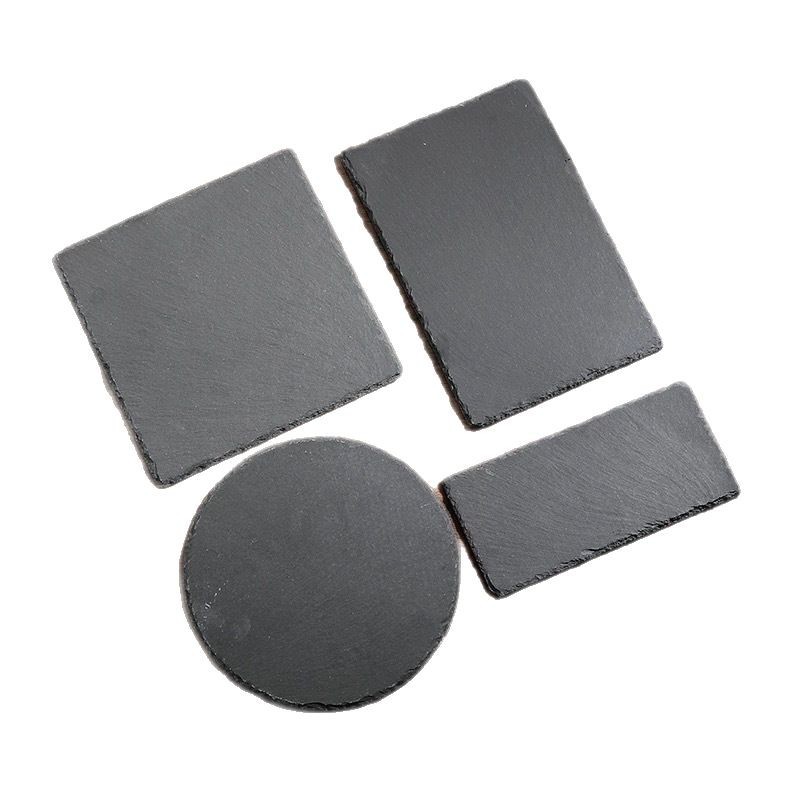
Bring a natural black slate serving plate to your table. Serve sushi on it. Serve steak on it. Serve tea on it. Watch the food change — not because the food is different, but because the plate finally got out of the way.