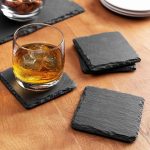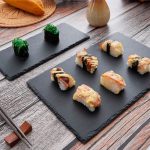

A black slate plate sits on a hotel breakfast table. An hour later, the same plate — or one like it — carries a ceramic teapot and two cups across a tatami room. At dinner, it holds a seared ribeye, still hissing, as it moves from kitchen to dining room. One material. Three meals. Three entirely different kitchens.
This is what we mean when we say a natural slate serving plate is more versatile than any ceramic or wooden platter you own. It does not dictate the cuisine. It does not impose a style. It is simply a flat stone. And a flat stone works everywhere.
Why slate makes sense as a plate
Most dinner plates are ceramic. Ceramic chips. Most wooden boards absorb oils and eventually warp. Stainless steel is sterile but cold in the wrong way — the metallic surface rejects the food rather than receiving it. Glass is too light, too bright, too ready to slide across a tablecloth.
Slate, by contrast, is heavy without being burdensome. A 24cm slate plate weighs roughly 800 grams — enough that a guest cannot accidentally push it off the table with a sleeve. It is matte, so light does not bounce off the food and into your eyes. It is dark, so the colours of the dish — the green of wasabi, the pink of rare beef, the gold of sesame oil — register with greater intensity than they would against white porcelain.
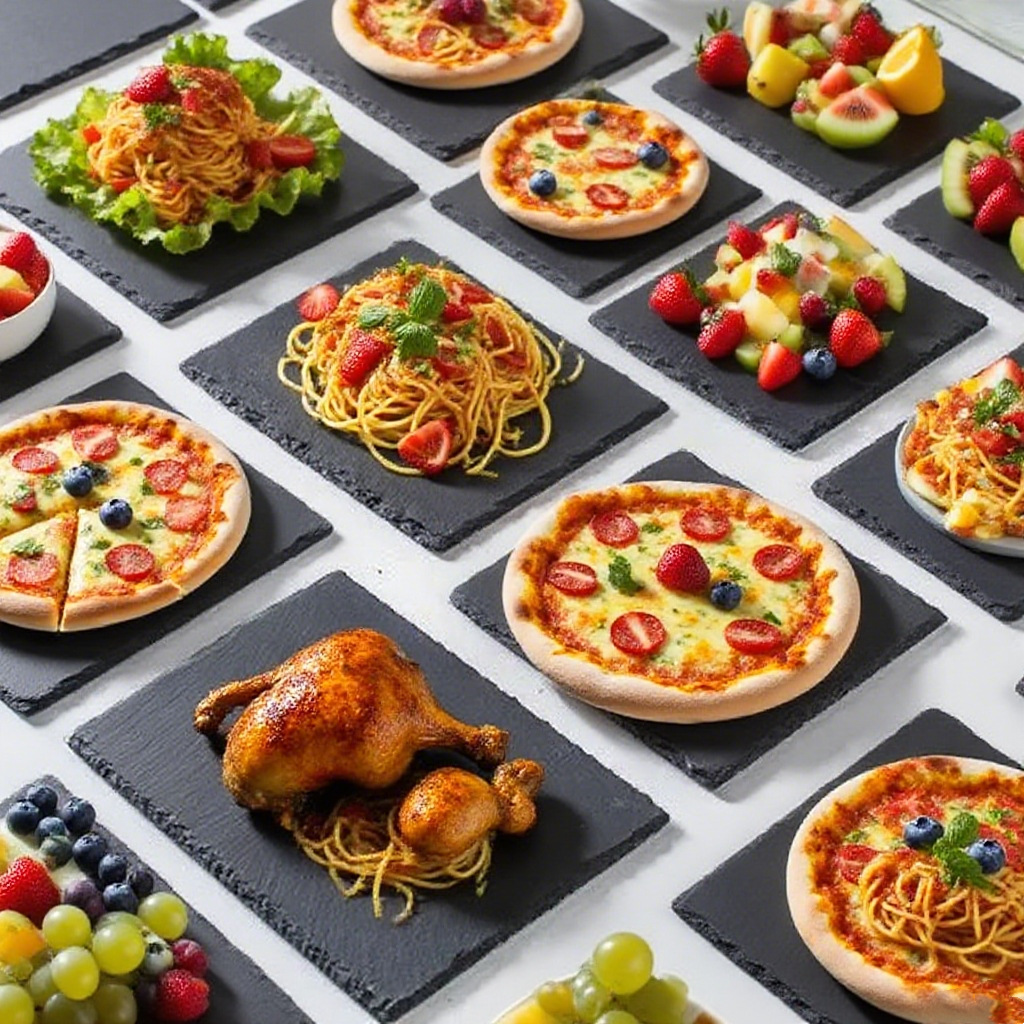
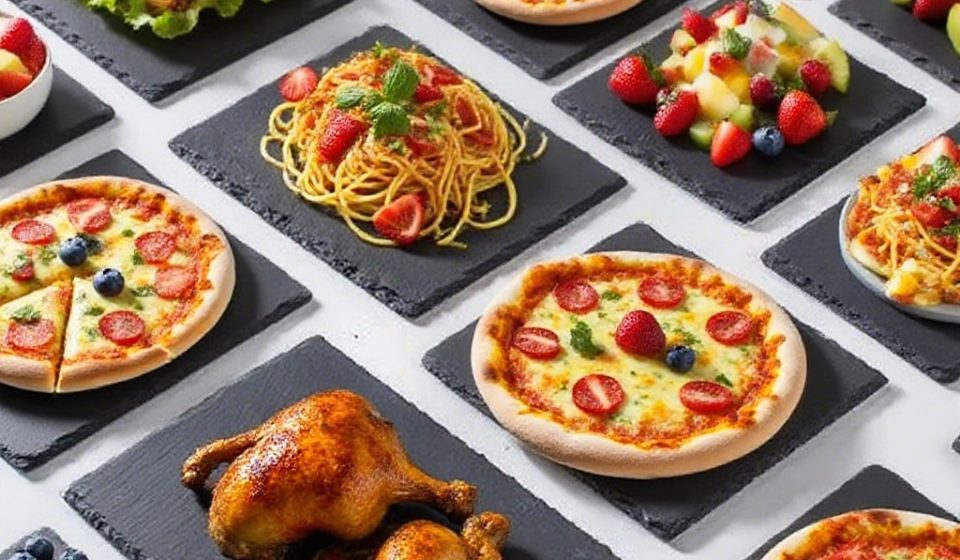
The three meals: how one plate changes role
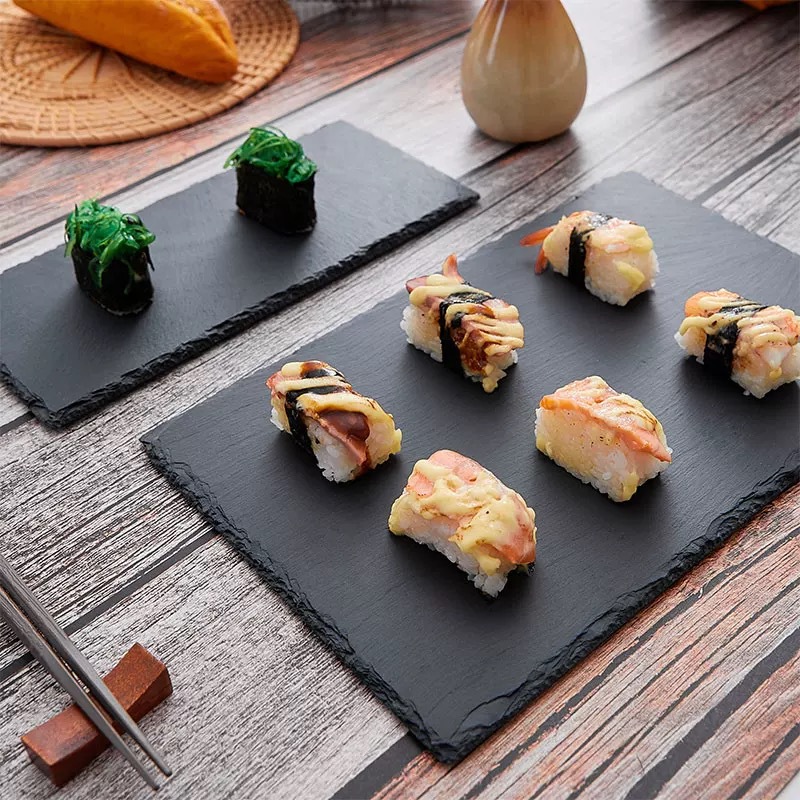
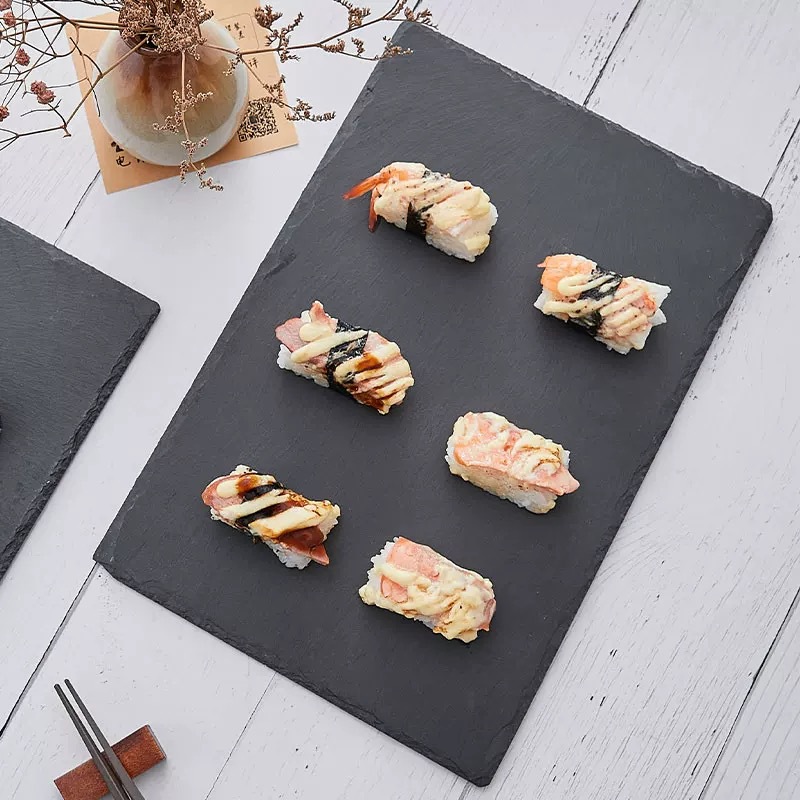
Sushi and dim sum. When you serve sushi on slate, the dark surface cools the fish slightly — not enough to hurt it, but enough that the salmon and the tuna taste of the sea rather than of the kitchen. Dim sum, similarly, benefits from a surface that does not trap steam. A bamboo steamer basket left on slate will drip gently; the slate catches the drip, and the dumplings stay firm.
Steak. Restaurants rest steak on wooden boards because wood is cheaper than slate. But wood is porous, and steak juice will stain a board in a single meal. Slate does not stain. A hot steak (rested for six minutes off the heat) placed on a cool slate plate will stop cooking immediately; the stone pulls the residual heat away and holds it. The steak stays at medium-rare. The guest cuts into it, and the slate does not move.
Tea. This is the most unexpected use, and perhaps the best. A dark slate plate under a white ceramic teapot is the visual equivalent of a tea ceremony’s tatami mat — a quiet, dark ground that frames the action. Pour hot water onto the plate by accident, and nothing happens. Leave a wet teabag on it overnight, and the slate is dry by morning. The plate does not absorb. It receives, and it waits.
How we make it: from quarry slab to dinner table
The slate arrives at our workshop as rough, irregular slabs roughly 3cm thick. We split each slab by hand — a tungsten scribe drawn along the grain, a wooden mallet tapped from the underside, and the stone cleaves into two mirror plates. The split face is the surface you eat from: rough-textured at a micro scale, smooth enough that a knife will not catch, porous enough that food-grade mineral oil can seal it in a single wipe.
We then cut the plate to shape with a diamond wheel and smooth the edges with a handheld grinder. No two plates are identical. The thickness varies by half a millimetre. The colour — charcoal to black — shifts from plate to plate depending on where the slab came from in the quarry. You are buying a plate that someone held in two hands for at least twenty minutes.
The stone itself: where it comes from, and why it is food-safe
Our black slate comes from a quarry in the northern slate belt — the same geological formation that has yielded roofing slate for two centuries. The stone is a fine-grained metamorphic rock, formed under low-grade pressure from ancient seabed sediment. It is chemically inert at food temperatures. It will not react with citrus, soy sauce, vinegar, or red wine.
When you first use the plate, we recommend wiping it with a thin layer of food-grade mineral oil and letting it sit for an hour. The oil darkens the stone slightly and seals the pores. After that, hot water and a sponge are all you need. Do not put it in the dishwasher — the detergents will strip the oil and leave the surface chalky. A quick re-oil every few months will keep the plate looking as it did on day one.
Why hotel chefs love slate plates
Walk into the breakfast room of a mid-tier hotel and you will find white porcelain plates stacked twelve deep. Walk into a boutique hotel in Kyoto or a degustation restaurant in Copenhagen, and you will find slate. The reason is the same reason a gallery hangs a painting on a dark wall: the plate does not compete with the food. It frames it.
Hotel chefs also appreciate that slate plates survive. Porcelain chips. Slate — barring a drop from counter height onto concrete — does not. A set of six slate plates at a hotel breakfast bar will outlast four sets of porcelain at half the cost. At $9.90 per plate, the hotel buyer is not buying luxury. They are buying durability.
At home: what a slate plate does to a dinner
Invite four people to dinner. Set a slate plate at each place. Do not tell them about the plates. Watch what happens.
The first guest will run a finger along the edge and say nothing. The second will lift the plate slightly — the weight surprises them. The third will ask, out loud, whether they are allowed to cut directly on it. (Yes.) The fourth will set their wine glass down and notice that the dark stone under the glass makes the wine look deeper red. The conversation will move on, but the plates will stay. They do not become the topic. They become the ground.
That is what we want from an object at the table. We do not want it to be talked about. We want it to be used.
Order your natural black slate serving plate — one material for three meals, a hundred dinners, and the quietest object on the table.