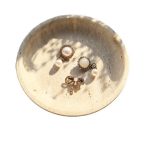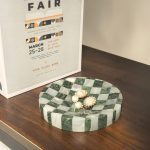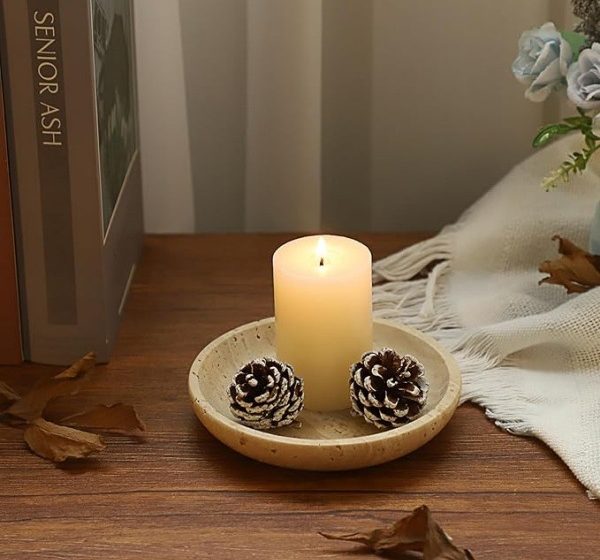

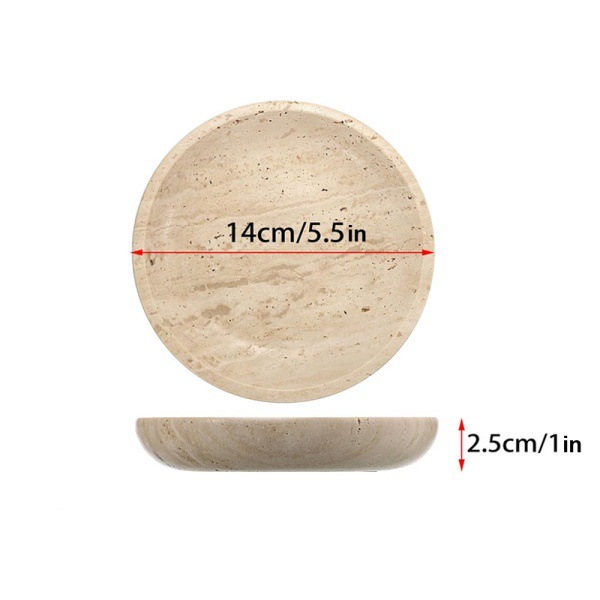
Every night ends the same way: something comes off the finger, something comes off the wrist, something comes out of the pocket, and all of it lands wherever the hand happens to be. Interior designers have a name for the object that fixes this, and it is not “organizer” — it is the jewelry bowl. The travertine jewelry bowl is that object in beige stone: fourteen centimeters of hand-carved mineral that catches the nightly unload, keeps it visible until morning, and makes the nightstand look deliberate instead of dusty. This walkthrough covers the ritual, the vanity, and the styling details that make one bowl work like three.
The Nightstand Ritual
Bedside is where the bowl earns its keep fastest. The evening deposit is always the same trio — rings, earrings, the watch — and the morning withdrawal is the reverse. The mechanics that make the habit stick are invisible but specific: the bowl must sit within a hand’s reach from lying down (anything further and the habit dies within a week), its walls must be low enough that every piece stays visible at a glance (buried jewelry does not get worn), and its surface must be smooth enough that a chain never snags. Stone answers all three. Travertine is polished to an even plane that treats chains better than fabric-lined boxes, and the beige ground glows under a lamp’s warm light in a way painted dishes never manage. There is a weight dividend too: the charging-cable tug that drags light dishes off the nightstand edge moves nothing that weighs as much as this bowl.
The watch deserves its own paragraph, because it is the object the bowl was quietly built for. A daily-wear watch off the wrist at six in the evening is the most valuable thing most people set down carelessly — face-down on a nightstand, strap tangled with a charging cable, crystal against wood. In the bowl it rests face-up on stone, strap settled, beside the rings it belongs with, and the morning pickup becomes one gesture instead of a search. The bowl’s fourteen-centimeter width takes the watch, the wallet that empties at the same hour, and the cufflinks or hair ties beside them without crowding. Stone’s mass matters here more than anywhere else in the house: a wallet dropped into a light dish drags it to the floor; dropped into two and a half centimeters of travertine, it lands with a sound like a coin into a fountain and stays. Owners describe the small satisfaction of that sound — the day’s work ending with something solid receiving something valuable.
The Vanity: Cosmetics Meet Stone
Moved to the dressing table by day, the same bowl becomes the organizer the beauty industry keeps failing to improve. Skincare in retail packaging is a chromatic accident; gathered in a beige stone bowl, the same bottles become a single neutral composition. The fourteen-centimeter width takes a serum, a moisturizer, and a perfume with room for the daily-use lip products; the shallow wall keeps every label readable from above, which is the whole secret of vanity organization — if you can see it, you will use it. Stone’s cool mass is a genuine material benefit: it holds a steady temperature that cosmetics and perfumes prefer, and unlike acrylic organizers it cannot cloud, stain, or absorb the oils it inevitably meets. Rings and earrings land in the bowl between applications and stay in view until the next one. One bowl, wiped weekly, and the dressing table reads as a spa counter instead of a retail shelf.
The Three-Item Rule
The jewelry bowl carries one styling rule, and it is worth stating plainly: keep its contents to three items. The moment a catchall holds seven things it becomes a junk drawer with walls, and the visual calm that makes it work evaporates. Three objects on stone photograph like a still life; seven on stone photograph like a parking lot. The rule has a practical edge too — when the bowl fills, it is time to put things away, and the dish resets itself as a habit rather than a hoard. Guests notice without knowing why: counters with one or two composed objects feel calmer than counters with six open dishes, because the eye counts shapes, not contents. One stone bowl is one decision; seven dishes are seven.
The guest room is the station nobody budgets for and every visitor remembers. A bowl on the guest nightstand — with a folded card of the wifi code, a chocolate, or a spare charger inside — is the hospitality gesture guests photograph and mention, and it costs less than the flowers that wilt before checkout. The same logic scales down to the bookshelf: on a shelf of spines, a shallow stone bowl gives the eye a horizontal rest and a home for the ticket stub, the shell, the single kept thing the shelf already memorializes. Neither station organizes anything. Both exist because the bowl is an object before it is a tool — and that is the quiet test of a good accessory: when it has nothing to catch, it still deserves the surface it stands on. Stone passes that test in a way plastic never can, because stone reads as permanence even when it is empty, and permanence is what guests and shelves are both asking for.
Composing the Nightstand Around It
The bowl styles easiest among matte neighbors: linen runners, ceramic lamps, oak or rattan surfaces — matte with matte, one texture statement per surface. The travertine’s pores are the statement, so let the lamp base stay plain and the books stay spine-out. Metal is an easy ally: brass and blackened steel both read warm against the cream ground, which is why the bowl bridges modern and traditional bedrooms without favoring either. Morning light is the final judge — the sun that rakes across a nightstand turns the stone’s pores into a low-relief map, shadow in each pit, warmth across the ground. That is also why the bowl never fades into the surface the way a uniform-colored dish does: it looks different at seven in the morning than at noon, and different again by lamplight.
Beyond the Bedroom
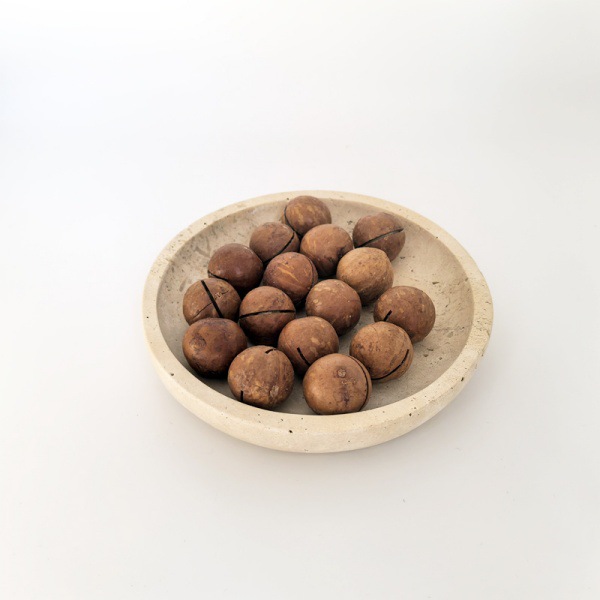
The same bowl migrates through the house without ever looking borrowed. In the bathroom it holds soap or the daily sponge; in the kitchen it takes clementines or the garlic bulb; on the desk it catches paperclips, the SD card, and the ring that comes off while typing — the curve catching cylinders better than any rectangular tray with corners. In video calls it can even stay in frame: a beige stone disc beside a lamp photographs as decor, not clutter. That migration is the final argument for stone over acrylic or ceramic — the bowl is an object first and an organizer second, so it earns its surface space in every room it visits. Pair it with a mosaic marble catchall tray from the same family and the two compose across surfaces: the tray flat where hands land, the bowl deep where pockets empty.
Frequently Asked Questions
Will the stone snag delicate chains?
No — the bowl is ground and polished into one even plane after carving, so it treats chains better than fabric-lined boxes and cannot catch a clasp.
Where should the bowl go first?
The nightstand, within a hand’s reach from lying down — between the lamp and the bed’s edge. The evening deposit of rings, earrings, and a watch builds the habit fastest where the hand already lands.
Can it hold a pillar candle?
Yes — fourteen centimeters fits standard pillars with a safe margin, and sealed stone tolerates candle warmth that would craze glazed ceramic. Never leave a burning candle unattended.
Bring one home: the Round Travertine Catchall Bowl 14cm — $29, hand-finished and sealed, ships worldwide in a rigid carton.
Read next: the travertine catchall bowl guide and the checkerboard tray: gift and desk decor.