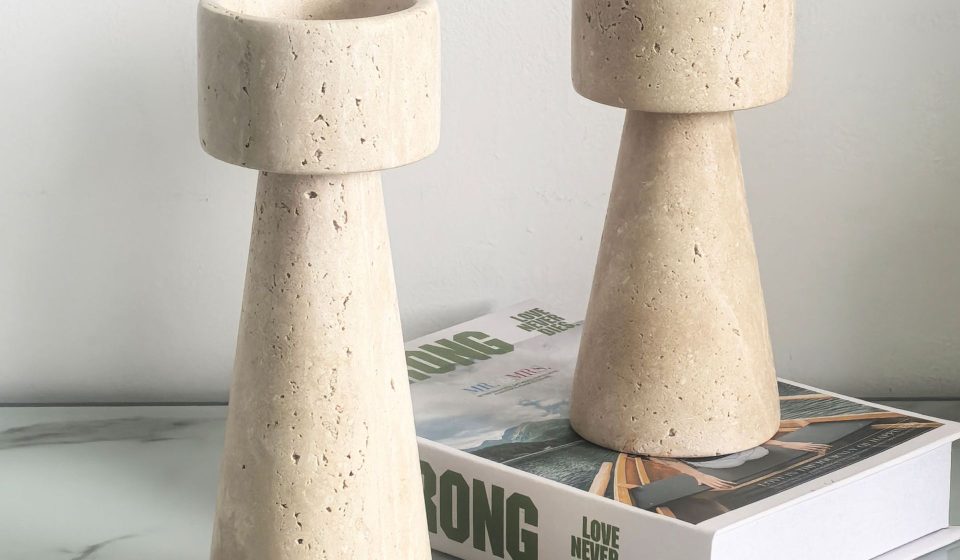

A pillar candle on a plate is a compromise; the same candle on a stand is a decision. Height is what flame wants — to be seen across a room, above the glasses and the flowers and the things a table actually does — and height is exactly what a stand provides. The travertine pillar candle stand raises the candle 18 or 22 centimeters on a turned cone of beige stone and catches it in a deep cup: church-candlestick geometry, carved from warm mineral instead of cast in metal.
Why Height Changes Candlelight
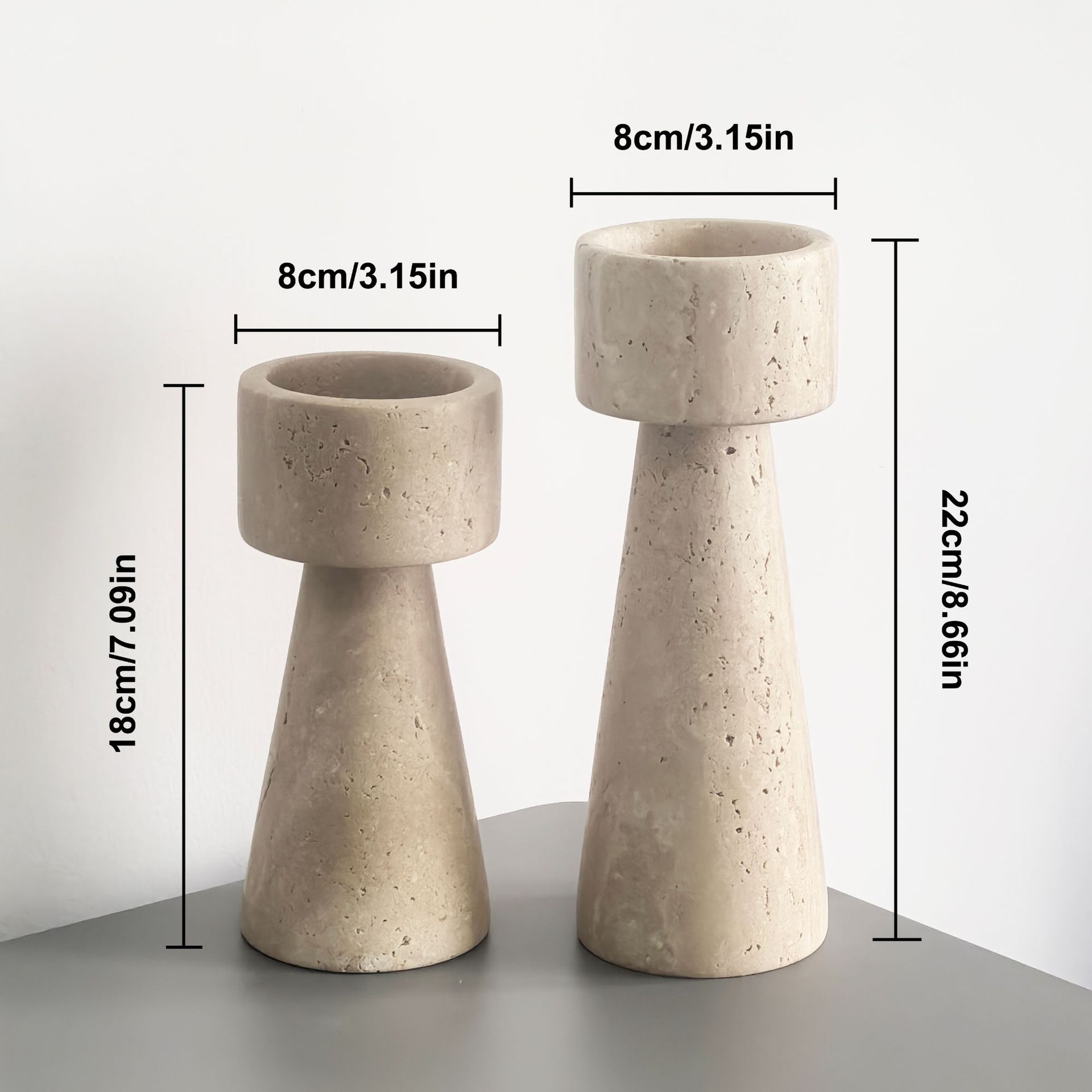
Flame at table level lights the table and nothing else. Raised, the same flame throws across shoulders and faces, and the room’s mood changes from dinner-party to gathering — people stop leaning in and start leaning back. There is also a practical layer: a raised cup keeps wax above the reach of sleeves and napkins, holds the flame clear of tabletop clutter, and turns the whole arrangement into one object you move in a single hand. Tall flames draft and lean; a weighted stone base — 1.9 kilograms on the large size — is the ballast that lets height stay carefree.
The Two-Step Rule
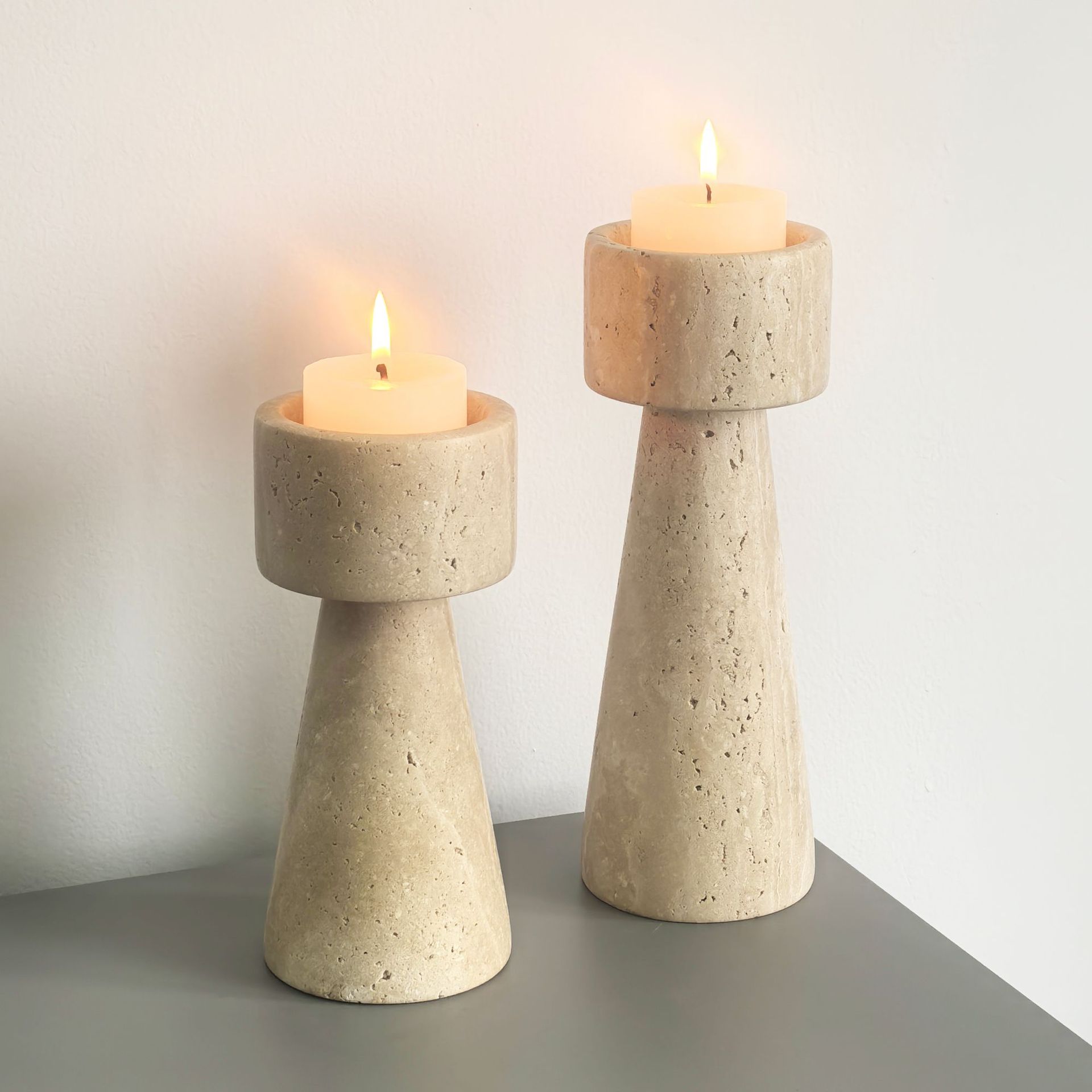
Stylists build candle groupings on staggered heights, usually three objects; the travertine stand makes two enough. The sizes — 22 and 18 centimeters, same cone, same cup — step cleanly from one to the other, and the shared profile ties them into a set. Place the tall one first, off-center; bring the short one a hand-width toward it; stop. The gap between them is doing compositional work, and every object you add beyond the pair dilutes it. For dining tables longer than two meters, run two pairs — four pools of light down the length — and retire the chandelier for the evening.
Anatomy of the Stand
The form is a truncated cone: wide, ground-flat foot; tapering stem; straight-sided cup on top with a 6.2-centimeter groove and 2.1 centimeters of depth — sized for standard pillar candles, so wax pools inside the cup instead of down the stone. The whole piece is hand-carved from one block of beige travertine, which is why the banding runs continuous from foot to rim. Sealed and polished, the surface wipes clean; the pores stay visible as texture, and the banding varies piece to piece — your stand is cut from its own slice of the quarry and matches nothing else on earth.
Where It Performs
- Dining table: the pair staggered down the center — flame at face height, conversation lit from within.
- Sideboard: the tall stand alone beside a vase; height contrast doing the styling single-handedly.
- Entry console: one stand lit at dusk; the house announces its own welcome.
- Bath or spa corner: the short stand with a wide pillar — the hotel signal, stone edition.
Pairing Pillars and Stone
Cream and ivory pillars are the safe marriage — tone on tone, the flame does the talking. Deep green, burgundy, or black pillars turn the stand graphic and seasonal in one move. Tapered dinner candles do not belong here; the cup wants pillars 6 to 7 centimeters across, which burn slower and steadier than tapers ever manage. Unscented for the dining table (scent and food argue), scented freely everywhere else — a vanilla or cedar pillar on the sideboard is the cheapest ambiance system that exists.
Burning Tall, Burning Safe
Tall flames need short wicks: trim to five millimeters before every burn and the candle burns down instead of out. First burn matters most — give a new pillar long enough to melt its full surface, or it tunnels and the stand never sees the candlelight it was carved for. Keep the pair clear of drafts and drapes, burn within sight, and retire each pillar at half a centimeter. The stand’s own care fits in a breath: cooled wax lifts from the sealed cup in one piece, a damp cloth finishes the job, and a yearly reseal keeps the stone indifferent to the occasional drip. Stone, flame, height — the oldest lighting rig there is, still undefeated.
The Stand Through the Year
A candle stand that only works at dinner parties is a rental prop; the travertine cone works the calendar. Spring: the tall stand on the sideboard with a single cream pillar and a bowl of lemons nearby — stone’s oat tones and citrus are the oldest pairing in still-life. Summer: evenings move outdoors, and the stand travels — on a sheltered porch table, one weighted cone handles a breeze that knocks tapers flat, and the stone shrugs the humidity that would swell anything wooden. Autumn is the pair’s championship season: two stands staggered down the table with small pumpkins and oak leaves running the runner, the candlelight doing the color work while the stone does the texture. Winter is not a season so much as a job description — advent, Hanukkah makeups, the whole dark-December arc — and the deep cups handle the long burns that other holders surrender to, wax pooling inside the 2.1cm depth instead of down the stem. Holidays with guests expose the difference between decor and equipment: decor needs instructions and handling, equipment needs a match. Rotating the candles is the only maintenance the calendar asks — cream until October, deep green or burgundy through the holidays, back to ivory in January, which is a five-dollar wardrobe for a hundred-dollar silhouette. And in the dead weeks between, the stand keeps its day job: a 1.9-kilogram carved stone obelisk that makes a shelf look considered with no flame anywhere near it. Owners who buy one height for the table almost always add the second within a year — not because the first failed, but because the stagger is the whole art, and the calendar keeps offering new reasons to climb it.
Reading Stone Quality Before You Buy
Candle stands get handled — lifted to clean under, moved when the table changes — so quality shows up in the hands first. Lift the stand: real travertine has honest weight (the large size runs 1.9 kilograms), and the weight sits low in the cone, which is why it never feels tippy. Run a finger along the joint where stem meets foot: on a one-piece carving the banding flows through without a seam, while glued assemblies show a line and, eventually, a wobble. Check the cup’s interior — it should be ground smooth and sealed, because that is the surface wax and heat actually touch. The foot deserves a flip-over inspection: sanded flat, it should sit silent on the table with no rock, friendly to delicate finishes. Pores and banding are not flaws; they are the stone’s biography, and a suspiciously uniform surface is the real warning sign — perfectly even “travertine” usually means cast concrete or resin in a stone costume. Finally, weigh the price against the labor: a hand-turned cone with flowing bands takes hours at the wheel and hours more at the grinder, and holders priced below that labor are telling you where the shortcut lives. The upside of buying right is that the inspection only ever happens once — stone does not peel, delaminate, or expire, and the stand you approve today is the one your table leans on for decades.
Frequently Asked Questions
What candles fit the 6.2cm groove?
Standard pillar candles 6 to 7cm across fit the deep cup (2.1cm). Wide pillars burn slower and steadier than tapers and pool wax inside the cup.
Will the stand tip or slide on the table?
No — the foot is ground flat and weighs 1.5 to 1.9kg depending on size. It does not rock on tile, wood, or stone; lift rather than drag it.
Which height should I buy first?
The 22cm if it will anchor a sideboard or large table; the 18cm for smaller tables. Most owners end up with both — the stagger is the styling.
Bring one home: the Retro Travertine Pillar Candle Stand — $69, hand-carved and polished, ships worldwide in a rigid gift box.
Read next: dining by flame: the candlelit table and stone that frames a flame.