
Look closely at a styled interior photograph — a hotel suite, a show flat, a designer’s own living room — and you will notice what is missing: packaging. Nothing on the counter is cardboard, printed, or branded. That discipline is the whole secret of professional styling, and it explains why the carved stone tissue box has become the prop stylists reach for first. It removes the last piece of packaging from the room and replaces it with material that belongs.
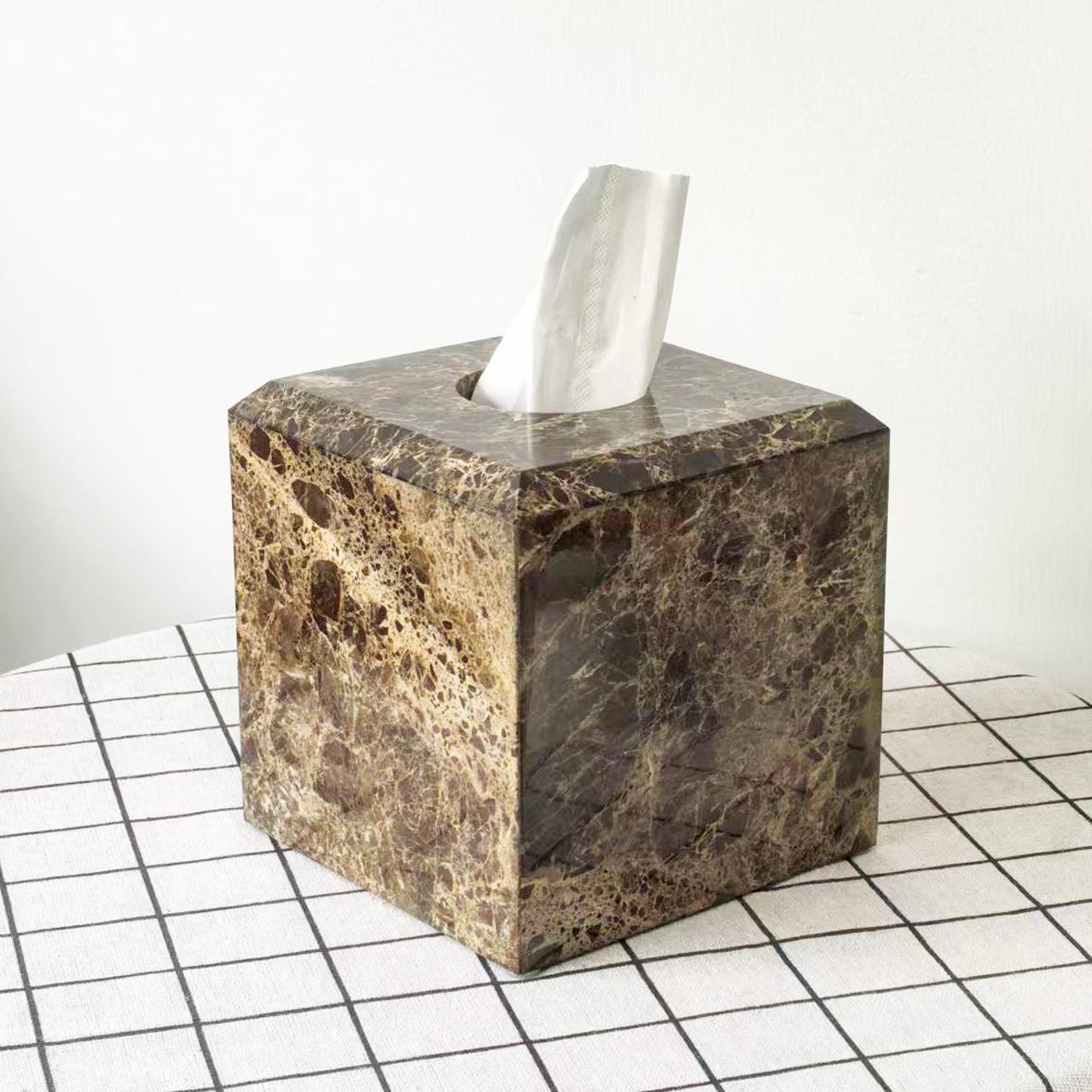
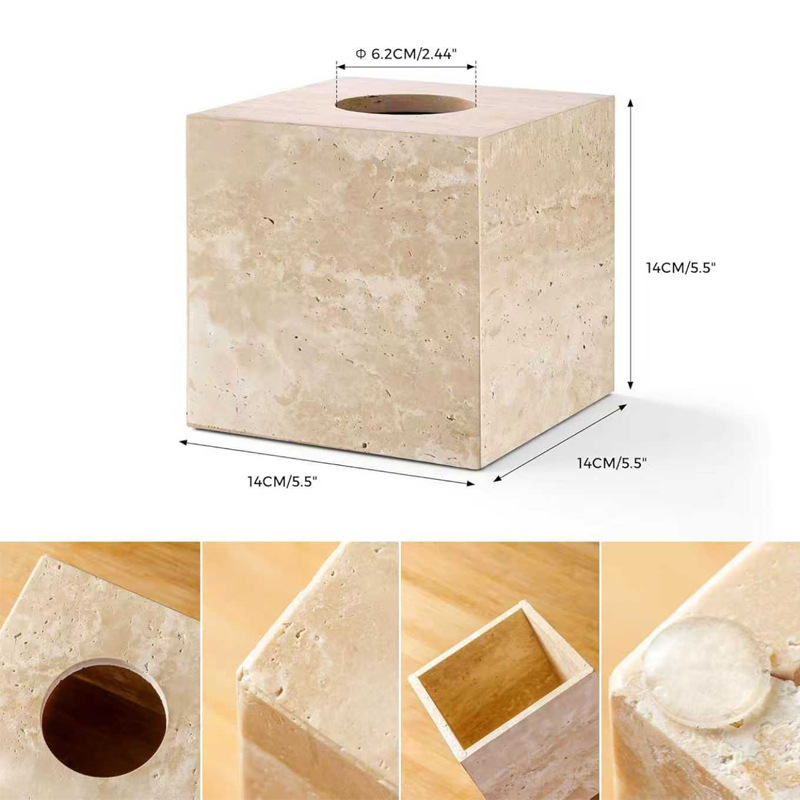
The square marble tissue box cover is a 14-centimeter cube carved from solid stone — beige travertine or Emperador Brown marble — with a round dispensing slot and a flush underside opening for standard tissue pouches. It weighs enough to stay planted, seals against humidity, and photographs as a pure geometric block: the rare functional object that improves every frame it enters.
The Styling Logic, Demystified
Professional stylists follow one rule that explains most of their choices: every visible object should contribute either texture, geometry, or life — ideally two of the three. A stone cube contributes geometry (a crisp chamfered block) and texture (mineral veining and pores), which is why it earns its place on a counter even before its job begins. Cardboard contributes packaging and a brand message, which is why it never survives the first edit.
The cube also solves the scale problem that plagues counters. Counters need one mid-size anchor between small objects (soap, rings) and large ones (lamps, mirrors). A 14-centimeter cube is exactly that anchor — bigger than the clutter, smaller than the architecture, and neutral enough to sit in any color scheme. In a show flat, one cube on the vanity tells buyers the bathroom is finished without saying a word.
Hotel Logic for Home Bathrooms
Hotel bathrooms feel calm for a reason you can copy tonight: every functional item is either hidden in stone, glass, or ceramic, or folded so precisely it looks intentional. The tissue cube is the easiest win in that system, because tissues are used by everyone and stored by no one. Put the cube beside the sink or on the toilet tank, fold hand towels into thirds, clear everything plastic, and the room reads as hospitality-grade. Guests will assume a designer was involved; the designer was a quarry.
Choosing Between the Two Stones
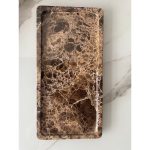
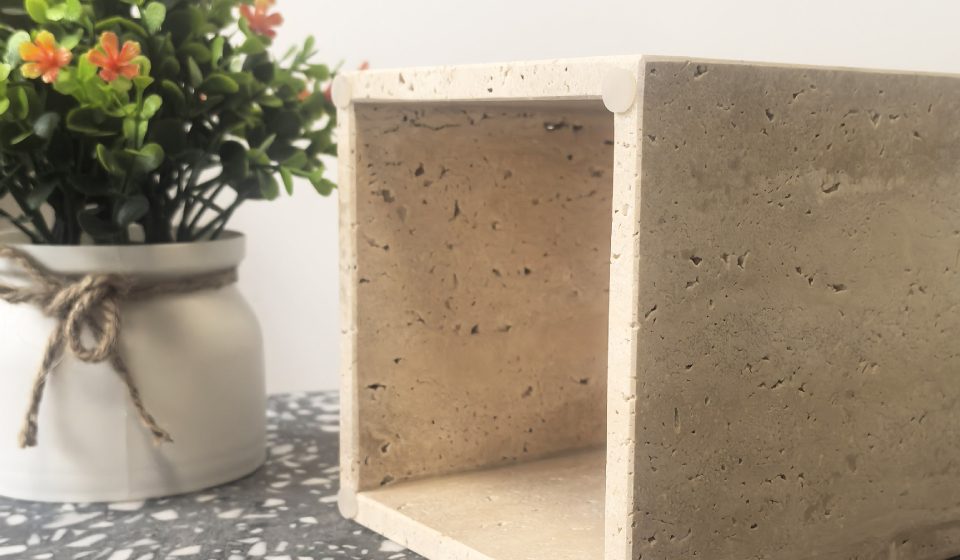
Emperador Brown is the stylist’s default: dense coffee-dark veining over warm brown, it anchors white counters, walnut vanities, and brass fixtures, and it hides the dust a real home generates. Beige Travertine is the airier choice — pale, pore-textured, and quietly at home in sunlit bathrooms with linen and light oak. If the room already has a strong pattern (a veined floor, a busy tile), choose travertine and let it whisper; if the room is all-white and waiting for one grounding object, choose Emperador and let it speak. Both are cut from the same 14-centimeter cube, so you can stage one of each and see which counter disappears more completely.
A Gift That Survives the Drawer Test
Most housewarming gifts fail the drawer test: within a month they are stored rather than used. A stone tissue cube cannot be stored — it is used in every room, every day, by every person in the house. It ships in a rigid box without risk, needs no sizing or engraving, and reads as considerably more expensive than it is. For weddings, new builds, office desks, and the relatives who insist they need nothing, it is the rare practical gift that still photographs like a design object.
From Show Flat to Real Home
The prop trick translates to ordinary rooms with one adjustment: staging is photographed once, but a home is lived in daily, so choose the cube’s room by traffic. The highest-return placements are the spots every member of the household passes daily — the kitchen end of the dining table, the main bathroom counter, the coffee table if the household includes children, whose cold seasons generate tissue demand no one plans for. Renters take note: the cube is one of the few decor upgrades that moves with you, weighs enough to feel like furniture but packs in a suitcase, and never touches the walls, which keeps any deposit intact.
Budget-conscious stagers can copy the full show-flat look for the price of one cube and twenty minutes of editing: clear the counter completely, put back only the daily-use items, swap any plastic for ceramic or glass, place the cube at the counter’s visual center, and stop. The room will photograph better immediately, and unlike a renovation, the whole edit reverses in five minutes if you hate it. That reversibility is worth stressing — stone decor is commitment-free styling. The cube asks for no drilling, no adhesive, no paint, and no matching set; it simply occupies space better than the cardboard it replaces, and it will still be doing that job long after this season’s printed boxes have gone to recycling.
A One-Weekend Counter Reset, Step by Step
For readers who want the show-flat effect on an ordinary budget, here is the full method we give clients, scaled to one weekend. Saturday morning: empty every counter and nightstand completely into a box — nothing returns by default. Saturday afternoon: clean the surfaces, then put back only what someone in the house used this week; the box contents that stay boxed for a month were never needed. Sunday: place the stone tissue cube at the visual center of the bathroom counter and the bedside of the room guests see most, fold hand towels into thirds, and move any plastic accessory into a drawer or out of the house. Total spend: one or two cubes. Total skill required: the willingness to leave a surface slightly emptier than feels natural on the first day.
The reason this works where shopping sprees fail is subtraction: professional rooms look expensive because less is visible, not because more was bought. The cube slots into that discipline naturally — it is the rare object that removes packaging while adding material, so it upgrades a room even as the room gets simpler. Guests will never name it, but they will feel it: nothing on the counter is selling them anything, everything is load-bearing, and the one block of carved stone quietly explains the whole room’s intentions.
Where the Cube Surprises You
After the expected rooms, owners keep finding unexpected jobs for the cube. On a kitchen shelf it dispenses paper napkins cut to size, which suits the stone better than anyone predicts. In a hallway it becomes the spot where dog-walking bags and gloves live. In a nursery it holds the tissues every parent needs at two in the morning, and the solid stone cannot be tipped over by a curious toddler the way a light box can — a safety detail worth more than any styling argument. Office managers order them for reception desks because the cube survives hundreds of visitors a month without a dent. None of these uses was designed; all of them work for the same reason. An object made of one honest material, with no moving parts and no branding, fits into any room that needs tissues and improves it simply by being there.
Frequently Asked Questions
Why do stylists use stone tissue boxes?
Because tissues must live on display, and cardboard prints a brand into every styled room. A carved stone cube contributes geometry and texture instead of packaging, and it photographs as pure architecture.
Is it hygienic for bathrooms?
Yes — the sealed stone surface wipes clean with a damp cloth and does not absorb moisture. Keep it out of direct shower spray, dry it like any stone accessory, and reseal once a year.
Can it be used with napkins or wipes instead?
Absolutely. The cube dispenses anything folded through a slot: square tissue pouches, napkin stacks cut to size, or refill wipes — no proprietary refills, ever.
Bring one home: the Square Marble Tissue Box Cover 14cm — $90, hand-carved and polished, ships worldwide in a rigid gift box.
Read next: the stone tissue box on display and the catchall bowl for small things.