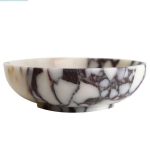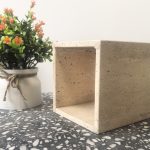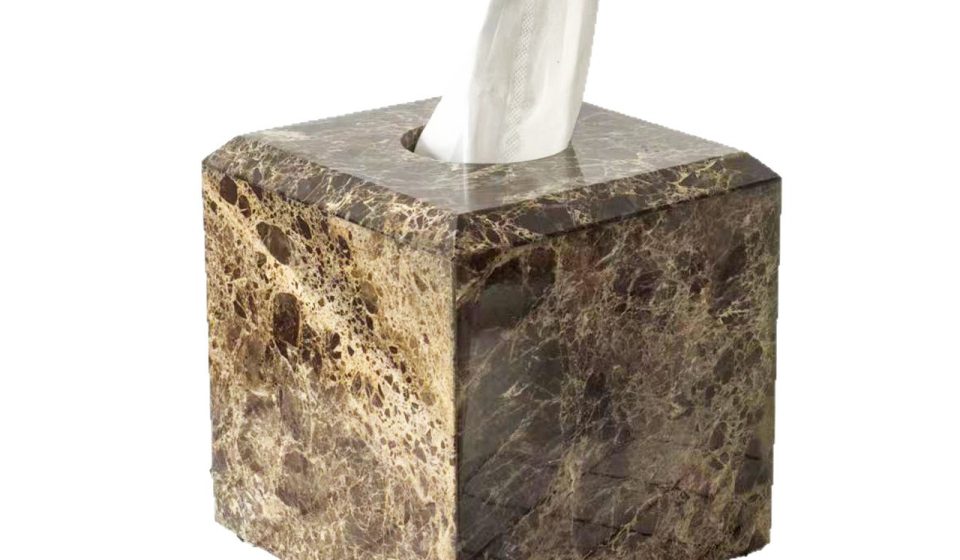

No object in the home is more universal and less designed than the tissue box. Cardboard prints change with the seasons; plastic boxes crack at the slot within a year. The solution has been sitting in stone yards all along: carve the box out of a single cube of stone and never think about it again. Ours is a 14-centimeter cube — square marble tissue box cover — in beige travertine or dark Emperador Brown marble, and it is precisely the kind of object that makes a counter look finished.
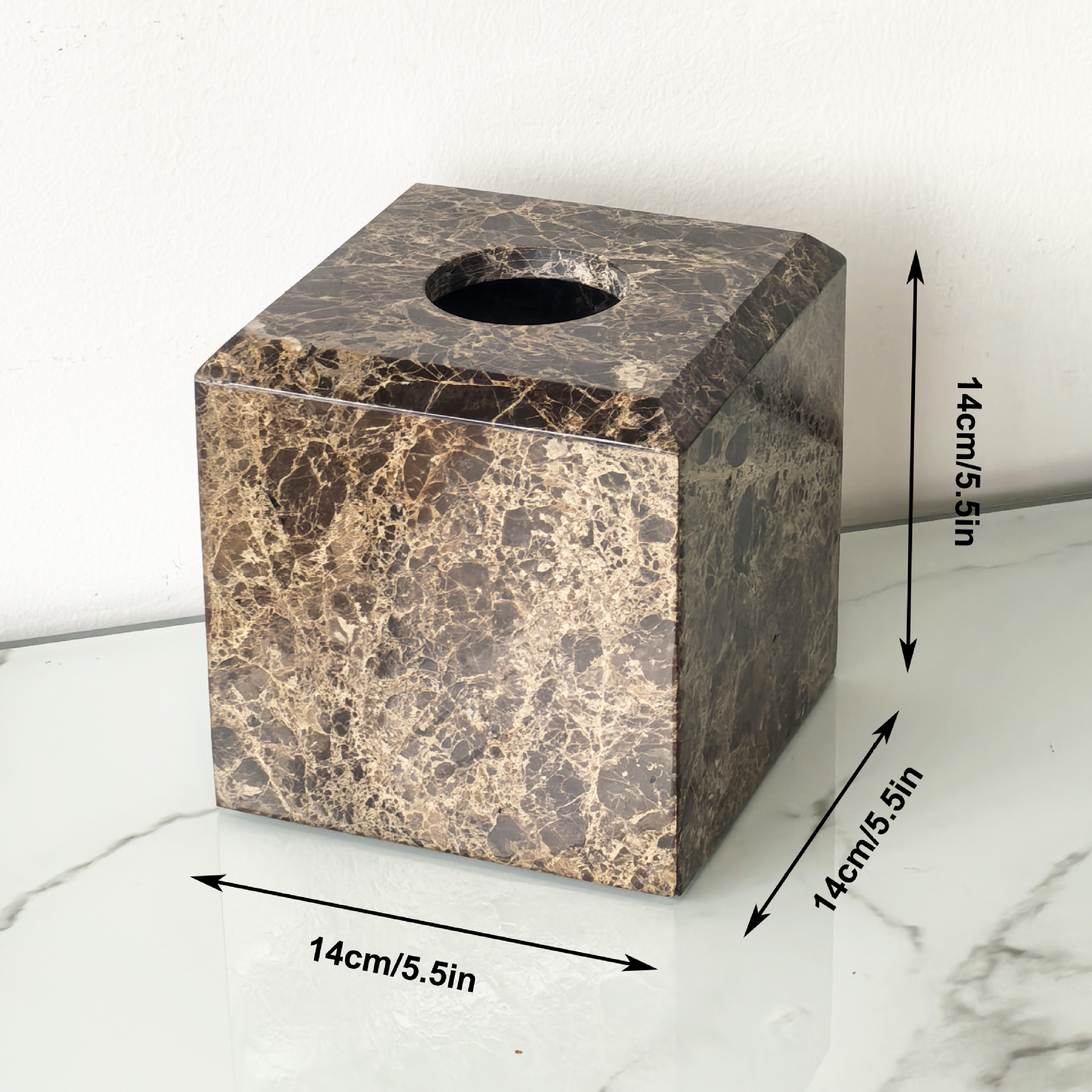
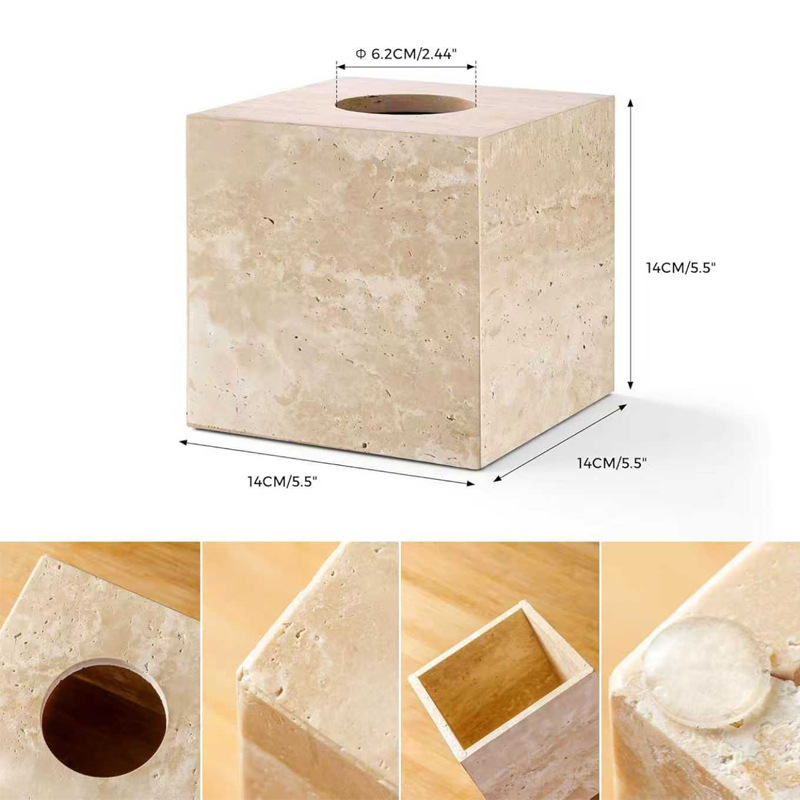
The geometry is simple and correct: a cube, 14 by 14 by 14 centimeters, hand-chamfered edges, a round Ø5.5 centimeter dispensing slot in the top, and a wide opening underneath for dropping in a standard square tissue pouch. No hinges to break, no lids to align, no cardboard visible from any angle. A standard refill takes ten seconds: flip, insert, flip back, pull a tissue through, done.
Weight Is the Feature Nobody Advertises
Every lightweight tissue box fails the same way: you pull a tissue one-handed and the box comes along, or tips, or skates to the edge of the counter. A solid stone cube ends all of it. One-handed pulling works — the box does not move. This is the same physics that makes stone candle holders and stone bowls so satisfying in daily use: the object you interact with should be the only thing in the interaction that does not move.
The stone also solves the aesthetic problem that cardboard cannot. Tissue boxes are necessarily on display — living rooms, nightstands, desks, bathroom counters — because tissues are used exactly where people are. A cardboard box prints an advertisement into every room it enters; a cube of carved stone prints nothing. It contributes texture, weight, and a cool mineral presence, and the tissues themselves become the only decoration it needs.
Travertine or Emperador: Choosing the Cube
The Beige Travertine version is the quieter of the two. Its sandy surface is full of tiny mineral pores, the tone sits between cream and oat, and it belongs in rooms dressed in linen, oak, and unfired ceramics — the wabi-sabi register. The Emperador Brown version is the dramatic one: cells of coffee-dark veining over a warm brown ground, dense as tortoiseshell, at home against walnut, leather, brass, and white marble counters that need one grounding object. Both stones are sealed against moisture; both are hand-polished; both will show slightly different veining from cube to cube, because both are real stone rather than a printed imitation of it.
One Cube, Four Rooms
Living room: beside the sofa, the cube reads as sculpture between uses. Bedside: cold season handled with dignity, and the nightstand gains a paperweight in the process. Home office: the hotel-desk polish that makes video-call backgrounds look considered. Bathroom: sealed stone shrugs off a humid room; keep it away from direct shower spray and wipe it dry like any stone surface. In staging and show flats, the cube is the prop stylists reach for because it photographs as architecture: a clean block with a single dark slot, entirely free of branding.
Care and Refills
Dust with a dry cloth; a damp cloth removes smudges; no acidic sprays, which belong nowhere near natural stone. The slot edges are polished and sealed like every other face, so tissues glide without snagging. Refills are any standard square pouch — no proprietary cartridges, no subscription. The cube you buy will still be dispensing tissues in thirty years, which is the entire argument for carving everyday objects from material that outlasts the objects.
Styling the Cube With What You Already Own
The cube needs no companions to look finished, but it accepts them gracefully. On a bathroom counter, put it beside a stone soap dish or a marble tray from the same quarra family and the pair reads as a collected set even when the stones differ — travertine and Emperador Brown in one room is a deliberate conversation, not a mismatch, because both carry the same matte mineral warmth. Add a small plant or a sprig of eucalyptus in a bud vase and you have the classic three-point styling rule done: geometry, texture, life. Avoid crowding the top face; the slot is the cube’s signature, and it should stay legible from across the room.
Height placement matters more than people expect. At counter level the cube reads as a utility; raise it onto a small stack of books or a short stand on a console and the same object reads as art. In a living room, keep it within arm’s reach of the sofa — the whole point is that tissues get used where people sit — but let the cube’s weight do the anchoring rather than a coaster underneath, which only adds a slipping surface. One cube per room is almost always right; a second belongs in the guest bathroom, where visitors need tissues and never know where to look.
Refills, Sustainability, and the Long View
A stone tissue cube changes your relationship with refills in a small but real way. Because the pouch is invisible inside the cube, you can buy whatever tissue is on sale, in whatever packaging is cheapest, without a thought for how it looks — the aesthetic lives in the stone now, not the cardboard. Bulk-buying becomes practical, which saves money and cuts packaging waste at the same time. The cube itself is the sustainability argument in object form: one carved stone item replacing decades of printed cardboard boxes, none of which were ever designed to be kept. Natural stone is cut with water and abrasive, finished by hand, and needs no kiln firing, which puts its embodied energy closer to a stone countertop than to a shelf of ceramics; and because it never trends out, it never becomes the thing you throw away during a clear-out.
There is a maintenance truth worth stating plainly: the cube will ask almost nothing of you. No hinges to tighten, no lid tabs that snap after the fifth refill, no lacquer that yellows. If a decade from now the surface looks dull in a humid bathroom, a resealing kit from any hardware store returns it to new in an afternoon. That is the entire lifecycle — one purchase, occasional refills, a rare reseal — which is exactly the ratio of use to fuss that everyday objects should have and so rarely do.
Sizing Notes for Common Counters
A 14-centimeter cube fits everywhere a standard tissue box does, but a few measurements are worth knowing before you choose its spot. On a 60-centimeter vanity top, the cube occupies less than a quarter of the width, leaving room for a soap dispenser and a small tray beside it. On a nightstand of 40 to 45 centimeters, it sits comfortably beside a lamp base without crowding the reading light. On a desk, place it behind the monitor line and it disappears visually until needed; place it at the front corner and it becomes part of the workspace’s look. If you are furnishing a guest bathroom from scratch, the winning trio is a cube, a stone soap dish, and a folded hand towel — roughly thirty centimeters of counter in total, and the room will read as professionally designed.
Frequently Asked Questions
What tissue pouches fit inside?
Any standard square tissue pouch available in supermarkets. The wide underside opening accepts the pouch in seconds, and the round top slot (Ø5.5cm) dispenses one tissue at a time exactly like a cardboard box.
Does the box slide when pulling a tissue?
No — that is the point of solid stone. The cube weighs several kilograms, so one-handed pulling works every time without the box skating or tipping.
Travertine or Emperador — which should I pick?
Beige Travertine for light, linen-and-oak rooms and sunlit bathrooms; Emperador Brown for white counters, walnut, and brass, or anywhere one grounding dark object is needed. Both are sealed and hand-polished.
Bring one home: the Square Marble Tissue Box Cover 14cm — $90, hand-carved and polished, ships worldwide in a rigid gift box.
Read next: the stylist logic behind stone tissue boxes and the marble fruit bowl for the table.