
There is a category of object that appears in every restaurant worth remembering and almost no private home: the stone bowl. Restaurants use it for a practical reason — stone holds temperature, wipes clean between courses, and looks identical at the two-hundredth service as at the first. Home cooks avoid it for a reason that no longer applies: they assume stone is fragile and precious. A carved marble bowl is neither. It is, in fact, the most forgiving piece of tableware you can own, and the Bulgari Purple version of it is arguably the most beautiful object you will keep on a table all year.
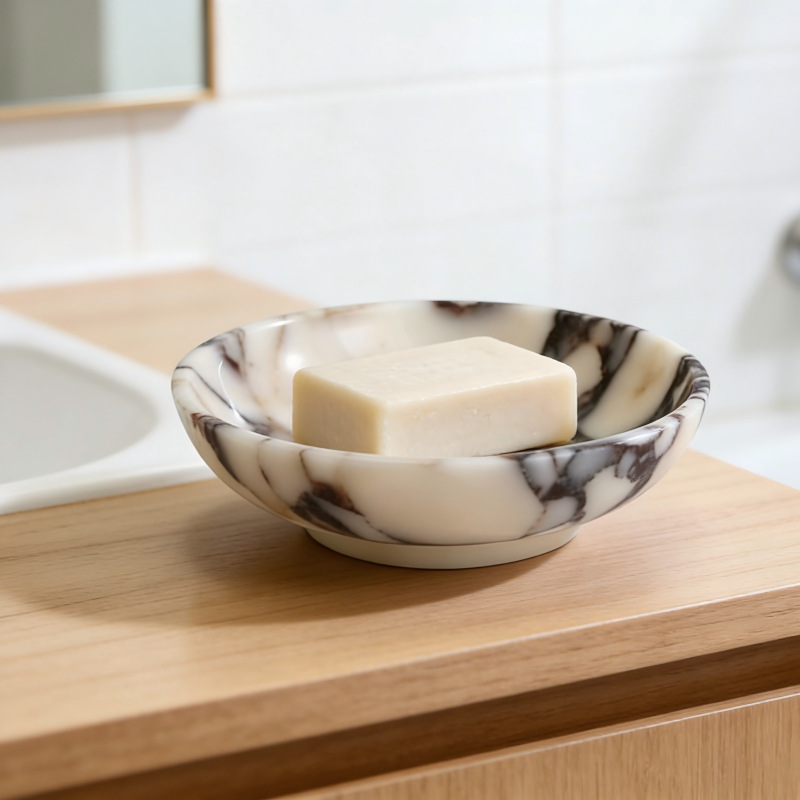
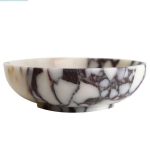
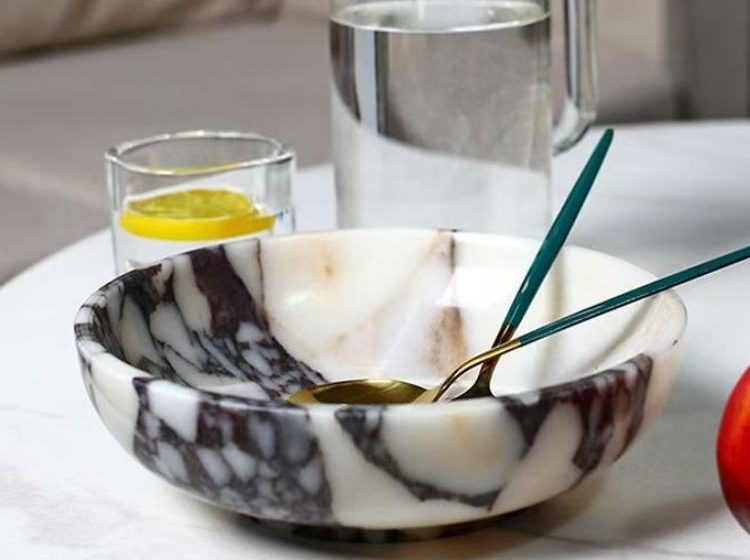
The Bulgari Purple marble catchall bowl is carved from a single block of the stone that made a thousand magazine covers: warm white marble crossed by bold violet-black webs. It is 20 centimeters across and 5 centimeters deep, with a small sculpted foot that lifts it off the table like a pedestal. Because the veining wraps around the whole bowl, no two angles look alike — turn it a quarter and you have, visually, a different object.
Why Stone Wins at the Table
Ceramic bowls chip; glass bowls announce every fingerprint; wooden bowls absorb the smell of last month’s citrus. Marble sidesteps all three. It holds a low, even temperature, which keeps grapes crisp and butter firm through a long dinner. It cleans with a damp cloth — no seasoning, no staining from berries if you rinse the same night. And it is heavy: nobody knocks a kilogram of carved stone across the table reaching for the salt.
The depth matters too. Five centimeters is the sweet spot between a plate and a mixing bowl: deep enough that a pile of cherries reads as abundance, shallow enough that you can see everything in it from across the table. The foot does quiet work — it lifts the bowl’s silhouette, keeps the base cool against a wood table, and adds the one design detail that separates carved stoneware from a turned bowl of composite.
Three Tables, Three Styled Bowls
The everyday table: the bowl lives in the center year-round with whatever the season offers — clementines in winter, cherries in June, figs when they appear. No restyling ever required; the stone makes fruit look intentional. The dinner party: line it with vine leaves or a linen napkin and it becomes a serving vessel for olives, bread rolls, or a chilled dessert. The kitchen island: filled with lemons and limes, it is the cheapest kitchen makeover that survives a real family week.
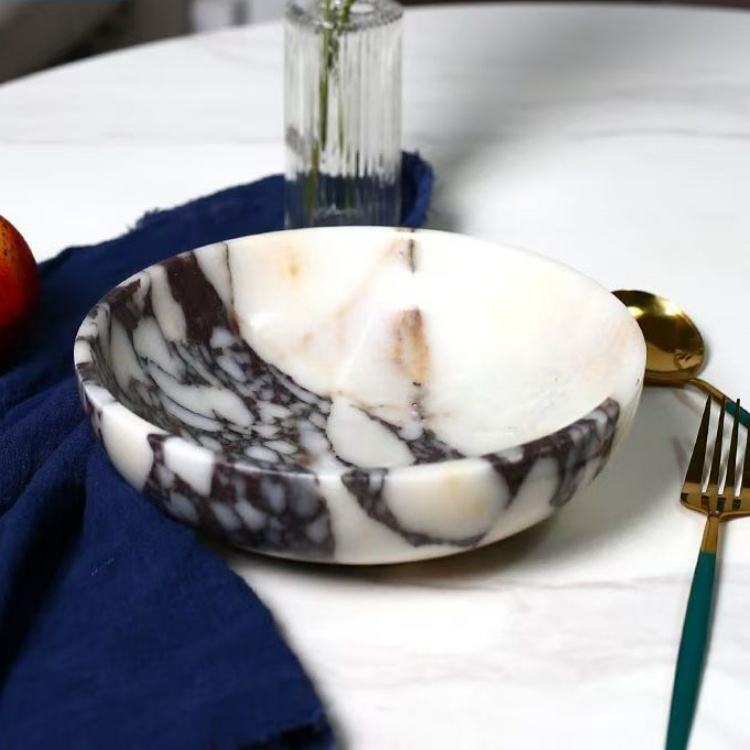
If you eat at a small table, note the scale: 20 centimeters centers nicely on a two-seater without crowding it. The bowl was carved for daily use, not display cabinets — a fact you will appreciate every time you rinse it under the tap instead of hand-polishing it for company.
Beyond Fruit: The Same Bowl, Five Jobs
Between meals the bowl keeps working. Fill it with water and floating flowers for a dinner centerpiece that takes ten seconds. Use it as a serving bowl for pasta or salad at a casual supper — the stone keeps pasta warm longer than ceramic. On a vanity it collects jewelry; by the sink it holds soap; on a console it takes keys and matches. This versatility is the quiet argument for stone over novelty tableware: a bowl that only serves on holidays is clutter, but a bowl that serves, then organizes, then decorates, becomes part of the house.
Care That Fits Real Life
Rinse with warm water after serving; wipe with a damp cloth for daily upkeep. The sealed surface shrugs off fruit acids if you rinse the same evening — the only real enemies are abrasive powders and the dishwasher’s thermal cycle. Once a year, a coat of food-safe stone sealer returns the surface to factory sheen. Hand-carved veining will vary from bowl to bowl; the web on yours is yours alone, which is exactly why photographs of it will never look like anyone else’s table.
Pairing With Fixtures and Tableware
Marble’s violet-and-white palette is more versatile at the table than people expect. Against warm woods — walnut, teak, oak — the stone’s white ground reads bright and the veining adds the drama the wood lacks. On painted or linen-covered tables, it behaves like a piece of sculpture you happen to serve from. The mistake to avoid is competing pattern: a bowl this boldly webbed wants calm surroundings, so skip the paisley runner and let it sit on plain linen, bare wood, or a solid-color cloth. Tableware follows the same logic. Matte stoneware in oat or charcoal flatters the stone’s polish by contrast; polished porcelain fights it for shine. Brass and antique gold candlesticks pull the warm undertones out of the veining, while chrome and glass keep the setting cooler and more contemporary.
Scale your additions down as the bowl goes up in prominence. On a breakfast table, the bowl alone is enough — fruit, stone, done. For a dinner setting, flank it with two low candleholders and nothing else; the triangle of light, fire, and stone photographs like a magazine spread with thirty seconds of effort. If you own a matching marble tray or coaster set from the same stone family, keep them in another room. One strong stone statement per surface is the rule; two on the same table turns decor into a showroom.
What to Check Before You Order
Stone tableware varies enormously between sellers, and the differences are invisible in photographs, so run through this checklist. First, ask whether the bowl is carved from a single block or assembled from pieces; glued seams fail eventually, especially around a foot, and ours is solid through. Second, check the finish inside the bowl: a food-contact surface must be polished and sealed to the same standard as the outside, not left raw. Third, confirm the sealant is food-safe and reapplyable — some export factories use industrial sealers that cannot be renewed. Fourth, weigh it. Roughly two kilograms for a 20-centimeter bowl is correct; a featherweight bowl was either hollowed too thin or is not stone at all. Fifth, look at the foot. It should be sanded and slightly felted or rubberized so it never scratches a wood table; ours is sanded smooth and sits silent on every surface we have tested.
Finally, expect variation and get it in writing. Real Bulgari Purple ranges from faint violet tracing to dramatic black webs, and the bowl you receive will not match the photograph exactly — any honest seller will tell you so up front, and any seller who promises an identical web is selling printed ceramic. The upside of that variation is worth the uncertainty: you are not buying a factory object but a one-off, carved from material that took geology a few million years to arrange and a craftsman a few days to reveal.
Frequently Asked Questions
Can I serve food directly in the marble bowl?
Yes — sealed marble is food-safe. Rinse with warm water after serving, use mild soap for oil, and dry. Avoid the dishwasher and abrasive powders; reseal once or twice a year to keep the surface at factory sheen.
Will fruit acids stain the stone?
Not if you rinse the same evening. Citrus, berries, and tomatoes are all fine with a prompt rinse; the sealed surface does not absorb them. The only permanent risk is leaving acidic food for days without cleaning.
Is the bowl stable on the table?
Very. It is carved from one piece of stone with a sculpted foot, weighs around two kilograms, and its low center of gravity makes it effectively tip-proof in daily use.
Bring one home: the Bulgari Purple Marble Catchall Bowl 20cm — $135, hand-carved and polished, ships worldwide in a rigid gift box.
Read next: the catchall bowl for small things and the stone tissue box on display.