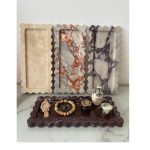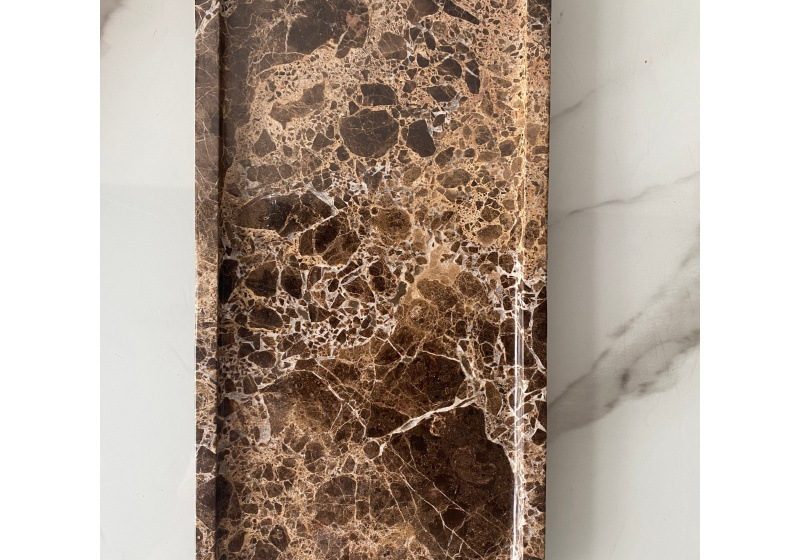

Every house has a place where the day is set down. It is rarely designed: coins migrate, keys wander, a watch lands beside a lamp and gets found ten minutes late. The fix is not a bigger drawer or a stricter habit — it is one obvious, beautiful landing zone, placed exactly where the hands already empty. A rectangular marble tray, thirty centimeters long and fifteen wide, is precisely that object.
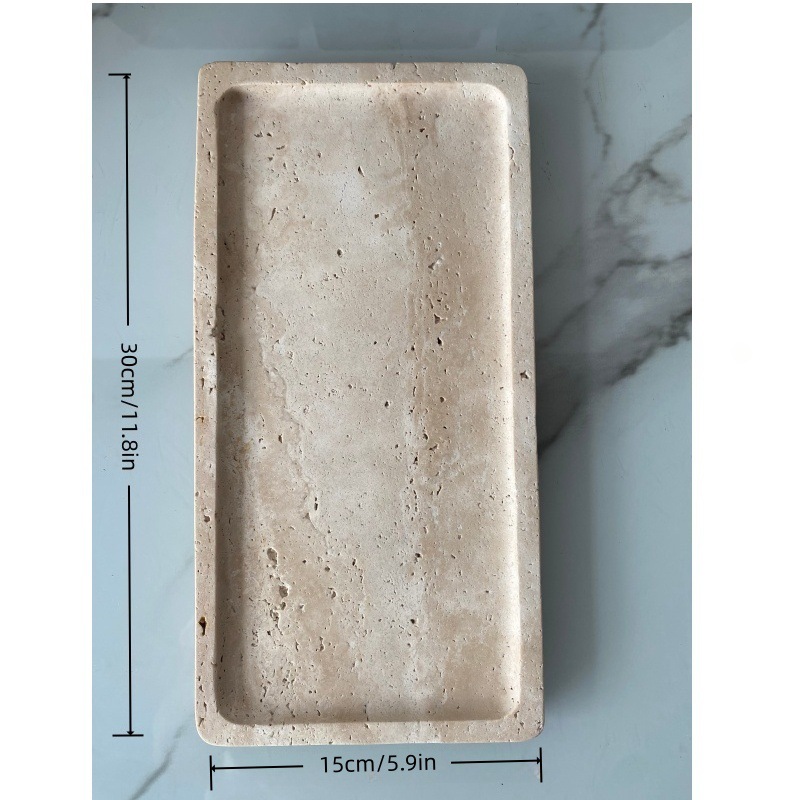
The rectangle is the right shape for a drop zone because pockets empty in a line, not a pile. Keys go left, wallet center, sunglasses right — the tray’s thirty centimeters give each its territory, and one glance across the surface confirms everything is there before the door closes. Round trays force a jumble; the long rectangle imposes order without asking anyone to change behavior. That last part is the trick: a system that requires habit fails, and a system that is simply the easiest place to put things never does.
Why Marble Specifically
Drop-zone trays live hard lives. They get bumped by backpacks, grazed by coat sleeves, and loaded with metal objects dropped from a standing height. A ceramic dish chips; a wooden bowl dents and collects pocket lint in its grain. Marble absorbs all of it — the clink of keys on stone is the sound of an object that will outlast the keys. At roughly two kilograms, the tray also stays exactly where you place it, which matters at the moment a hand dives in hurriedly for one escaped earring.
The coolness of stone is a small daily luxury for the objects themselves. Watches and rings rest on a surface that never warms much above room temperature; there is no sticky film, no felt that traps dust, no lacquer that wears to a dull patch in the shape of your keys. The polished surface wipes clean weekly and looks unchanged years in.
Beyond the Entryway: Three More Stations
The vanity: the same tray becomes a jewelry landing pad — rings off before washing up, earrings before bed, all in one visible line instead of scattered across a dresser. The office desk: badges, spare change, and the USB drive that used to live in three places. The bar cart: a marble tray under the bottles turns loose glassware into a composed arrangement. The tray does not care what it organizes; it simply gives small objects a shoreline, and every room has small objects.
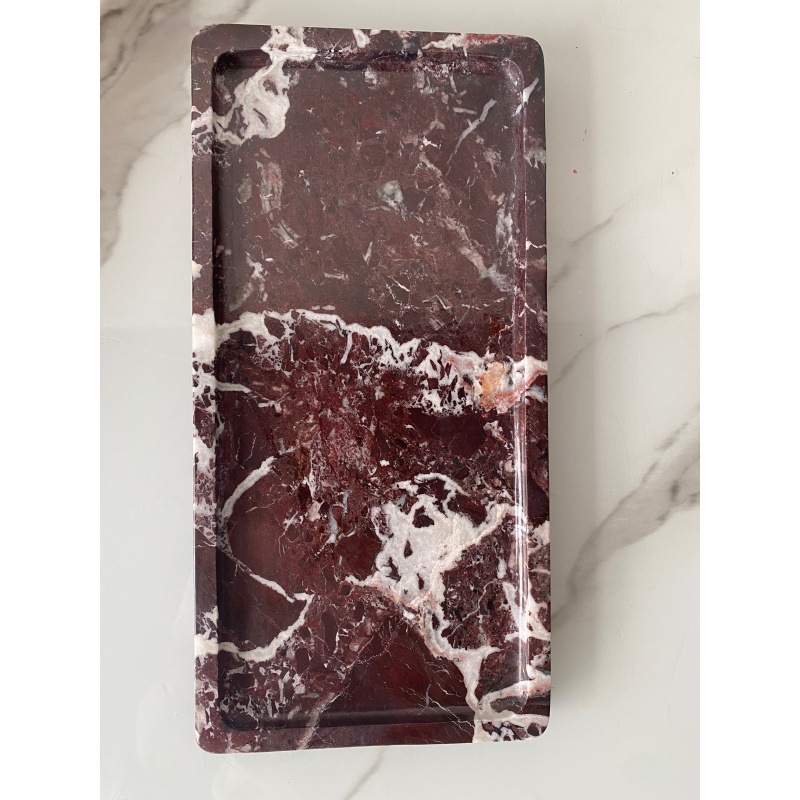
Choosing the Stone for a Drop Zone
Four stones, and the entry logic differs from the vanity logic. In an entryway, the tray works hard and gets seen briefly — Emperador Brown and Rosso Levanto are the practical picks because their busy veining hides the dust that keys and coins leave behind until Saturday’s wipe-down. In a bedroom or bathroom, where the tray sits in better light and works slower, India Green makes a rich, almost lacquered statement, and Beige Travertine disappears gracefully into pale, minimalist rooms. All four are sealed; all four clean the same way.
The Gift That Solves a Universal Problem
Everyone empties pockets; nobody has a good place to do it. That is why the marble entry tray has become our most-gifted rectangle — for housewarmings, for the person who has everything, for fathers who claim they need nothing and then use it every single day. It ships safely in a rigid box, requires no engraving or sizing decisions, and reads as far more expensive than it is. A gift that gets used twice a day, every day, is the rarest kind.
Setting Up the Drop Zone in Ten Minutes
The tray works from the moment it is placed, but ten minutes of setup makes it permanent. First, pick the exact landing height: the surface your hand crosses at the door, whether that is a console at hip height or a shelf at shoulder height — the tray goes where the hand already travels, not where a designer would photograph it. Second, empty your current pockets onto the tray and look honestly at what lands: if coins dominate, add a small dish on the tray’s corner for them; if masks, badges, and chargers appear weekly, that is the tray’s second territory. Third, remove everything nearby that competes — the bowl of dead pens, the pile of mail — because a drop zone works by being the easiest and the most obvious option in the room, and clutter next to it kills the signal.
One habit tip from experience: the tray only stays empty-looking if everything on it has a category. Keys left, wallet center, sunglasses right takes one second to scan and one second to restore. When the family learns that the tray is where things are looked for first, the ten-minute setup pays for itself every morning for years.
What the Tray Should Never Hold
Honest limits make the tray last. Do not rest hot pans or a straightening iron on it — stone conducts heat and a thermal shock can crack any marble, sealed or not. Do not let water pool on it overnight in a bathroom; the sealed surface repels it, but standing water leaves mineral rings like on any polished surface. And keep vinegar-based cleaners off it entirely: acid is the one chemistry stone cannot shrug off. With those three rules observed, the tray will look the same in ten years as the day it arrived — which is more than can be said for the keys it holds.
Two Trays, One System
Households that run on the single-tray system eventually discover its one limitation: the entry tray and the bedside jewelry pile are different problems wearing the same clothes. The clean solution is two rectangles in the same stone family — one at the door, one on the dresser — so the house reads as intentionally outfitted rather than gradually filled. Because both trays share the 30×15 geometry and the sealed polished finish, they pair without matching exactly; veining differences make the pairing look collected. Cost-wise, two trays are still below the price of most storage furniture, and they solve the two fastest-cluttering surfaces in the house. If you buy for two rooms, buy the stones deliberately: same stone twice reads as a set, two contrasting stones read as curation — both work, but decide which effect you want before the second order.
Renters and dorm-dwellers take note: this is one of the few organization upgrades that survives a move. The tray weighs enough to feel permanent but carries in one hand, asks nothing of the walls, and works on whatever surface the next home provides — the console in this flat becomes the dresser in the next. Systems that require installation get abandoned at move-out; systems that are objects travel with you.
Frequently Asked Questions
Is a marble tray too heavy for a narrow console?
No — the tray’s weight is what makes it work as a drop zone. It never slides when bumped, and any sturdy console, dresser, or desk carries two kilograms easily.
How do I stop keys from scratching the surface?
You don’t need to: polished, sealed marble shrugs off key contact, and any micro-marks blend into the veining. A yearly reseal keeps the sheen at factory level.
Which stone hides dust best?
Emperador Brown and Rosso Levanto — their busy veining disguises the dust keys and coins leave behind until the weekly wipe. Travertine and India Green suit cleaner, lighter rooms.
Bring one home: the Rectangular Marble Vanity Tray 30x15cm — $89, hand-carved and polished, ships worldwide in a rigid gift box.
Read next: the long marble tray for every ledge and styling a wavy-edge marble tray in every room.