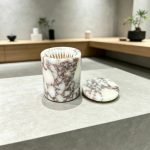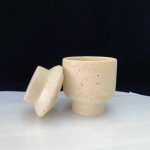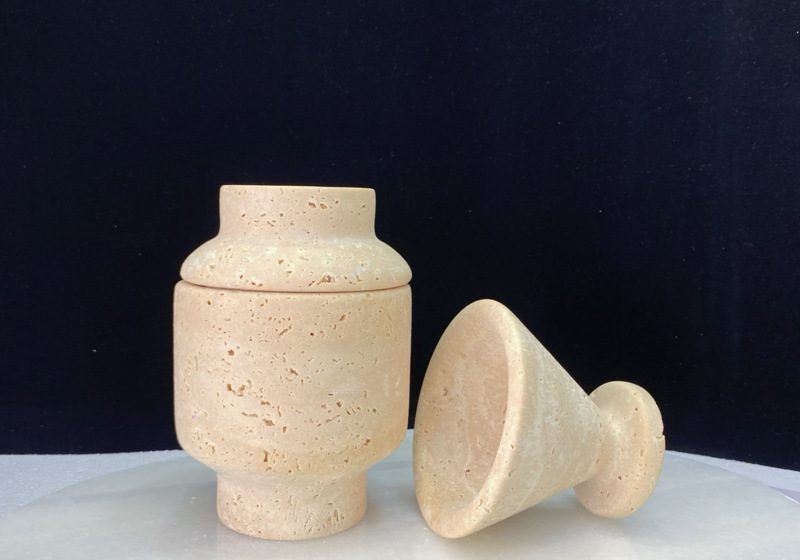

Single accessories decorate; sets compose. The difference is visible from the doorway — one object is a point, but three objects at three heights and widths are a shape, and the eye reads a shape as intentional. The travertine storage jar and aroma cup set is built on exactly that grammar: a tall lidded jar, a stemmed cup, and an oval tray, all carved from the same speckled beige stone, sold as one composition for the counters and consoles that deserve better than a pile of small purchases.
Anatomy of the Trio
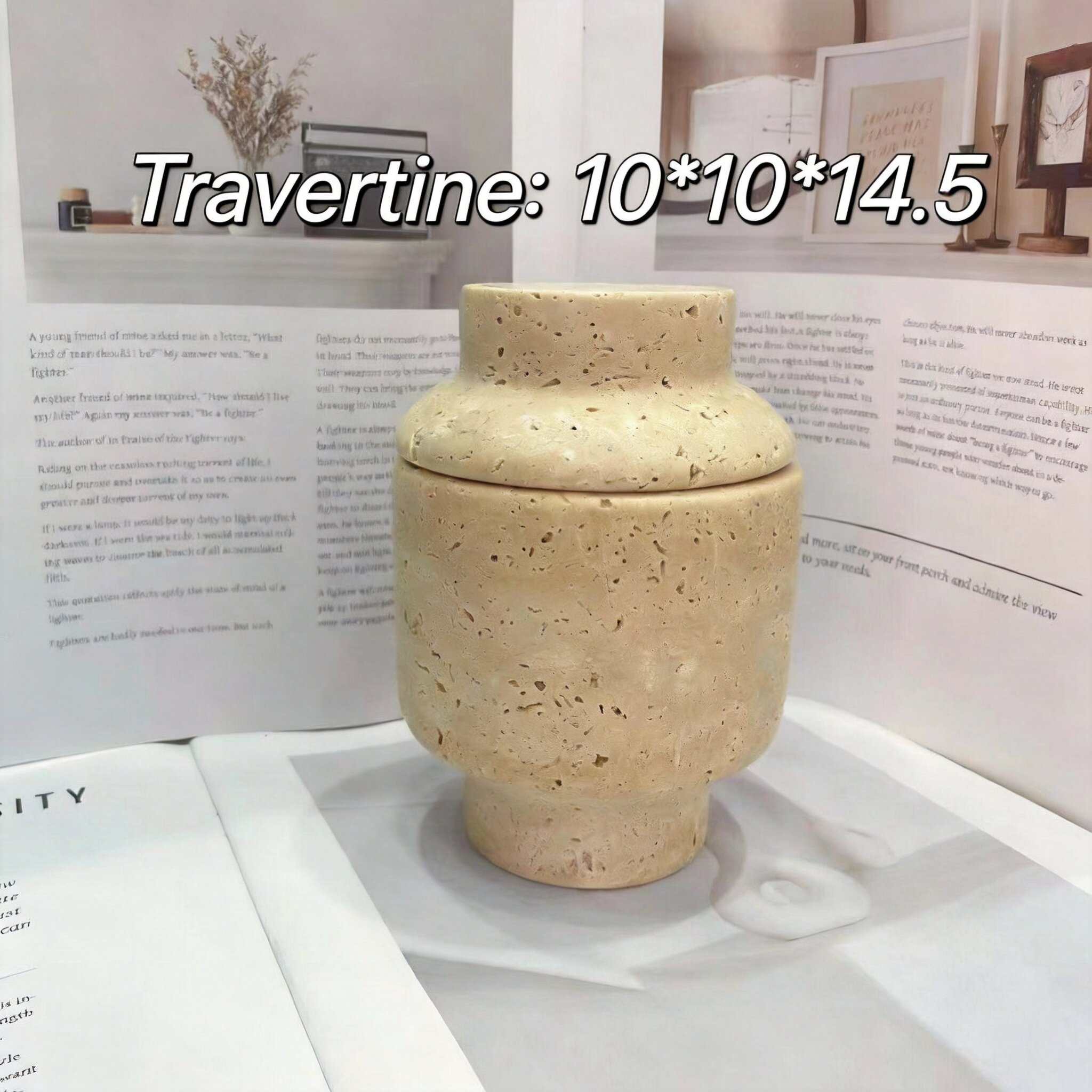
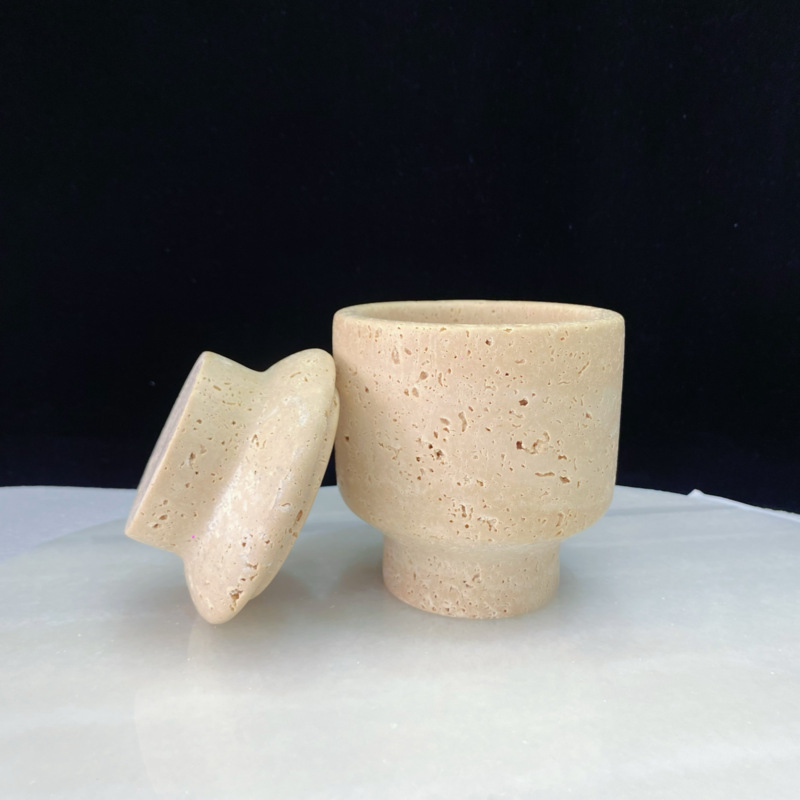
Each piece carries a different job, and the trio works because the jobs do not overlap. The storage jar, ten centimeters across and fourteen and a half tall, is the vertical note: a turned vessel with a stepped shoulder and a heavy round lid, sealing cotton balls, tea, salt, or the small objects that otherwise wander. The aroma cup is the sculptural one — a wide funnel bowl raised on a stem, the exact silhouette boutique hotels use as diffuser vessels. The oval tray, twenty-six by thirteen centimeters, is the ground note: it gathers the pair, catches drips, and by itself becomes the catchall for keys, rings, or a folded note. Tall, wide, and flat — the three shapes every styled surface needs, arrived in one box speaking the same stone.
Why Speckled Travertine
The stone is the quiet reason the set works. Speckled travertine — a beige ground scattered with dark mineral freckles — is the chameleon of the decor palette: warm enough for linen and oak, plain enough for concrete and matte black, patterned enough that a white room never reads sterile. Smooth cream marbles photograph cooler than they feel; speckled travertine photographs exactly as warm as it feels, which is why hotels and model homes order it by the pallet. The freckling also hides life. A polished white marble shows every ring and crumb; this stone absorbs them into its own dots and drifts. For a working set — a jar that opens daily, a tray that catches everything — that forgiveness is not a detail. It is the reason the pieces still look right in year five.
The Aroma Cup, Demystified
The stemmed bowl confuses buyers until they meet its hotel origin story. Lobbies and spa receptionists keep wide, shallow stone vessels beside the register; a few drops of essential oil go into the bowl, the stone’s porous face holds the scent and releases it slowly for hours, and the vessel never looks like equipment. The same trick works at home: five drops of lavender by the bed, citrus by the entry, cedar by the sofa. A tea light beneath a heat-safe dish turns the same cup into a warming diffuser, and in summer the bowl holds a floating flower head or a scoop of water with a sprig of anything. The point is that the cup earns its sculptural keep even empty — the scent is a bonus the stone was already shaped to deliver.
Where the Composition Lives
- Entry console: the full trio on the tray — keys and coins land in the bowl’s shadow, the jar seals the pocket debris.
- Bathroom counter: jar for cotton, cup for the oil ritual, tray catching the water rings glasses leave.
- Bedside: the cup by the lamp with lavender drops; the jar takes the watch and the hair ties.
- Living room: the trio on the coffee table as a still life — the set’s most photographed role.
- Kitchen: jar for salt, cup for utensils, tray under the oil bottle — stone shrugs off what wood cannot.
Splitting the Set
Here is the part sellers rarely admit: a good three-piece set is three good solo objects that happen to share a stone. The tray migrates to the vanity within a month of most purchases. The jar ends up in the kitchen more often than anyone predicts. The cup stays wherever the evening happens. That is not failure — it is the set doing double duty as a family of pieces, and it is the test that separates carved stone from matched ceramic ensembles, which only ever work as a group and sulk apart. Buyers who split theirs report the remaining pair re-arranges itself without complaint, because two shapes at two scales still compose. And at holiday time the pieces reunite on one tray and the original still life returns, full cast, no rehearsal needed.
The Tray Is the Anchor
Of the three pieces, the oval tray does the least dramatic work and holds the composition together. Without it, a jar and a cup are two objects that happen to share a shelf; with it, they are a group with a border, and the border is what the eye reads as intention. The tray also multiplies the set’s usefulness in ways the taller pieces cannot: it is the catchall by the door, the safe zone under the oil bottle in the kitchen, the valet on the dresser where a watch spends the night. At 26 by 13 centimeters it fits the average console depth with a hand’s width to spare on either side, and at 1.7 centimeters thick it reads as a plate rather than a plank. Most interiors have room for one more tray. Almost none have a piece of carved stone waiting to be it.
What to Check Before Buying Any Stone Set
Sets are where stone shortcuts hide, because three pieces triple the surfaces to finish. Lift each piece: real travertine has honest, low-slung weight, and a suspiciously light jar is resin wearing stone’s costume. Run a finger around every rim — jar mouth, lid seat, tray edge — and reject any sharp or raw seam; hand-ground edges are the first thing skipped in cheap production. Set the lid on the jar: it should seat flush with no wobble and no rock. Stand the cup on the tray: the foot should sit silent. Finally, compare the freckling across the three pieces — they should read as one stone family without matching like laminate. Natural variation is the signature of real material; identical pattern across three pieces is the signature of a mold. The upside of checking once is that stone holds its approval: nothing peels, nothing delaminates, and the set you verify on day one is still verifiably yours in year ten.
The Gift Math of Sets
Stone sets occupy a peculiar sweet spot in gift-giving: they are substantial enough to feel like a real present and practical enough to actually get used, which is the combination weddings and housewarmings are impossible to buy for. A single accessory risks guessing wrong about someone’s taste; a set in neutral stone guesses right almost always, because beige travertine flatters every interior currently being lived in. The three-piece box also solves the scale problem — it weighs and presents like the major gift its price suggests, and the recipient uses all three pieces within the first week, which is the quiet test of a gift that worked. Add a small bottle of essential oil to the wrapping and the present completes itself: the ritual, the tool, and the stone, all in one bow.
Frequently Asked Questions
What are the exact sizes of the three pieces?
Storage jar Ø10 × 14.5 cm, footed aroma cup Ø10 × 8 cm, oval tray 26 × 13 × 1.7 cm — all hand-carved from the same speckled travertine.
How does the aroma cup work?
A few drops of essential oil in the wide bowl release slowly through the porous stone for hours. A tea light beneath a heat-safe dish warms it further.
Do the three pieces match exactly in pattern?
They read as one stone family but no two pieces freckle alike — that natural variation is the signature of real travertine, not a flaw.
Bring one home: the Travertine Aroma Cup & Storage Jar Set — $129, hand-carved and polished, ships worldwide in a rigid carton.
Read next: hotel quiet luxury: the diffuser-cup trick and the vanity stone, explained.