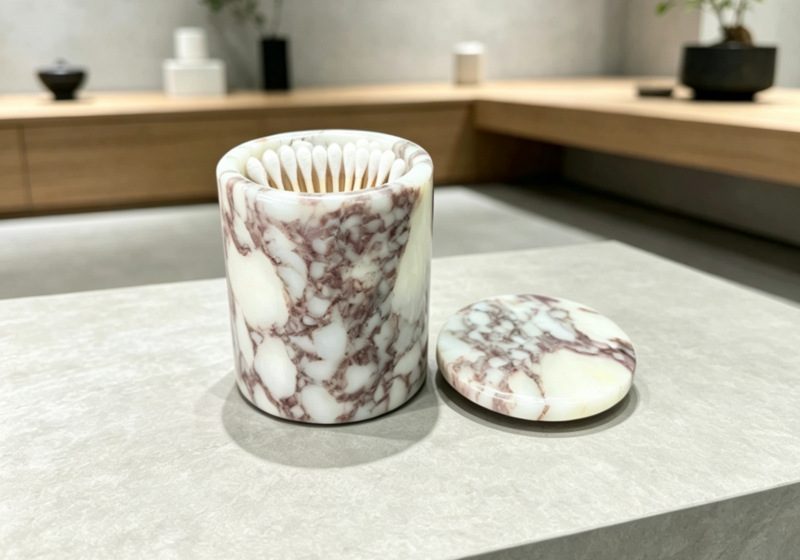

For a decade the styling advice for every counter was the same: corral small things on an open tray. It looked wonderful in photographs and lasted about a week in real life, because open storage has a flaw the camera never sees — dust, steam, and the fine grey film a bathroom manufactures overnight. The correction is already visible in every boutique hotel: the lidded jar. The BVLGARI purple marble cotton swab holder is the stone edition of that correction, and its rise says something larger about how counters are being organized now.
Why Closed Storage Won
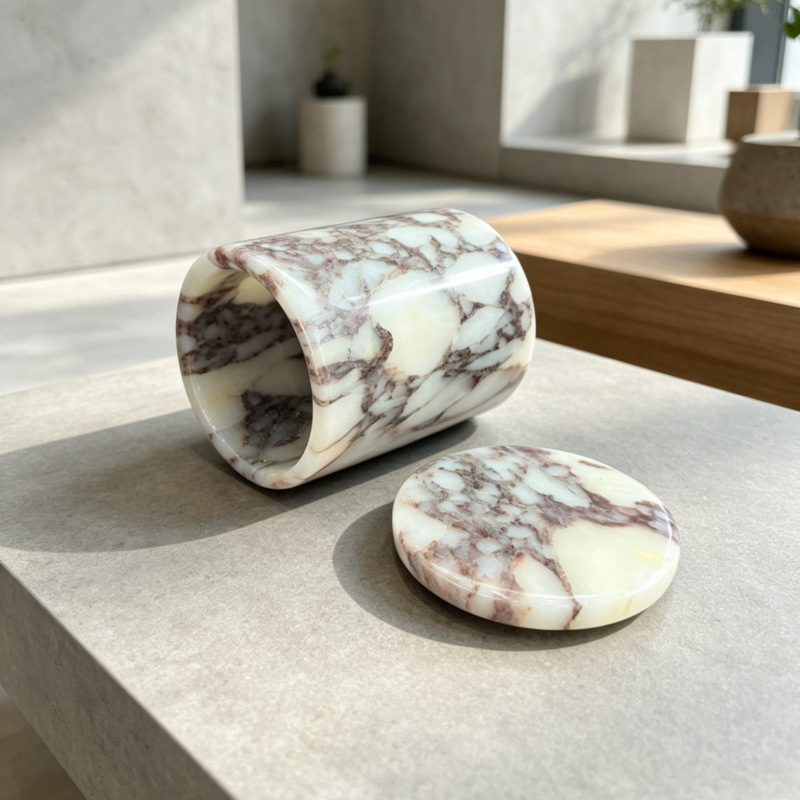
An open dish does one job — visibility — and surrenders three: hygiene, freshness, and calm. Swabs in an open bowl catch steam and everything airborne; cotton pads go stale before the bag is finished; and a tray of seven small dishes reads, to the eye, as clutter in costume. A lidded jar flips the arithmetic. Closed volumes read as order even when the drawer behind them is a disaster, because the eye counts shapes, not contents: one stone cylinder is one decision, while seven dishes are seven. Hygiene follows the same logic — a sealed jar keeps its contents exactly as clean as the day they went in, which is why hotels, the only businesses that must reset a bathroom perfectly every single day, moved to lidded vessels long before homes did.
The Material Ladder
Lidded jars come in a hierarchy of honesty. Acrylic is cheap and clouds within a year, yellowing exactly where the light hits. Ceramic glazes chip at the lip, the one edge a lid touches daily. Glass shows everything — including the smudges — and weighs nothing, so it travels off the counter by accident. Solid stone sits at the top of the ladder for unglamorous reasons: a marble canister weighs around a kilogram, so it does not slide or tip; it cannot chip in a way that matters, because the material is the same all the way through; and it never clouds, because there is no glaze to cloud. The purple-veined version adds the one thing utility jars never had — a pattern worth keeping out on display rather than hiding under the sink.
One Jar, Many Rooms
The understated talent of a lidded canister is how many jobs it holds without changing shape. Bathroom: swabs and pads, obviously. Dressing table: the jewelry jar — rings through the day, earrings at night, everything visible through the open top and sealed from dust when the lid goes on. Desk: paperclips, SD cards, the small tech debris that drawers were supposed to solve and never did. Kitchen: salt, tea, the good peppercorns. Entry console: the jar by the door that eats keys and coins. The perforated-lid version adds a public role — set it out for guests and it quietly says the host thought about them, which is hospitality performed by an object. A jar that does five jobs earns counter space in five rooms; almost nothing else at the price does.
The Counter Edit, In Three Moves
Here is the reset that turns any crowded counter into the hotel version. First, decant: everything in retail packaging — swabs, pads, floss picks — moves into vessels, because branded plastic is visual noise and stone is not. Second, close: anything that gathers dust goes behind a lid, and anything used daily goes into the jar with the perforated top. Third, clear the runway: at least half the counter belongs to nothing at all. Three moves, ten minutes, and the surface stops being a storage problem and becomes a composition. The purple marble jar is the piece that survives every version of the edit, because it is both the tool and the decoration — remove everything else and it still justifies its spot on looks alone.
Pairing Stone With What You Own
A purple-veined jar is bolder than the beige-stone family most counters already have, but it pairs by the same rule: matte with matte, one pattern per surface. Beside white or cream ceramics it is the accent; beside brass and black fixtures it is the warmth; beside other marble it should be the only veined piece, letting plain stones play quiet. In a wooden or japandi interior the wine tones bridge the linen and the oak — purple sits between warm and cool better than any other deep color, which is why it flatters both palettes. The one surrounding to avoid is busy pattern: a jar this veined wants plain neighbors, tile included. Give it a calm surface and the veining does what good marbles do — it looks different every time you glance at it, which is the difference between decor and wallpaper.
Sizing the Jar to the Habit
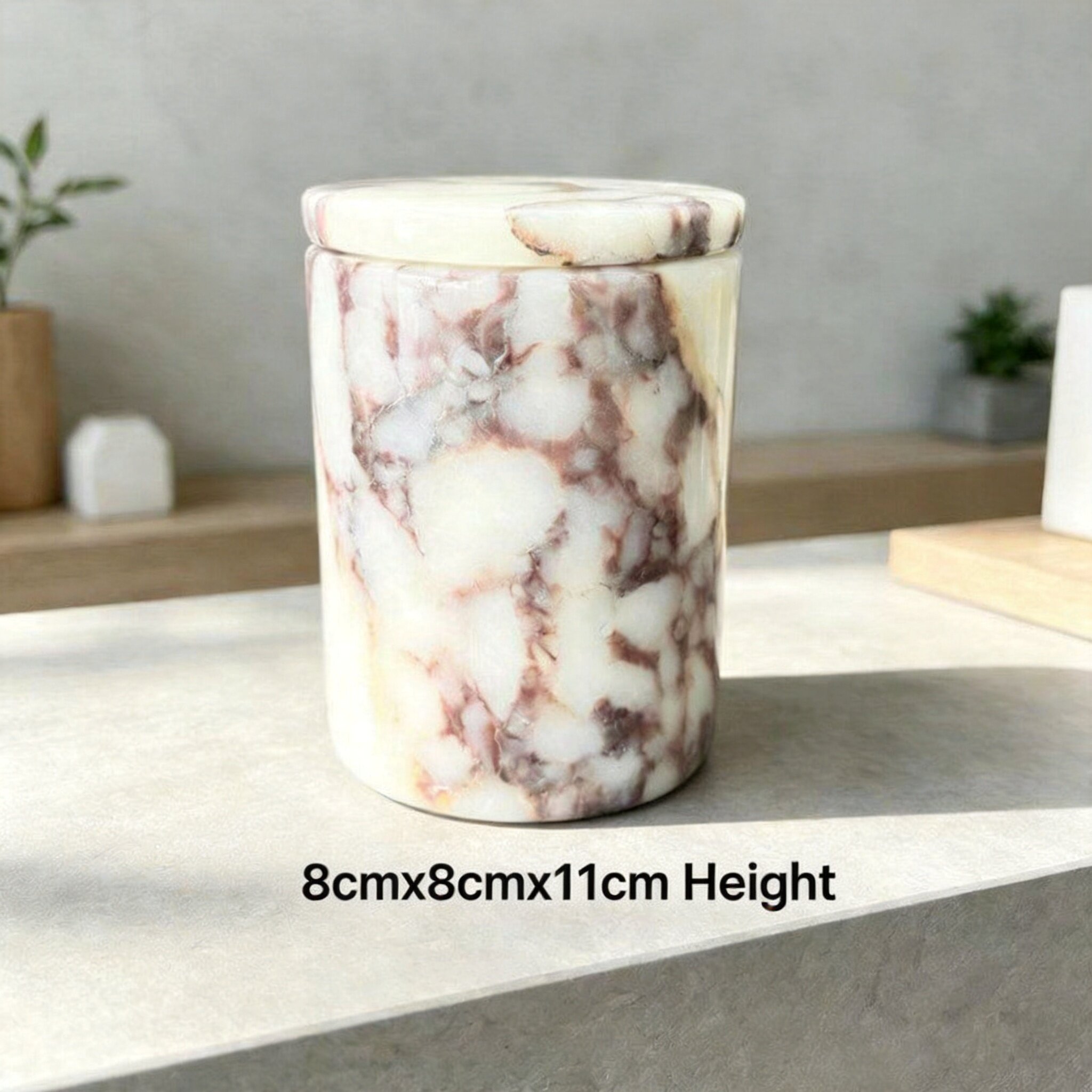
The eight-by-eleven-centimeter cylinder is not an arbitrary size — it is the volume most vanities actually use. Standard cotton swab boxes hold roughly three hundred sticks, and the jar swallows a full box with room for the dispenser lid to work; a stack of cotton pads stands along the wall in a single layer; a week of daily use never empties it. Smaller jars make refills a chore by the second week, and larger canisters dominate a counter that also holds soap and a tumbler. At eight centimeters across, the jar occupies the footprint of a coffee mug — the one volume of counter space every bathroom already reserves — and rises just high enough to clear the faucet’s shadow. Size, like weight, is the kind of decision nobody notices when right and everybody notices when wrong.
The Guest-Bathroom Signal
Of all the places a lidded jar works, the guest bathroom is where it earns the most reputation per square centimeter. Visitors judge a house by the room they are given private access to, and the details they actually remember are the practical ones: a fresh towel, a working light, and somewhere to find a cotton swab without opening your cabinets. A perforated marble jar placed at hand height answers the last one wordlessly. It is also the rare accessory that improves with use — the jar guests open, weigh in the hand, and ask about. Hosts report the question so reliably that the jar has become a small piece of conversation furniture, which is more than any acrylic organizer ever managed.
Buying Stone Once
The honest accounting of a stone jar is not against the acrylic version — it is against the five acrylic versions you would buy in the same decade. Plastic organizers live eighteen months before clouding, cracking, or simply going out of style with the season; a marble canister has no fashion to expire and no finish to peel, and it holds its value the way all solid-stone objects do, by being heavy enough that nobody ever throws it away casually. Buy once in a pattern you like looking at, and the jar moves rooms and houses for as long as you keep finding small things that deserve better than a drawer. That is the whole pitch of stone storage: it is the last version of the object you will need to buy.
Frequently Asked Questions
How much does the jar weigh?
About a kilogram of solid marble — enough that it never slides or tips on a wet counter, and every lift feels deliberate.
Will the flat lid keep cotton pads fresh?
Yes — the lid seats flush and seals the interior, so pads, swabs, and small jewelry stay exactly as clean as the day they went in.
Is it suitable as a gift?
It wraps in its own carton, weighs like a real present, and suits nearly every interior — one of the rare practical gifts that photographs like jewelry.
Bring one home: the BVLGARI Purple Marble Cotton Swab Holder — $69, hand-carved and polished, ships worldwide in a rigid carton.
Read next: BVLGARI purple marble, the vanity stone and the hotel diffuser-cup trick at home.