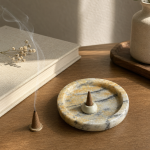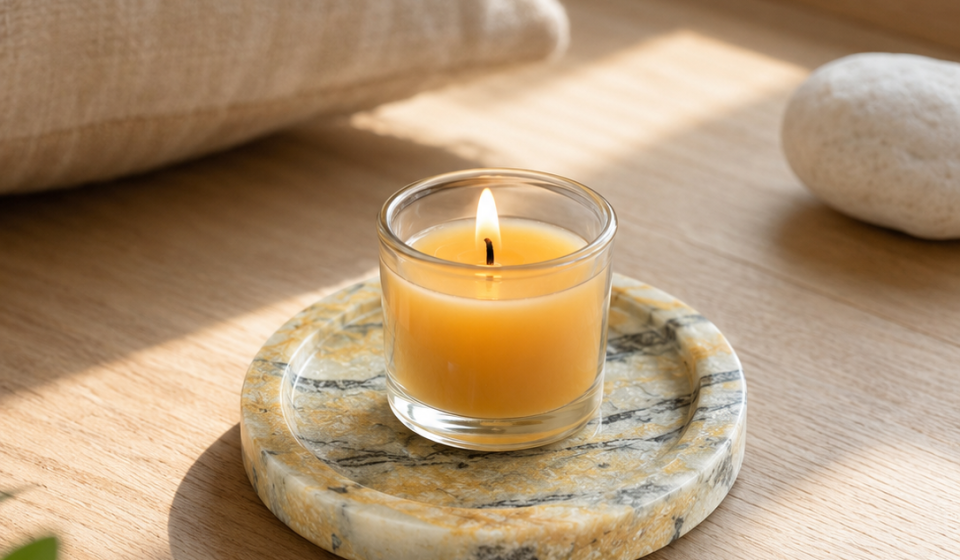

A catchall tray is one of those objects you do not know you need until you have one, and then you wonder how the surface stayed tidy without it. Our Natural Marble Round Catchall Tray takes that idea and grounds it in natural stone — a small, circular home for the everyday essentials that otherwise drift across the basin or the dresser. This guide walks through where to place it, how to choose among nine natural stones, and how to keep it looking its best for years.
Three places it earns its keep
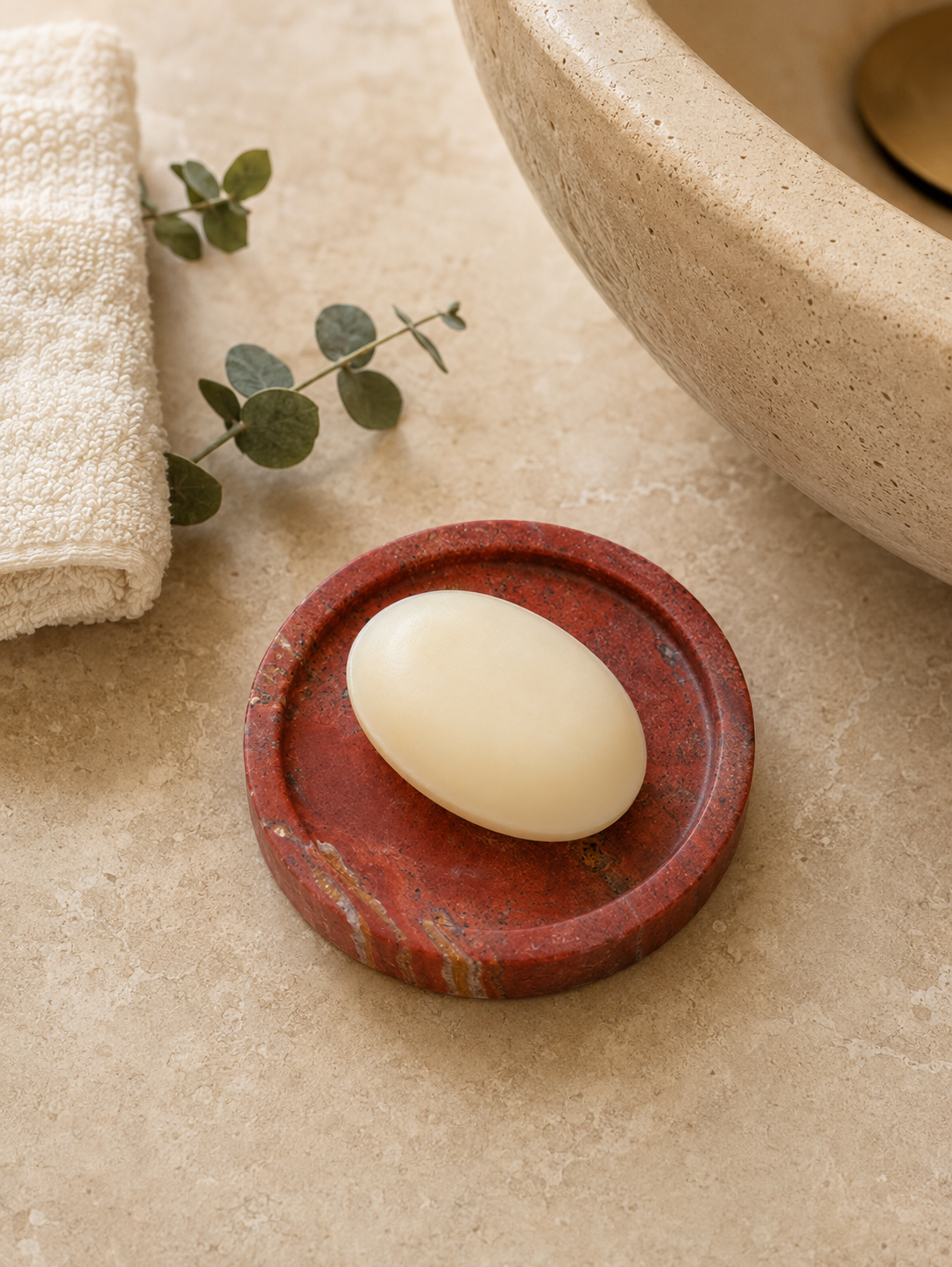
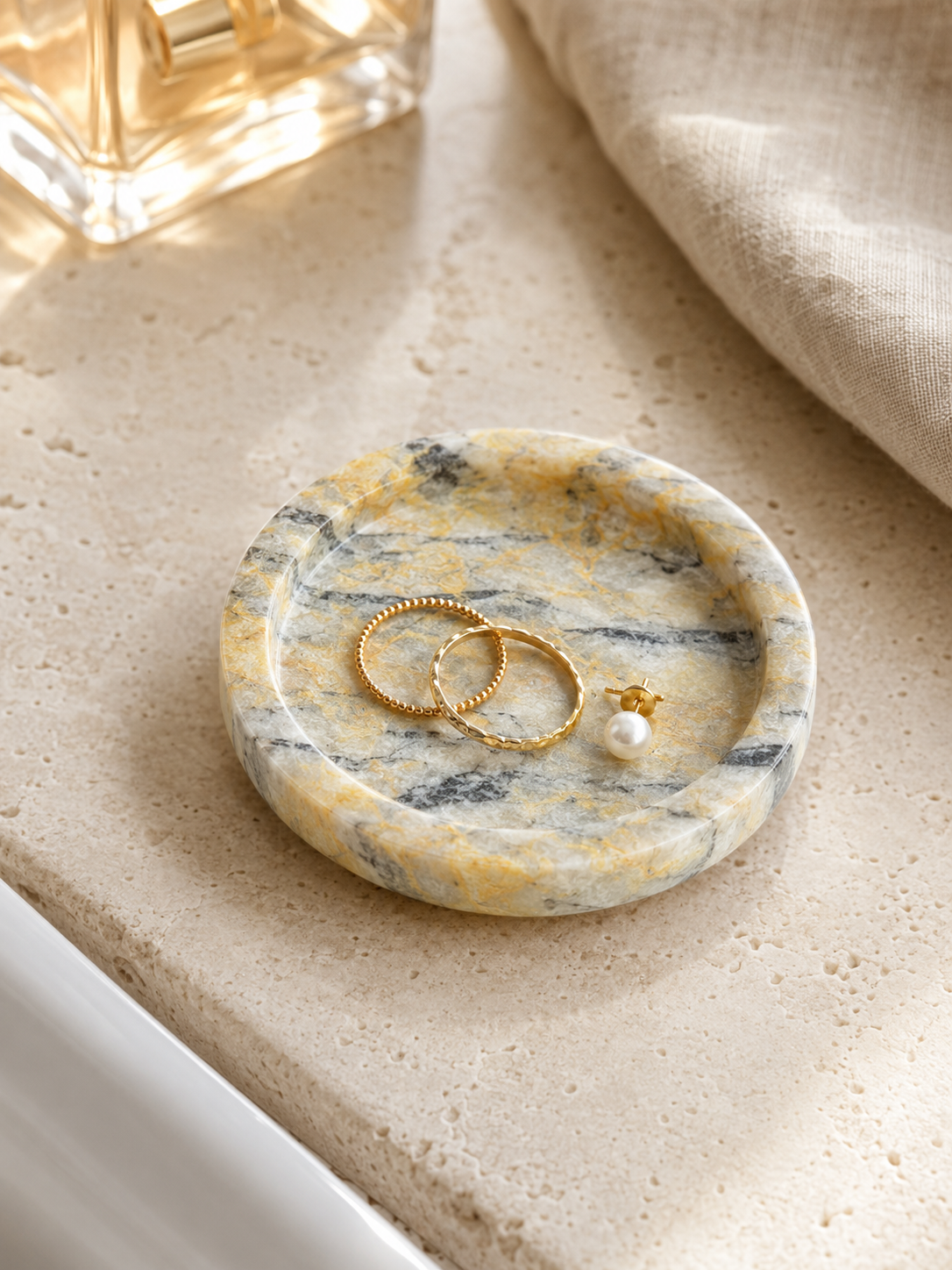
The bathroom basin is the obvious first home: a soap bar, a razor, and the ring you take off to wash up, all in one calm circle. The vanity — bedroom or bathroom — is the second: a watch, a pair of earrings, a dab of balm, a small essential-oil bottle, gathered instead of scattered. The third is the entryway, where keys and loose change stop being a daily small crisis. In each spot the tray does the same quiet work: it defines a zone, signals intention, and keeps the eye from landing on clutter.
Choosing among nine natural stones
The nine options split into moods. For a warm, earthy, welcoming space, Travertine and Red Travertine are unbeatable; Ink Yellow adds a graphic, surprising warmth. For bright, clean, gallery-like rooms, Carrara White and Fendi White deliver that crisp near-white calm. If you want the room to feel designed rather than decorated, the greens — Emerald, Fendi Green, Cloud Jade — and the misted Wave Grey do the heavy lifting with almost no effort. A simple rule: pick one stone per room for a quiet look, or set two contrasting stones side by side for a deliberate bit of tension. Because each tray is cut from a single block of natural stone, the veining you get is unique to your piece.
Caring for natural stone
Natural stone is durable but not invincible. Clean with a soft, damp cloth and a mild soap; keep acids and abrasives — vinegar, citrus, bleach — far away, as they can etch the surface. Dry the tray after use rather than leaving it in a puddle, and every few months a light stone conditioner will keep the honed face from looking thirsty. Do that, and the tray will outlast the bathroom remodel that surrounds it. The sealing we apply at the workshop handles everyday humidity, so a bathroom is genuinely a good home for it — just not a swimming pool.
Why natural stone, not ceramic or plastic
Ceramic can chip and plastic always looks like an afterthought. Natural stone sits between them with a weight and a depth that no molded material reproduces: the cool touch, the slow movement of veining, the knowledge that the object was once a mountain. For the price of a typical decorative piece, you get something that is both useful and genuinely made of the earth — and that duality is rare. It is also quietly sustainable in the ways that matter: one honest stone tray replaces a procession of disposable dishes.
Gifting and pairing
A single stone tray in a chosen color is a refined, gender-neutral gift — housewarming, wedding, host gift — that reads as considered rather than costly. Pair two trays in contrasting stones on a shared vanity, or set one beside a matching soap for a small, complete gesture. However you use it, the tray asks very little and gives back a small, daily kind of order.
Grouping and gifting in multiples
One tray is a solution; two or three become a system. Set a Travertine tray by the basin and a Carrara White one on the dresser, and the house begins to feel coordinated without being matchy. In a guest bathroom, a single stone tray with a bar of soap and a small bottle reads as a quiet welcome that costs almost nothing to maintain. They also travel well as gifts: a chosen color, wrapped plainly, communicates taste far more clearly than something louder and more expensive. Because the trays are sealed and robust, they survive shipping and daily use alike, which is why we are happy to send them anywhere a thoughtful object might be wanted. A tray this small asks almost nothing of you and gives back a kind of daily order that is easy to underestimate until the day it is simply gone and missed.
Frequently Asked Questions
- Where should I place a natural stone catchall tray?
The three best spots are the bathroom basin (soap, rings), the bedroom or bathroom vanity (watch, earrings, oils), and the entryway (keys, loose change). Any flat, dry-ish surface works. - How do I choose among the nine colors?
Match the stone to the room: warm Travertine or Ink Yellow for cozy, earthy spaces; Carrara White or Fendi White for bright, clean looks; the greens and Wave Grey for a calmer, more designed feel. Pick one tone per room, or mix for contrast. - How do I care for a natural stone tray?
Wipe with a soft, damp cloth and a mild soap. Avoid acidic or abrasive cleaners (vinegar, bleach). Dry it after use, and every few months a light stone conditioner keeps the surface from drying out. - Is it safe in a humid bathroom?
Yes. The stone is sealed for everyday use and handles bathroom humidity better than wood. Just avoid leaving it in pooled water for long periods. - Can it be a gift?
Absolutely. A single stone tray in a chosen color makes a refined, gender-neutral gift for a housewarming, wedding, or host — small, useful, and genuinely made of the earth.
Explore the full nine-stone collection on the Natural Marble Round Catchall Tray product page — pick a single tone for a quiet look, or mix stones across a room.