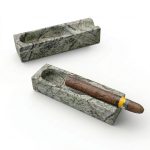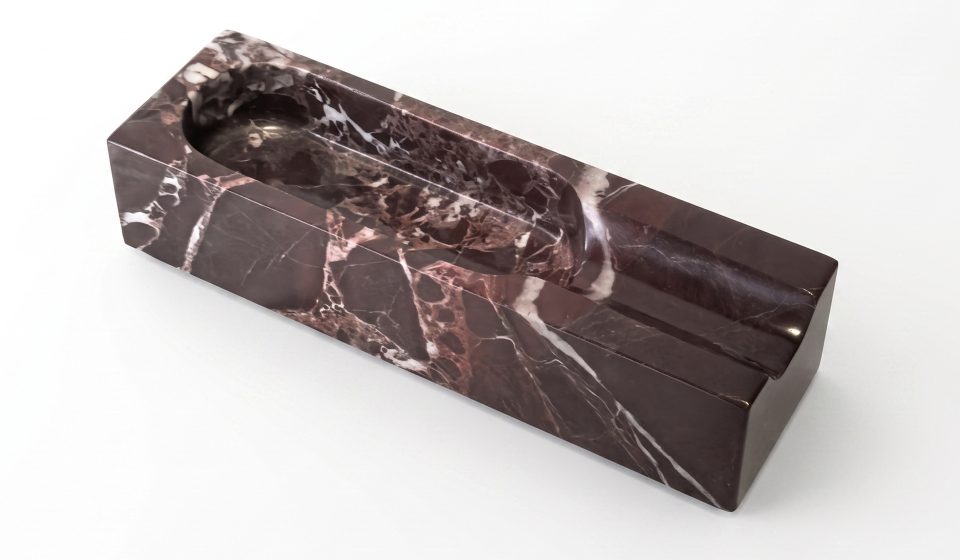

Two blocks of marble, the same shape, the same price, the same dimensions. The only decision left is which one you want on the table — and because these two stones sit at opposite ends of the palette, that decision is less reversible in practice than it looks on a product page.
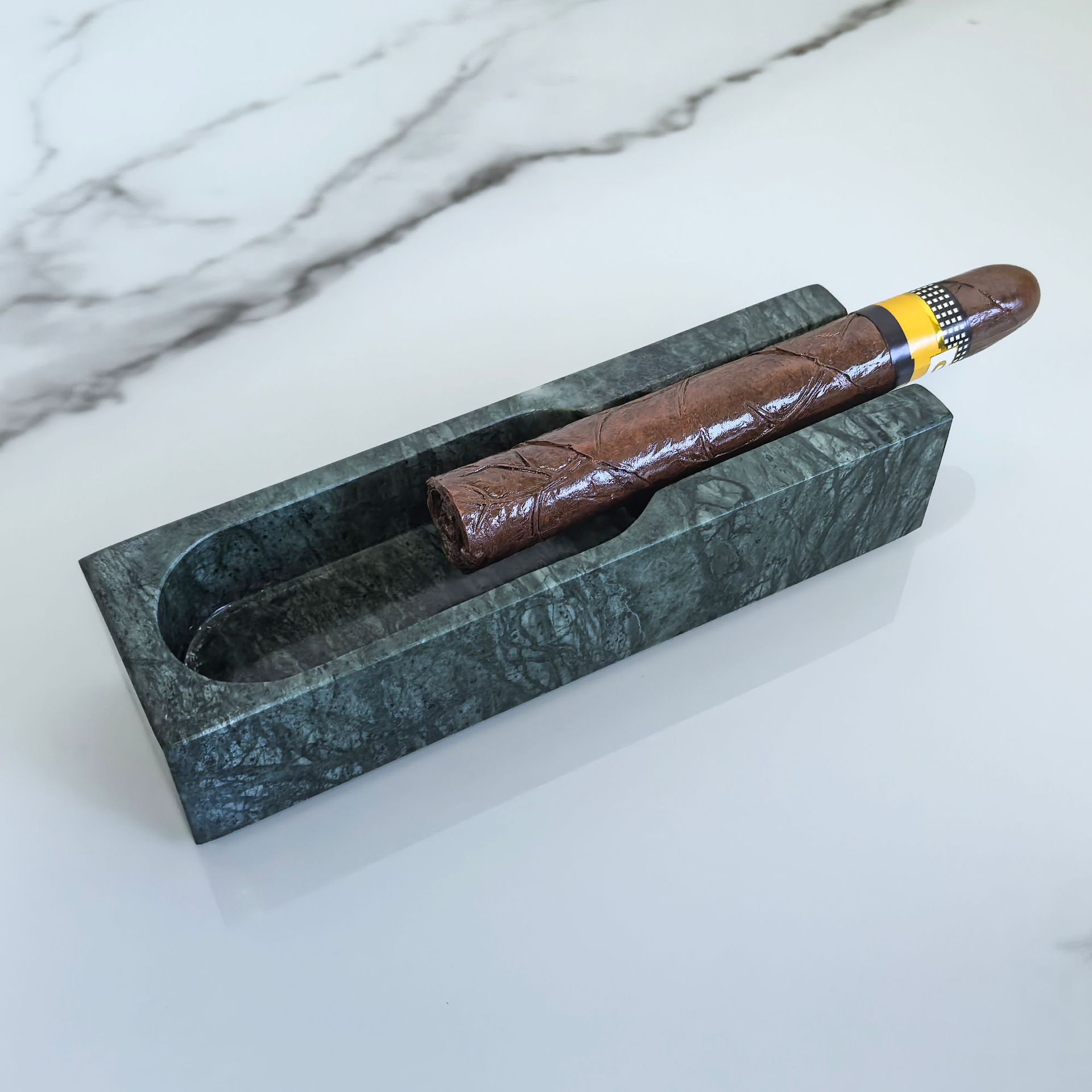
Both are available on the Natural Marble Long Cigar Ashtray, a 17 x 5 x 3.5cm block with an ashtray bowl at one end and a grooved cigar cradle at the other. The shape and the polished finish are identical across the range. Only the stone changes, and the stone changes a great deal.
How to read a block of marble before you choose
Marble is metamorphic rock: limestone that has been compressed and heated until its calcite recrystallised. What you see on the surface is the record of that process — the veining is where mineral impurities were folded through the stone, and the base tone is the colour of the calcite itself.
Two consequences matter when you are buying.
The first is that no two blocks are the same. A quarry face produces a range, not a colour, and a supplier cutting a long run of ashtrays will move through that range as they work. The piece that arrives will be recognisably the stone you chose and visibly not the piece in the photograph.
The second is that the tone shift is larger on darker stones. A pale marble stays roughly pale across a whole slab. A deep burgundy marble can run from a translucent wine red to virtually black within a few centimetres, because the mineral concentration that makes it dark is uneven. That is the biggest single difference between the two stones here, and it is the one that catches people out.
Rainforest Green: the stone that disappears into a room
Rainforest Green is a soft, cool green carrying pale mineral veining and a certain amount of grey in the base. It is not a vivid green. In daylight it reads closer to a weathered sage; under warm interior light it picks up a faint olive cast.
That restraint is the point. On a pale oak table, a white balcony surface or a limestone-look console, the green ashtray blends rather than contrasts, and the object stops announcing itself. If you want the ashtray to be part of the furniture — a surface that happens to hold a cigar — this is the one.
It is also the more forgiving of the two in daily use. Ash dust and dried water spots simply do not register against a mid-tone, veined surface; a light green stone can go a week outdoors without looking neglected. For a balcony table, a garden room or a covered terrace, that matters more than any aesthetic argument.
The trade-off is visual weight. Against a similarly toned surface, the block’s edge is hard to read at a glance, and the object loses some of the presence that makes a heavy stone rest feel deliberate.
Purple: the stone that becomes the object
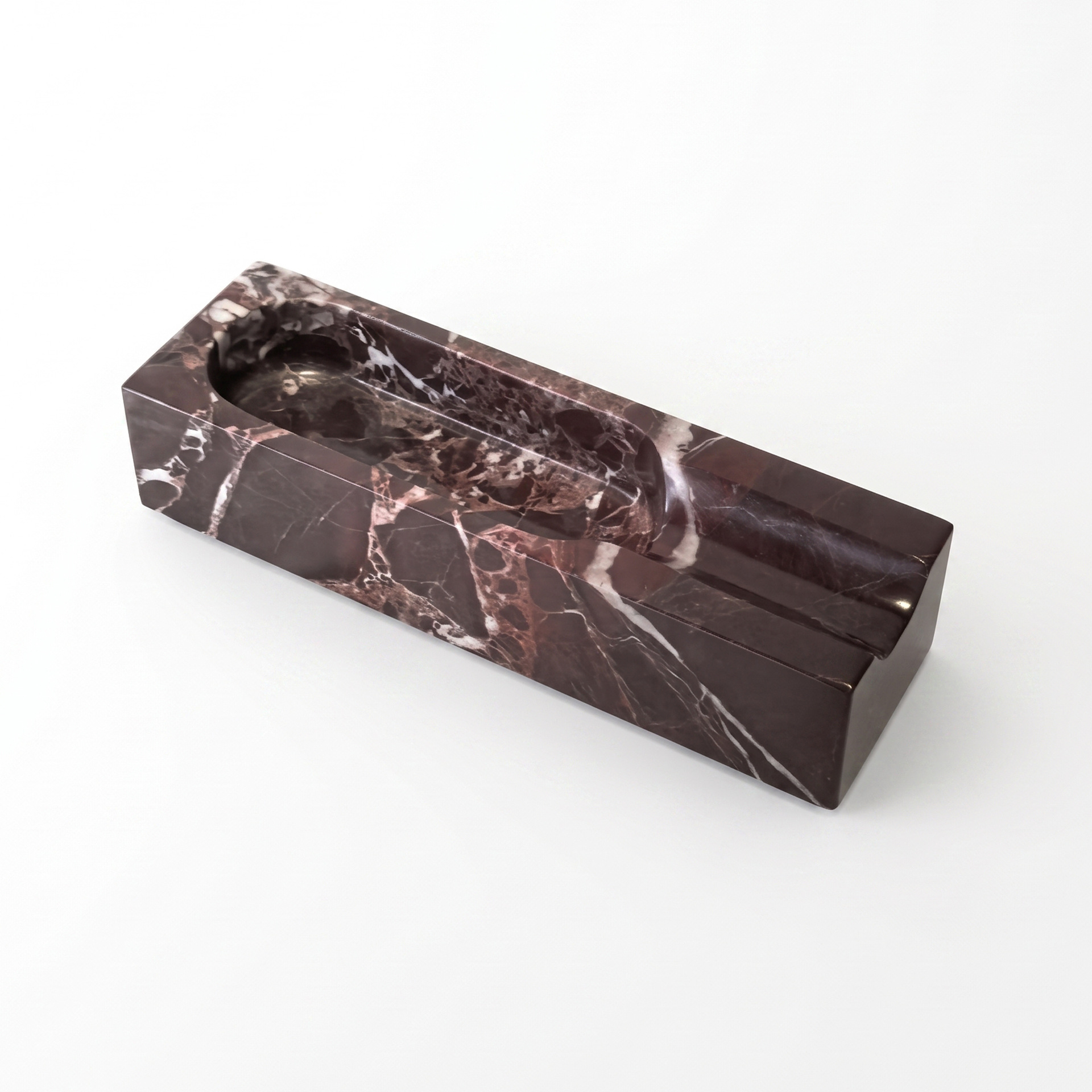
The purple is a deep plum-burgundy ground cut through with bold white and rust-coloured veins. In the hand it reads as wine rather than as a colour, and the veins are dramatic enough that each face of the block looks like a different piece of stone — which is exactly what it is, because a rectangular block exposes three faces of the same vein structure.
There is nothing subtle about it, and that is its value. On a dark wood side table, a black console or a bar cart, it holds the eye and reads as a considered object rather than a utility. In a study or a cigar lounge, where accessories are already part of the decor, it looks like it belongs.
Two practical notes. Polished dark stone shows dust, fingerprints and dried water spots sooner than light stone does — not dramatically, but enough that a two-second wipe after use becomes the habit that keeps it looking even. And the tone range is wide: expect the piece to run lighter or darker than the photograph, and expect the white veining to be more or less prominent, because that is how the mineral banding falls across a cut block.
Polished finish: what it changes on each stone
Both stones are supplied polished rather than honed, and the finish behaves differently depending on the base tone.
On the green, polish produces a low, broken sheen. The pale veining interrupts the reflection, so the surface never looks like glass; it looks like stone that has been cared for. It is an easy surface to live with, and it hides the fine surface marks that a lighter stone accumulates.
On the purple, polish does something more theatrical. A dark, near-uniform ground reflects cleanly, so the veins appear to float above it, and a candle or a lamp beside it will show as a soft highlight along the veins. It is the more striking finish by a distance — and the less forgiving one, for the reasons already given.
Neither finish is sealed against acid. Vinegar, lemon and wine will etch calcium-based stone, and the dull patch they leave cannot be wiped away. On a piece designed to sit beside a glass, that is worth knowing before the first spill rather than after. Tilt and blot rather than wiping across the face: the wider an acid is spread, the larger the etch.
Matching the stone to the surface
The reliable rule is to match the stone to the surface it will stand on, not to the wall behind it.
Pale oak, ash, travertine, white marble, cream plaster: either stone works, and the choice becomes a matter of temperament. The green disappears; the purple becomes the focal point. On a light surface, the green is the safer buy and the purple is the better photograph.
Dark walnut, black metal, dark stone, glass: the purple belongs here. Against a dark ground the white veining gives the block a silhouette, which the green would lose entirely. This is the combination the stone was cut for.
Outdoors, uncovered, or in a garden room: the green. Uncovered stone collects everything the weather brings, and a mid-tone veined surface conceals more of it than a polished dark one does. Frost and rain will not damage marble, but they will make the maintenance difference between the two stones obvious.
An office, a car, or a table shared with other people: the green again, purely because scratches and scuffs from a communal surface show less. Polished dark stone records every encounter.
Care is identical for both
The routine does not change with the colour, because the finish does not. Wipe with a soft dry cloth; use warm water with a pH-neutral stone soap for anything stubborn; dry the surface immediately afterwards. Standing water is the most common cause of marks on polished stone, on light and dark alike. Never use abrasive pads or acidic cleaners — on either stone, they take the polish off and leave a dull patch that has to be professionally repolished. Our full marble care guide covers stain removal and what can and cannot be fixed.
Two notes specific to a smoking accessory. Ash is harmless to marble and can be tipped out and left; resin is the one that needs attention, and it comes off far more easily while the stone is still cool and the residue has not set. And a lit cigar should be rested in the cradle rather than stubbed against the bowl wall — marble survives heat and impact, but stubbing hard against an edge is the one habit that can chip a corner.
Finally, accept the variation. Both stones are quarried, not cast: the veining will not match the photographs, the depth of the bowl may differ slightly from piece to piece, and on the purple the tone shift across the block is part of what you are buying. That unpredictability is the reason no two of these look quite the same once they are on a table.
Frequently asked questions
Which of the two stones is the more durable?
Both are marble with the same polished finish, so durability is effectively identical. The practical difference is how quickly marks show: the dark purple registers dust and dried water spots sooner, while the lighter green is more forgiving and needs less attention.
Will the veining on my piece match the photographs?
No, and it should not. Each ashtray is cut from a different part of the block, so the veining pattern, the depth of the bowl and the exact tone shift from piece to piece. The purple in particular ranges from a lighter wine tone to near-black within the same slab.
Does polished marble stain from ash or cigar residue?
Not from ash, which wipes away and does not mark polished stone. Resin is the one to watch: it bonds as it cools, so wipe the cradle while the stone is still cool rather than letting residue set overnight.
Still deciding? Browse the Natural Marble Long Cigar Ashtray in Rainforest Green and Purple, read why a grooved rest beats a rim notch, or start from the marble ashtray buying guide.
The ashtray in this article
Natural Marble Long Cigar Ashtray — 17 x 5 x 3.5cm, polished natural marble with a deep bowl and a grooved cigar cradle, in Rainforest Green and Purple.