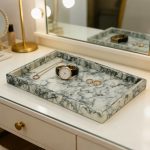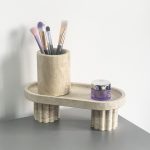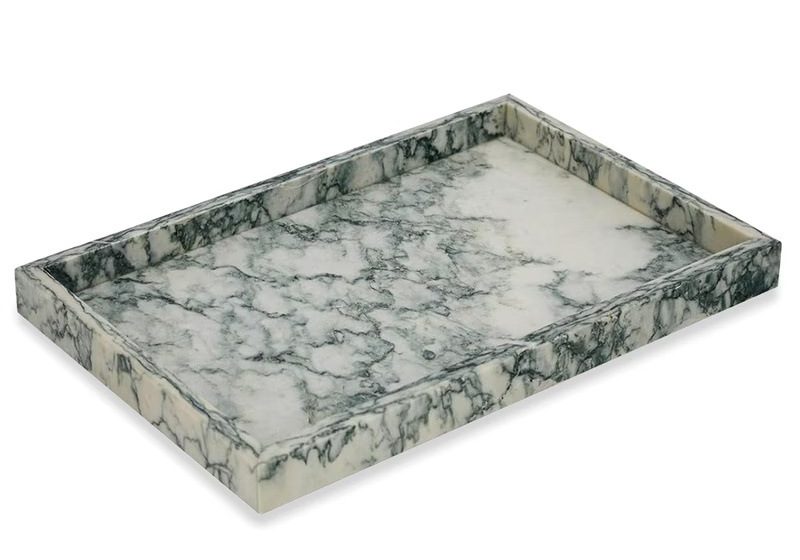

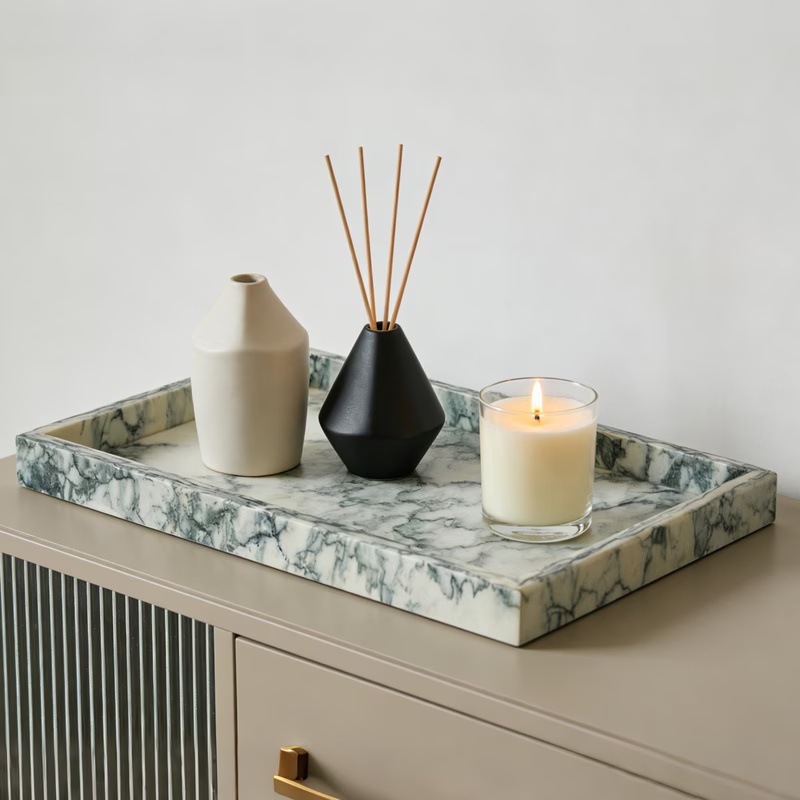
Small trays organize; large trays compose. The difference is not linear — a tray twice the size does four times the styling work, because it gathers enough objects to form a scene instead of a pile. The green travertine vanity tray, thirty by twenty centimeters, is the full-size argument: a stone panel with a raised patchwork rim that turns a perfume collection into a display, a fruit service into a centerpiece, and a bathroom counter into a finished room.
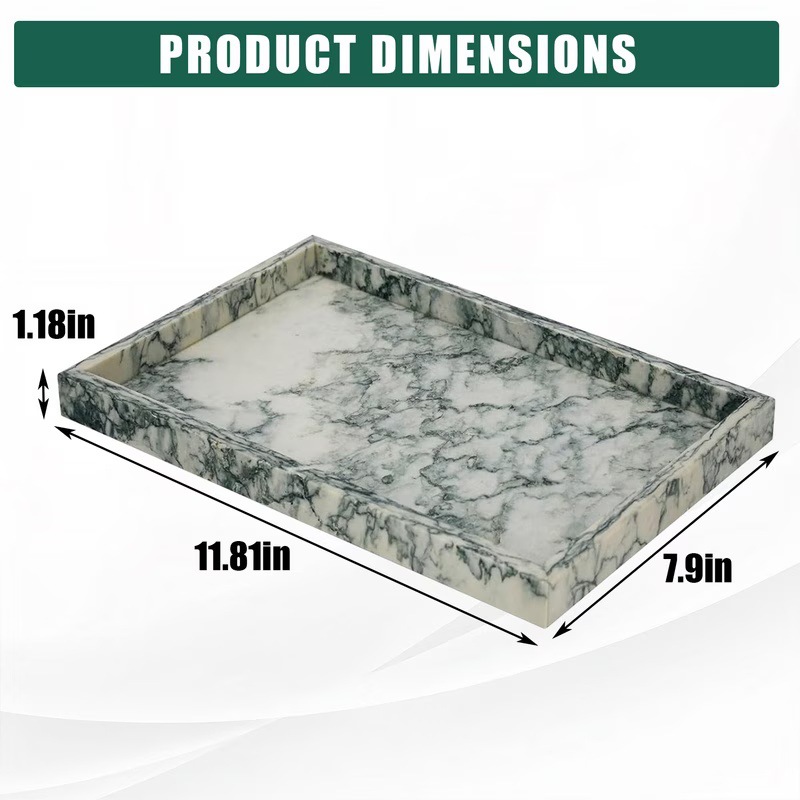
Size changes what a tray can hold. At 30 by 20, the tray’s floor takes a full fragrance lineup of six to eight bottles, or a jewelry set plus watch plus the little dishes they used to live in, or a fruit arrangement for two with room for the knife. Small trays hold the highlight; the large tray holds the whole act. And because it is stone — three centimeters thick, several kilograms heavy — it anchors that scene without any help from trays-in-training around it.
Four Rooms, Four Compositions
The vanity: perfumes along the back rim, jewelry front and center, and the tray’s pale panel with emerald webs doubles as the counter’s only permitted pattern. The coffee table: candles, a diffuser, and coasters gathered into one footprint the remote cannot escape. The kitchen island: a fruit service that survives a real family week — stone rinses, citrus rolls safely inside the rim, and nothing stains if you rinse the same evening. The bathroom: towels folded to size, skincare staged hotel-style, and the sealed stone shrugging off the humidity that ruins wicker within a season.
The One-Third Rule at Full Size
A large tray makes the classic styling rule easier to obey: no more than a third of any surface covered. Thirty by twenty occupies about a quarter of a standard vanity and a third of a generous coffee table — enough presence to anchor, never enough to crowd. Place it off-center, keep one hand-width of clearance to the nearest object, and let the tray’s own rim do the collecting. The most common mistake with big trays is centering them perfectly and filling them symmetrically; the look that actually reads as designed is slightly off-balance, with the tray carrying the small objects and one taller element — a vase, a lamp — carrying the vertical.
Staging, Photography, and the Guest Test
Show flats run on large stone trays because they photograph as architecture: a clean rectangle with a raised edge, reading as furniture even when nearly empty. The same logic serves real homes. Styled photography for a listing or a shop benefits from the tray’s geometry; guests, meanwhile, use it without being told — that is the deepest test a functional object passes. Nobody needs instructions for a tray. They need the tray to be big enough to be obvious, heavy enough to be trusted, and handsome enough to earn its counter space. This one is all three.
Care, Briefly
Damp cloth, no acid, no dishwasher; reseal yearly in wet rooms. The hand-joined rim is ground flush and sealed like every other face, so the tray cleans as one continuous surface. Real veining varies piece to piece — your tray is an original, which is the quiet luxury of stone.
Fruit, Cheese, and the Kitchen Case
Kitchens are where large stone trays quietly earn their price. On the island, the tray becomes the staging ground for whatever the day eats: citrus piled inside the rim, a cheese board moment for guests, the olive oil and salt cellar gathered off the backsplash. Stone handles everything a kitchen produces — knife marks buff out of the routine, citrus rinses away before it can etch, and heat from a serving dish is tolerated far better than on most surfaces (though a trivet under anything straight from the oven is still the rule). Unlike wooden boards, it never absorbs onion or garlic; unlike plastic, it never takes a curry stain permanently. Wipe, rinse, done — and the island reads as styled every day of the week, which is more than the fruit bowl can claim.
Buying One Large Instead of Three Small
There is an economic argument hiding in the size. A counter styled with three small objects — a dish, a candle, a coaster stack — costs more in total, collects more dust lines, and still reads as scattered. One large tray gathers the same three jobs into a single purchase with a single footprint and one wipe-down. The large tray is also the more honest gift: it fills a surface the way the recipient actually lives at it, rather than decorating a corner they will rearrange anyway. For new homes and renovated bathrooms, go large first; if a niche needs a smaller piece later, the large tray will already have taught you which one it should be.
Storage between uses is the last question, and the answer is: there is none. The tray does not go away between seasons or get wrapped in paper — it stays on the counter doing its job, which is precisely the difference between stone and the seasonal decor it replaces. If a move requires packing, the tray rides flat in its original rigid box with a towel under the rim and arrives the way it left; stone forgives careful handling indefinitely and forgets nothing except neglect.
The Guest Room and the Rental
Two rooms deserve special mention because they are where large trays overperform. The guest room survives on impressions, and the tray delivers three of them at once: a carafe and glass staged on stone says care, a folded towel says hotel, and the emerald veining says someone decorated. Total effort: one purchase, one placement. Rental hosts discovered the same math — in listing photographs, a large stone tray on the bathroom counter photographs as a luxury finish, and it survives dozens of guests a year without the chips and water rings that retire ceramic props after a season. Because the tray is sealed stone, turnover cleaning is a damp cloth, and because it weighs several kilograms, guests treat it like furniture rather than a toy. For anyone furnishing spaces that strangers use daily, stone trays are the rare decor purchase that appreciates in usefulness the harder it is used.
Finally, a word on weight, because large trays invite skepticism about carrying them. Yes, the tray is heavy — that is the feature, not the flaw — but it is also sized to be lifted by two hands from two rim edges, balanced like a serving board, and its weight sits low in the 3-centimeter profile, so it carries steadier than any object this flat has a right to. Move it once a month for cleaning and the heft becomes part of the ritual: stone asks to be lifted properly, and lifting properly turns out to be one of those small domestic disciplines that makes a house feel managed.
Frequently Asked Questions
What actually fits on a 30x20cm tray?
Six to eight perfume bottles, a full jewelry set with watch, or a fruit service for two — the tray holds a complete scene rather than a highlight.
Will it overwhelm a small vanity?
It occupies about a quarter of a standard vanity, within the one-third styling rule. Place it off-center with one hand-width of clearance and it anchors without crowding.
Is the heavy tray safe on glass or marble counters?
Yes — the base is ground smooth and the weight keeps it planted. Lift rather than slide it and neither surface takes a mark.
Bring one home: the Green Travertine Vanity Tray 30x20cm — $89, hand-carved and polished, ships worldwide in a rigid gift box.
Read next: styling the green marble tray and the watch and jewelry stone bench.