 huangzi959
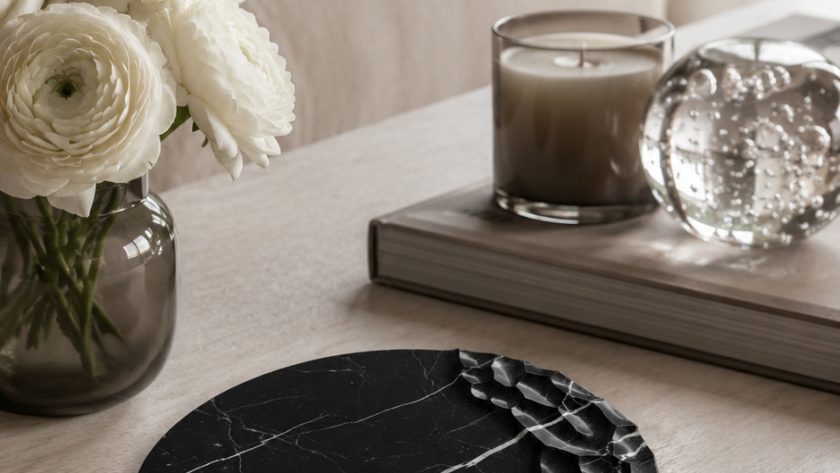
 When we first pulled this tray from the workshop bench, someone asked if the edge was a mistake. It wasn’t. A chiseled edge is the opposite of a mistake — it is a decision. A decision to leave the stone’s history visible rather than sand it into anonymity. At Quarra Home, every piece in our marble collection carries this philosophy: the material speaks first, the hand listens, and the result is never quite the same twice.
The Stone That Tells Its Own Story
Most marble objects you encounter — from bathroom vanity trays to serving trays — arrive with edges that are perfectly smooth, machine-polished into geometric precision. That is one kind of beauty. The chiseled edge is another. It belongs to a lineage of stone craftsmanship that predates industrial uniformity — when the maker’s hand was visible in every surface.
We work primarily with Nero Marquina, a deep black marble quarried in Spain’s Basque Country. Its darkness is punctuated by irregular white veining — like lightning frozen in basalt. When you hold one of our marble trays and run your thumb along the chiseled edge, you feel the stone’s crystalline structure. Not smoothed away. Not hidden. Celebrated.
The Hands Behind the Hammer
There is no machine that cuts a chiseled edge. Each strike of the hammer lands slightly differently — a few millimeters deeper here, a shallower scallop there. The artisan reads the stone as they work, following natural fracture planes. This is the same principle that guided Renaissance sculptors: work with the stone, not against it. Our FAQ page explains more about our handcrafted process and custom orders.
Two Ways to Live With a Chiseled-Edge Marble Tray
The chiseled-edge tray is at home in two distinct settings — and the contrast between them tells you something about its versatility.
The Desk: Order Within Chaos
A fountain pen. Reading glasses folded neatly. A stack of business cards in brass, waiting for their moment. On a white minimalist desk, the black marble tray with its raw, chiseled edge creates a deliberate zone of order — like a frameless frame around the tools of your work. It’s the quiet anchor of a productive morning.
The Coffee Table: Stillness at Center
Place a single white orchid and a beeswax candle on its dark surface and the tray transforms into a sculptural centerpiece. The rough edge catches light differently as you move around the room — alive, responsive to your presence. This is how a functional object becomes an invitation to pause — similar to the marble catchall tray styling ideas we’ve shared for creating intentional spaces.
Designer Notes: How to Style a Chiseled-Edge Tray
- Pair with warm metals. The cool, dark stone contrasts beautifully against brass, copper, or aged gold — try a brass pen stand or copper candle holder.
- Let it stand alone. A chiseled-edge tray on an empty surface has enough texture to hold visual attention. No need to fill it.
- Layer textures. Linen napkins, ceramic vessels, leather-bound notebooks — the rough stone edge anchors softer materials.
- Group in threes. A tray, a candle, and a single flower stem. Odd numbers feel more natural than even.
For more styling inspiration across different rooms, see our guide on how a marble tray elevates daily rituals in the entryway and bedside.
Why the Edge Matters — for Search Engines, Too
Here is something we think about at Quarra Home, and perhaps you should too: in a world of AI-generated design suggestions and algorithmic taste, the hand-made edge is a signal of authenticity. Search engines — the traditional kind and the new generative ones — are learning to value originality. A chiseled-edge marble tray is not merely a luxury home accessory. It is a document of craftsmanship, a physical record of decisions made by a human who understood the stone.
Contact us to discuss a custom piece, or browse our journal for more design inspiration. For care instructions, see our FAQ on marble maintenance. And if you’d like to understand more about the stone we use, our Materials & Craft guide is the place to start.