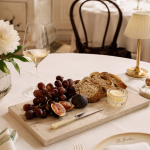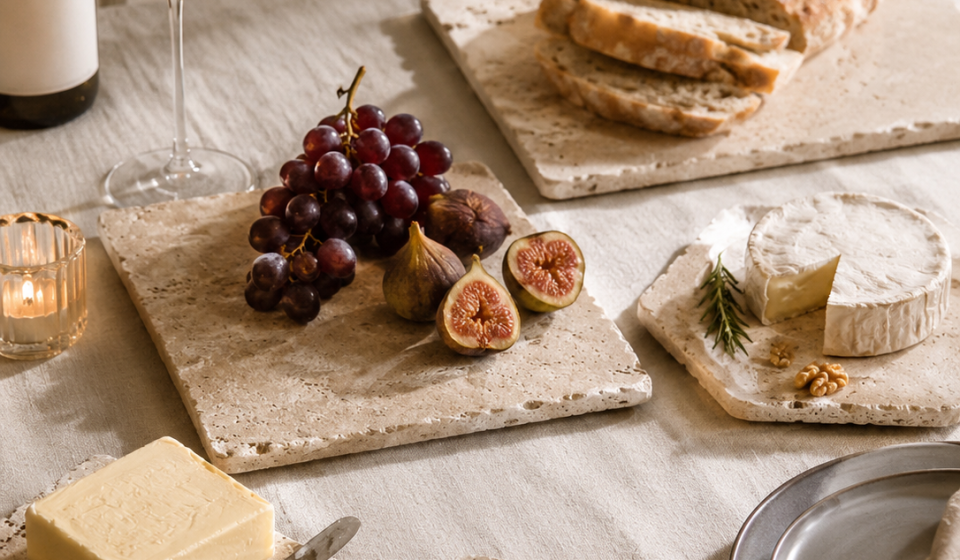

A wabi-sabi travertine display tray is less a product than a prompt: it asks you to slow down and place one honest object where light can find it. This room-by-room guide shows where the Wabi-Sabi Travertine Display Tray does its quiet best work — from the entryway your guests see first to the home studio where you build a scene. The rule throughout is the same: less, placed with care.
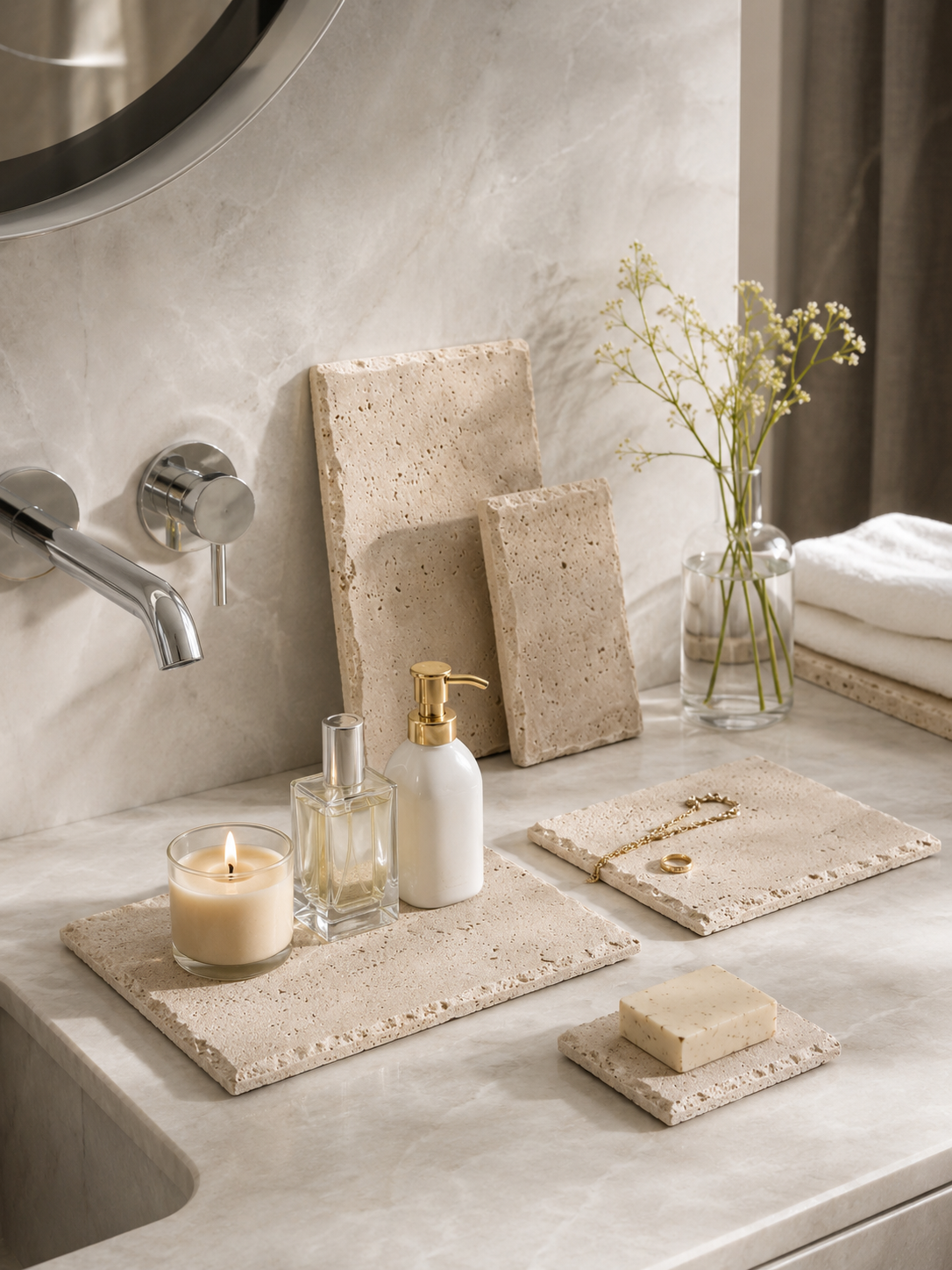
Entryway: The First Impression
The entryway is the easiest win. Set a mid-size slab (15×15 or 20×10 cm) on a console with a small dish for keys, a single stone or a slim vase. The travertine’s warm, sandy tone grounds the space and signals that this home values real materials. You do not need more than that — the negative space around the tray is what makes it feel designed. Pair it with our Beige Travertine Luxury Entryway Tray if you want a second, larger piece for the same surface.
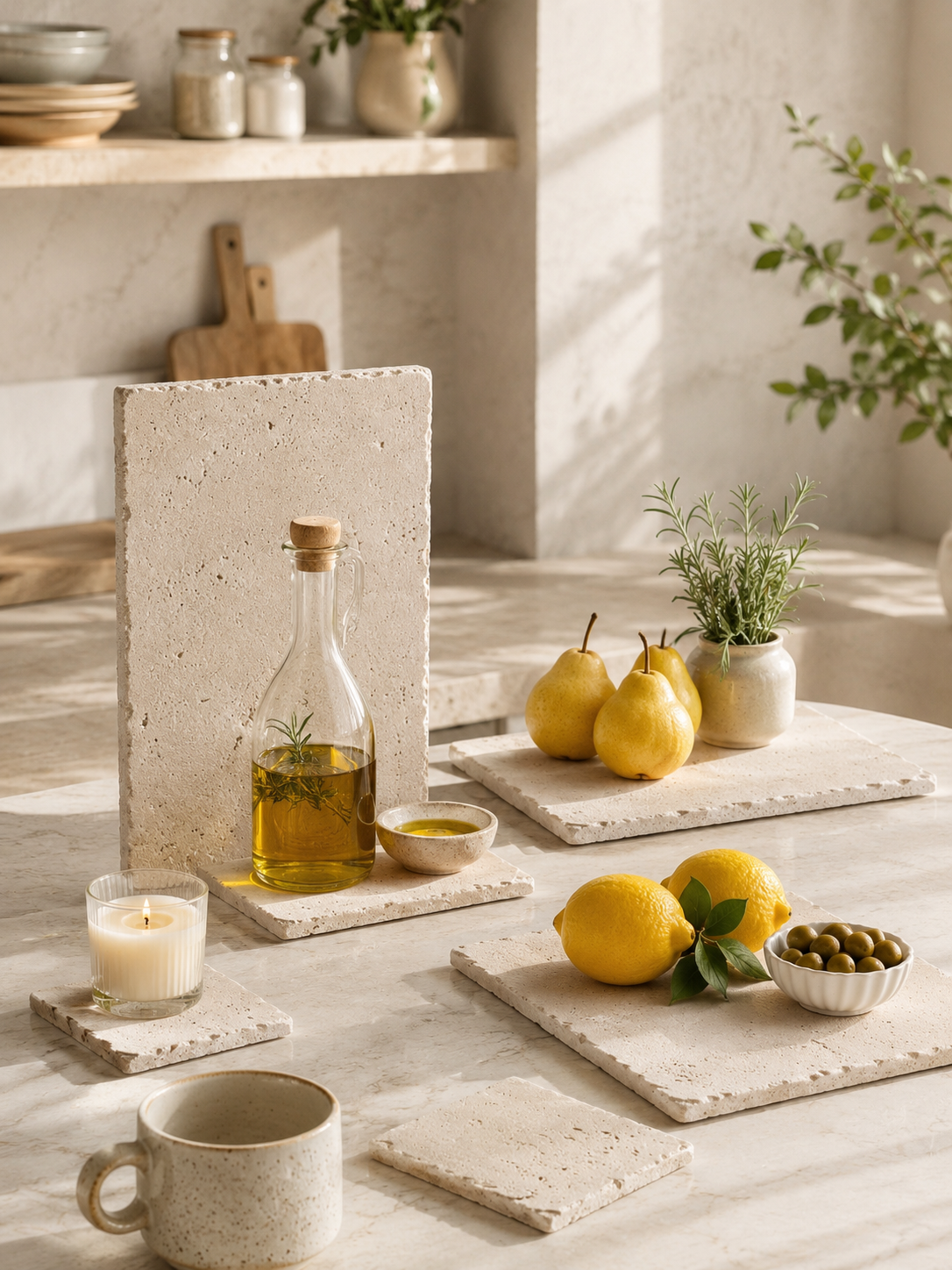
Coffee Table: A Low Still Life
On a coffee table, the tray becomes a low still life. Place a 20×20 cm slab slightly off-center with one rounded vessel and a stacked book beside it. The matte natural stone keeps the scene calm while the vessel adds height. Avoid crowding — a coffee table reads best when the tray is a punctuation mark, not a centerpiece wrestling with everything else.
Bedside: A Quiet Ritual
A small slab (10×10 or 15×10 cm) by the bed holds a ring dish, a stick of incense or a single stone. The wabi-sabi idea is that even the most private corner deserves one honest object. Travertine’s cool, substantial feel is soothing at the end of the day, and because it is a natural stone it never looks like a dated trinket.
Open Shelf: The Power of Negative Space
Shelves are where the tray shines by doing almost nothing. Lean into restraint: one 20×20 cm tray, one object, nothing else, and let the wall behind do the talking. The stone’s fine grain catches side light and gives the shelf a point of weight without clutter. Stylists use exactly this move to make a shelf look considered rather than decorated.
Home Studio & Photo Set: A Prop That Reads Real
For photographers and content makers, the tray is a reliable prop. The matte surface holds side light beautifully: angle a soft window source across it and the pores catch just enough texture to read as authentic, not staged. Build a low trio — a 30×20 cm base, a 15×15 cm piece angled on top, one vessel — and the overlap creates shadow and depth that flat styling never achieves. Natural stone simply photographs better than resin, which looks flat and weightless under the same light.
Sample Room: Staging With Restraint
In a sample room or model home, the tray grounds a vignette of linen, raw wood and one warm metal. Its sandy tone bridges cool and warm materials, so it rarely clashes. Use the largest slab (30×20 cm) as a low base under a ceramic pair, or scatter two sizes on a shelf for a layered, lived-in feel. Buyers read the room as calm and considered — exactly the impression a staged space wants to leave.
Pairing Materials the Wabi-Sabi Way
Wabi-sabi prefers honest, imperfect companions. Around the travertine tray, reach for linen, raw wood, unglazed ceramic and a hint of aged brass. Skip anything glossy or obviously synthetic; the stone should lead and the other materials should murmur. Because travertine is a natural stone with subtle shade shifts, it tolerates imperfection in its neighbors — a chipped bowl or a hand-thrown cup only adds to the scene rather than fighting it.
Caring for Display Pieces Between Shoots
If you use the tray as a prop, care is mostly storage. Stack slabs with a soft cloth between them so they do not rub, keep them out of long direct sun to preserve the seal, and brush off dust between uses. A damp cloth handles marks. There is no coating to reapply and no kit to buy. The stone is happy to be used and stored like the honest object it is — and if it picks up a small mark, that is more character, not damage. The same calm logic applies at home: it holds jewelry, incense or a single stem, and looks right either way. See how we finish and seal every piece on our Materials page, or explore the broader material family in the Stone Library.
Frequently Asked Questions
How do I style a wabi-sabi display tray at home?
Use restraint: one tray, one or two objects, lots of space. Place it where light falls across the stone so the grain shows. The goal is calm, not fullness.
Which rooms suit a travertine display tray best?
Entryways, coffee tables, bedside tables, open shelves and home studios. Any quiet surface where a single honest object can sit without competition.
Can I use the tray as a photography or sample-room prop?
Yes — it is a favorite prop. The matte natural stone catches side light and adds real texture to flat-lays and staged rooms, reading as authentic rather than staged.
How many trays should I keep on hand?
Two or three sizes cover most moments: a small one for jewelry or incense, a mid one for a vessel cluster, and a large one as a low centerpiece or shelf anchor.
What should I put on a display tray?
Found stones, a single stem, incense, jewelry, a small bowl, or nothing at all. Wabi-sabi prefers one honest object over a crowded arrangement.
How do I care for a display tray between shoots?
Dust with a soft brush, wipe marks with a damp cloth, and store slabs with a cloth between them. Keep them dry and out of long direct sun. No special kit needed.
Add One Honest Object to Your Space
The Wabi-Sabi Travertine Display Tray is available in seven sizes from $19.90. Choose the one that fits your shelf or set today, and let a piece of natural stone do the quiet work of making a room feel real.