Vintage Natural Travertine Serving Tray: A Quiet Luxury for Hotel, Restaurant and Home

There is a particular kind of calm that only a piece of natural stone can bring to a table. The Vintage Natural Travertine Serving Tray is our answer to the over-designed, disposable servingware that fills most kitchens. Cut from genuine travertine and finished by hand, it is built for hotels, Western restaurants, fruit platters, dinner service and quiet kitchen decoration alike — a single object that quietly upgrades every surface it touches.
The Vintage Soul of Natural Travertine
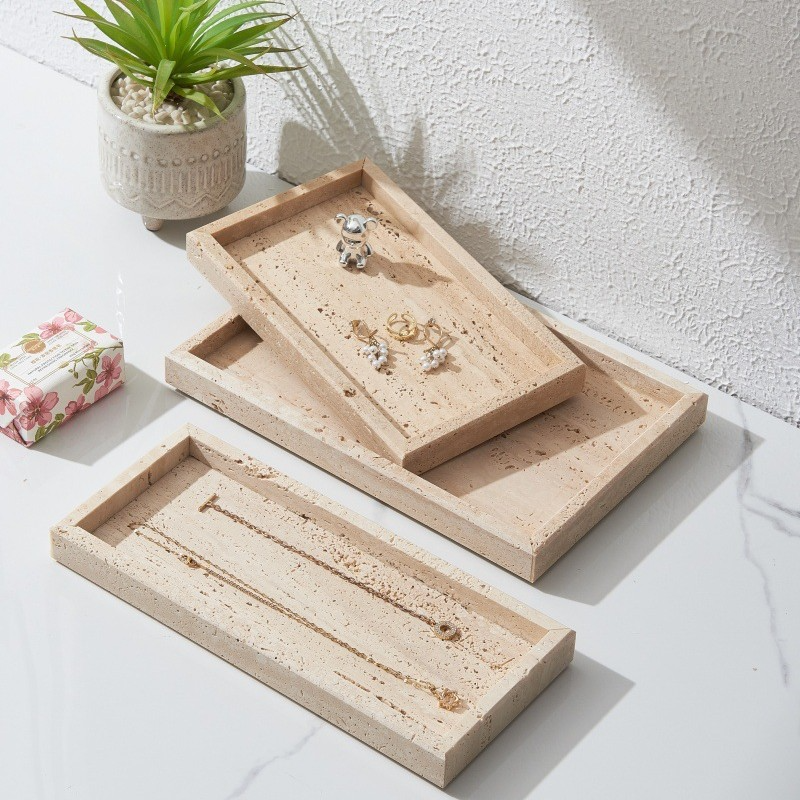
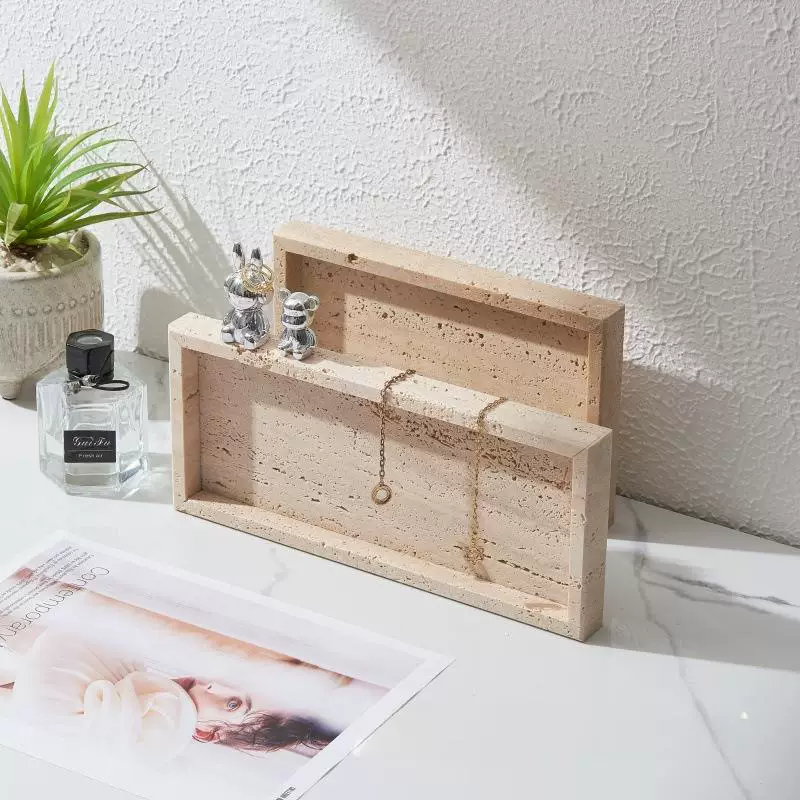
Travertine is a natural stone with a story that begins underground, where mineral-rich water deposits layer upon layer of calcium carbonate over thousands of years. The result is a warm, tactile stone with soft tonal shifts and a gentle, open grain. Our vintage finish celebrates that history rather than hiding it: the surface keeps a matte, time-worn character that pairs as easily with linen and brass as it does with raw wood and ceramic.
Because every block of stone is different, every tray carries its own map of veining and shade. That is not a flaw — it is the point. A natural stone tray is never a copy of another; it is a small, permanent record of the earth it came from. For a deeper look at the material, explore our Stone Library or read about how we source and finish our materials.
Hand-Finished by Makers Who Respect Stone
Each tray passes through the hands of makers who treat stone as a living material. After cutting, the slabs are ground flat, the edges are softened, and a food-safe seal is worked into the surface so the tray can live on a busy table without losing its character. We do not rush this step. The vintage look depends on restraint — just enough finishing to feel considered, never so much that the stone loses its voice.
This is slow work by design. A travertine tray is not meant to be replaced next season; it is meant to be the kind of object you keep, and that quietly becomes part of a home’s visual memory.
Where It Belongs: From Hotel Banquets to Home Kitchens
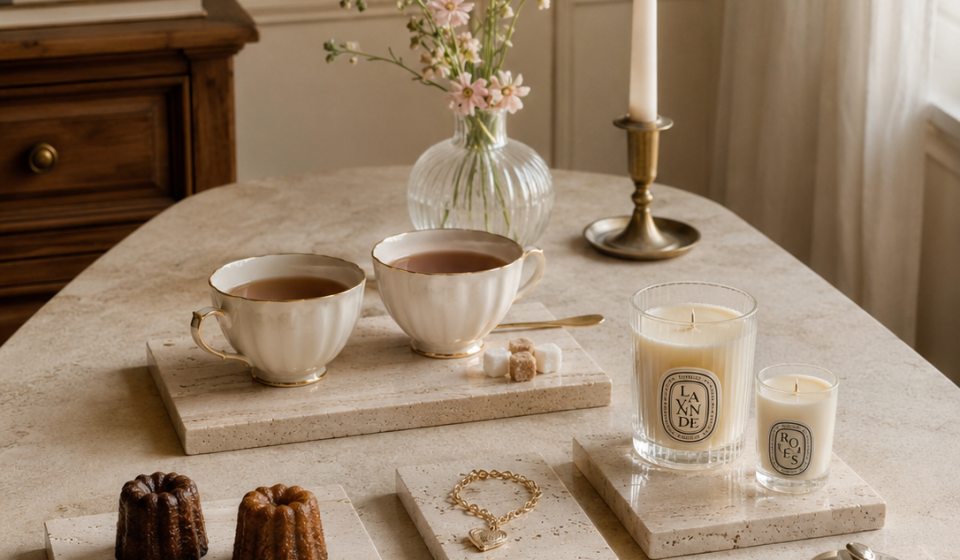
The vintage travertine tray was conceived for hospitality but quickly earned a place in everyday homes. In a hotel or Western restaurant it carries breakfast pastries, charcuterie and after-dinner fruit with an understated, premium feel. At home it becomes a fruit plate on the counter, a cheese board for guests, a catch-all by the entryway, or a quiet decorative piece on a open shelf.
If you like the look, our Beige Travertine Luxury Entryway Tray and Natural Travertine Round & Oval Tray extend the same material language across different rooms and moments.
Choosing the Right Size
With fourteen variants, the tray adapts to almost any setting. The slab rectangles run from a petite 5×5 cm square up to a generous 30×20 cm platter, and the round options come in 10, 15, 20 and 25 cm. Small squares are perfect for condiments, jewelry or single servings; the larger slabs hold a full fruit arrangement or a shared dessert. Many of our customers buy two or three sizes and stack or nest them for a layered, styled look.
- 5×5 / 10×5 / 10×10 cm — condiments, keys, jewelry, single treats
- 15×10 / 15×15 / 20×10 / 20×20 cm — pastries, cheese, side dishes
- 25×12 / 25×25 / 30×20 cm — fruit platters, shared service, centerpieces
- Round 10 / 15 / 20 / 25 cm — cakes, bowls, decorative rounds
Caring for Your Travertine Tray
A natural stone tray is easy to live with. Wipe it with a soft, damp cloth after use and dry it promptly. Avoid leaving it in standing water, and keep citrus juice, vinegar or other strong acids off the surface — they can dull the seal over time. With that small routine, the tray will keep its warm, vintage patina for years.
Why Natural Stone Outshines Mass-Produced Servingware
Ceramic and resin trays are everywhere, and most of them look it: uniform, lightweight, forgettable. A natural stone tray is the opposite. It has weight, temperature and grain that no mould can replicate. On a styled table it reads as intentional; in a photograph it adds the kind of texture that makes a scene feel real. For the price of a typical decorative object, you get something that is both useful and genuinely made of the earth.
Frequently Asked Questions
From Quarry to Your Table: Our Sourcing Promise
We are deliberate about where our stone begins. Each travertine block is selected from established quarries that work with the stone’s natural bed rather than against it, which is why the grain on your tray flows the way it does instead of fighting the cut. After milling, off-cuts are kept for smaller pieces rather than discarded, so a single block yields trays, coasters and decorative objects across our range with very little waste.
We also believe a natural stone object should be honest about what it is. No painted veining, no resin fillers masquerading as stone, no misleading coatings. What you see — the warm tone, the fine pores, the subtle shade shift — is the material itself. That transparency is part of the vintage appeal: the tray looks the way real stone looks, not the way a factory wishes stone looked. If you want to understand the broader family of materials we work with, our Stone Library walks through each one, and the Materials page explains how we finish and seal every piece for daily life.
For hospitality buyers this matters at scale. A hotel or restaurant outfitting dozens of tables wants objects that read as considered and hold up under constant use. Natural stone does both: it survives service, and it tells guests the venue cares about details. The vintage travertine tray is one of the easiest ways to signal that without a full redesign.
What is a travertine serving tray made of?
It is cut from genuine travertine, a natural stone formed by mineral-rich spring water. Each tray keeps the stone’s original pores, veining and warm tone, so no two pieces look alike.
Is this tray safe for food and daily use?
Yes. The surface is sealed for everyday serving of fruit, pastries, cheese and dry dishes. We recommend a quick wipe with a soft damp cloth and avoid long soaking.
How many sizes does the vintage tray come in?
Fourteen variants: slab rectangles from 5×5 cm up to 30×20 cm, plus four round sizes (10, 15, 20, 25 cm). You can mix sizes for a layered table setting.
Will the stone stain or crack easily?
Travertine is a durable natural stone, but like all stone it prefers gentle care. Keep it away from strong acids and sudden heat, and it will age beautifully.
Why choose natural stone over ceramic or resin?
Natural stone carries real geological character — cool to the touch, substantial in weight, and uniquely patterned. It reads as considered, not mass-produced.
Bring Natural Stone to Your Table
The Vintage Natural Travertine Serving Tray is available in fourteen sizes, starting at just $9.90. Whether you are styling a hotel banquet, a restaurant service, or a quiet corner of your own kitchen, it is a small upgrade that pays off every day.