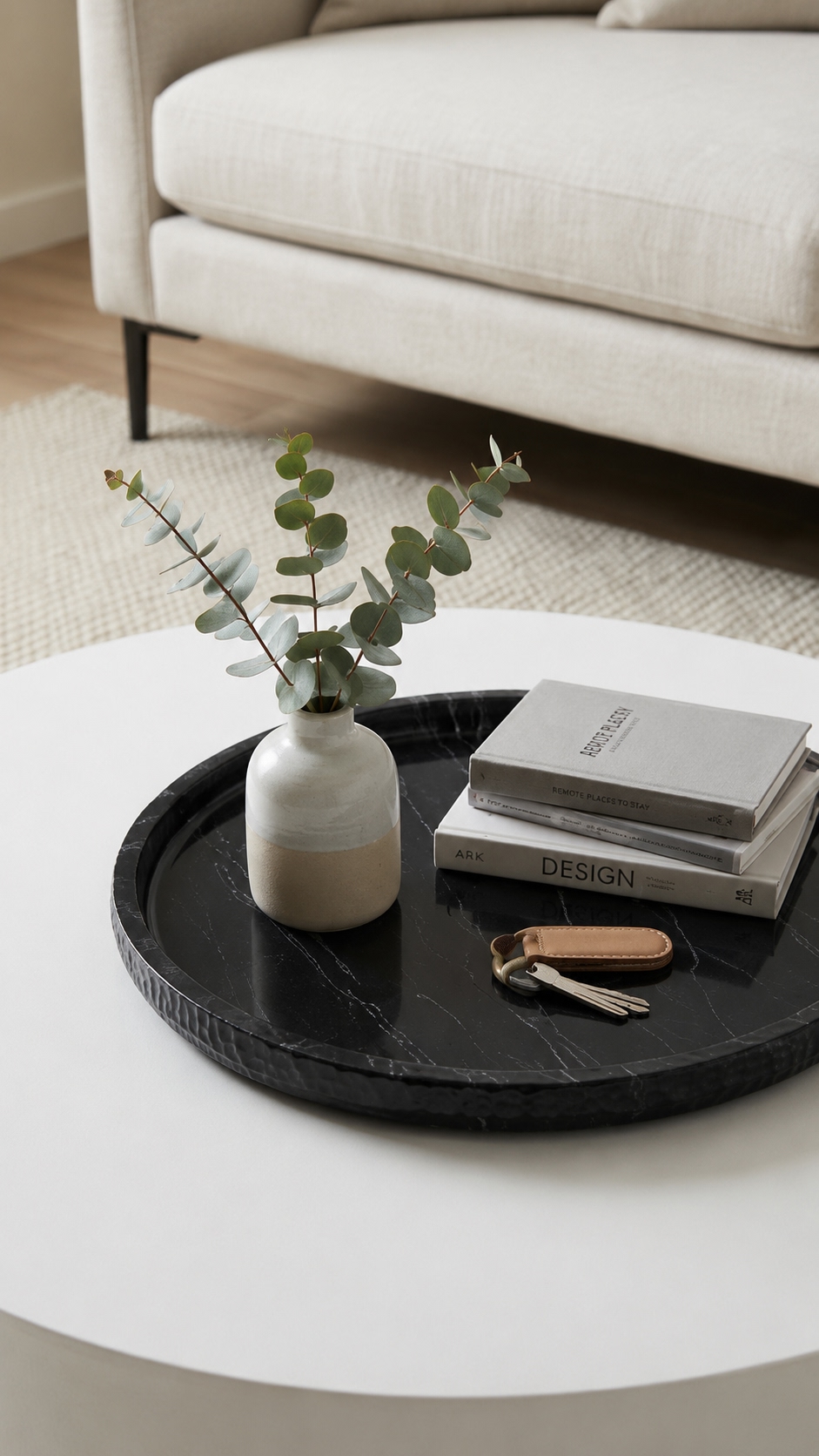

Marble is a metamorphic rock formed over millions of years. It is durable, elegant, and timeless – but it is also naturally porous and sensitive to acids. The good news? Caring for marble is straightforward once you know the basics. A few simple habits will keep your Quarra Home pieces looking as stunning as the day you unboxed them.
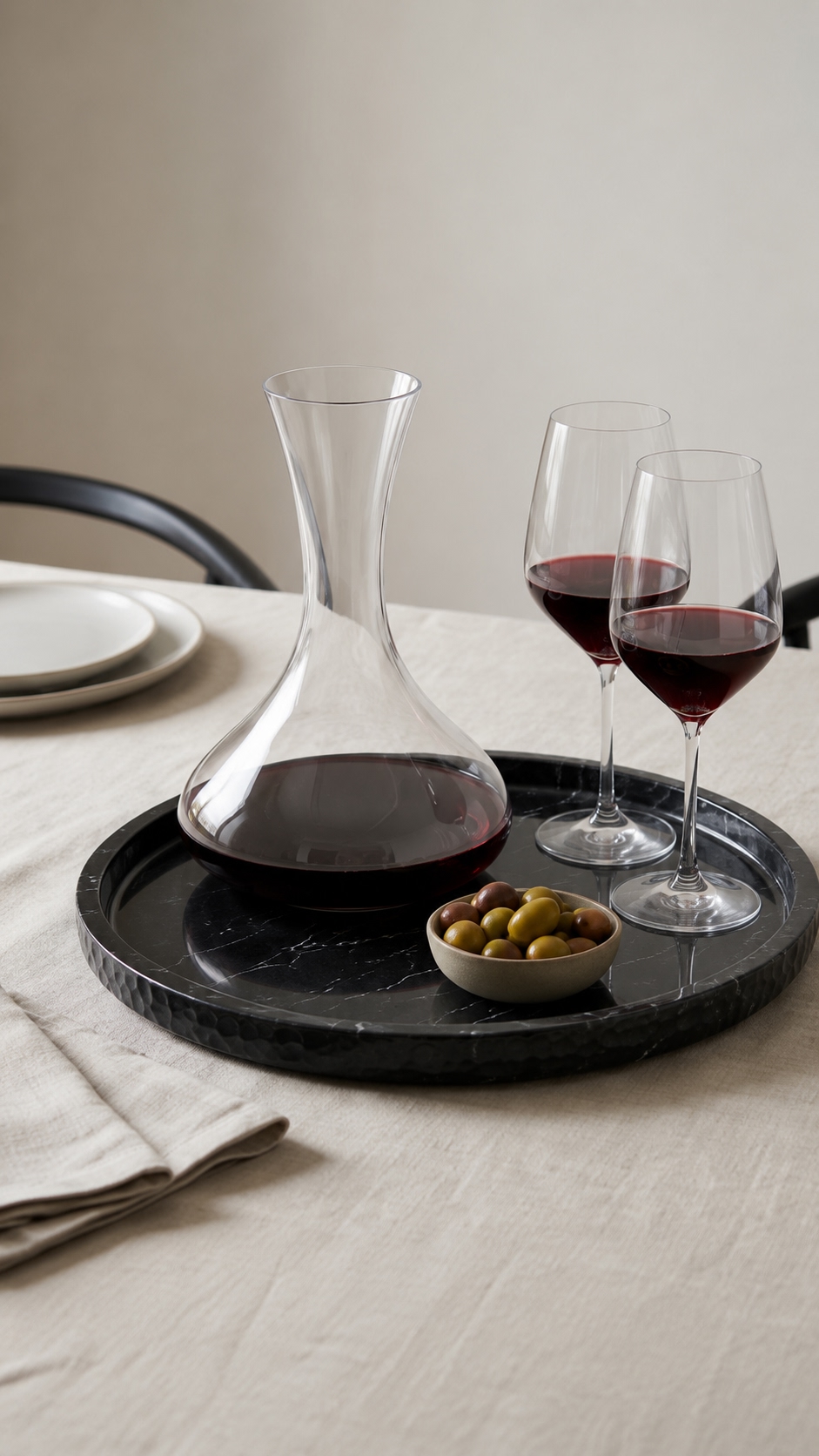
Daily Maintenance: 30 Seconds is All It Takes
The single most important rule for marble care is simple: wipe, do not soak. After each use, use a soft, dry microfiber cloth to buff the surface. If the piece needs cleaning, dampen the cloth slightly with plain water – no soap needed. Dry immediately with a clean, dry cloth. That is it. Thirty seconds of attention after each use is all it takes to prevent water spots, residue buildup, and dulling.
What to Avoid
- Acidic cleaners: Lemon juice, vinegar, bleach, ammonia, and most household cleaners will etch marble – permanently dulling and roughing the polished surface.
- Abrasive pads: Scrub sponges and rough cloths can scratch the polish.
- Standing water: Do not let water, perfume, or skincare products pool on the surface. Marble absorbs liquids over time.
- Hot items: While marble handles temperature well, placing extremely hot items directly on unsealed marble can cause thermal shock.
The Importance of Sealing
Think of a marble sealer as an invisible raincoat. It penetrates the microscopic pores and creates a barrier that repels water, oil, and stains – without changing the appearance, color, or feel. A quality penetrating sealer is completely invisible.
How Often Should You Seal?
For decorative pieces like our Nero Marquina trays and dishes, sealing every 6 to 12 months is ideal. Daily-use bathroom pieces should be sealed every 6 months. Pieces in drier environments can go up to 12 months.
How to Apply Sealer
- Clean the marble thoroughly and let it dry completely (24 hours is best).
- Apply the sealer evenly with a clean, lint-free cloth.
- Let it penetrate for the manufacturer recommended time (usually 10-15 minutes).
- Wipe away any excess sealer with a clean dry cloth.
- Allow 24 hours to cure before using the piece.
Cleaning the Textured Surfaces
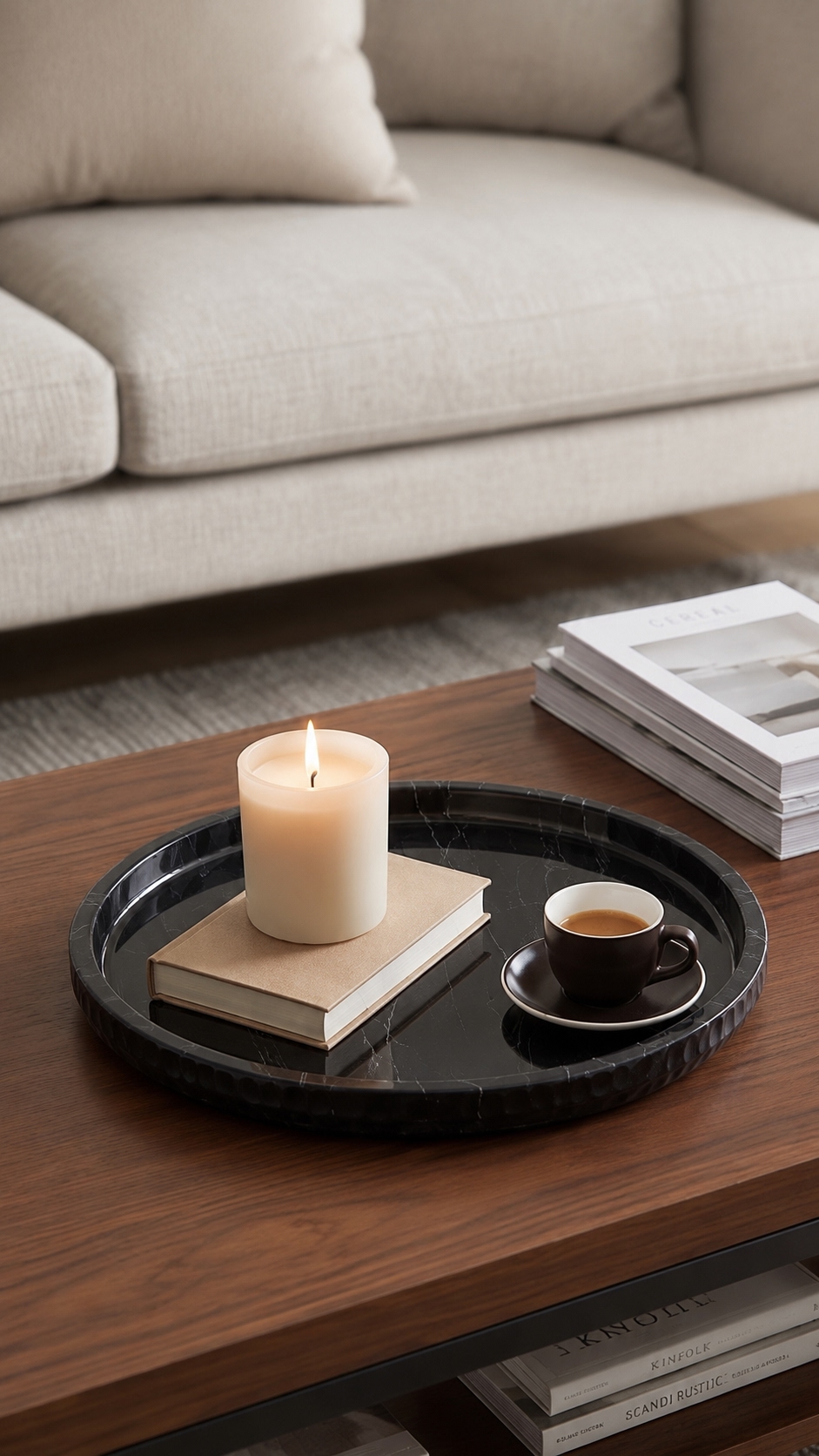
Our hammered edge trays and sculpted relief dishes feature beautiful textured surfaces that require slightly different care than the polished interiors.
Hammered Edge
The textured outer rim collects dust over time. Once a week, use a soft-bristled brush – a clean makeup brush works perfectly – to gently sweep the crevices. Follow with a dry microfiber cloth to buff.
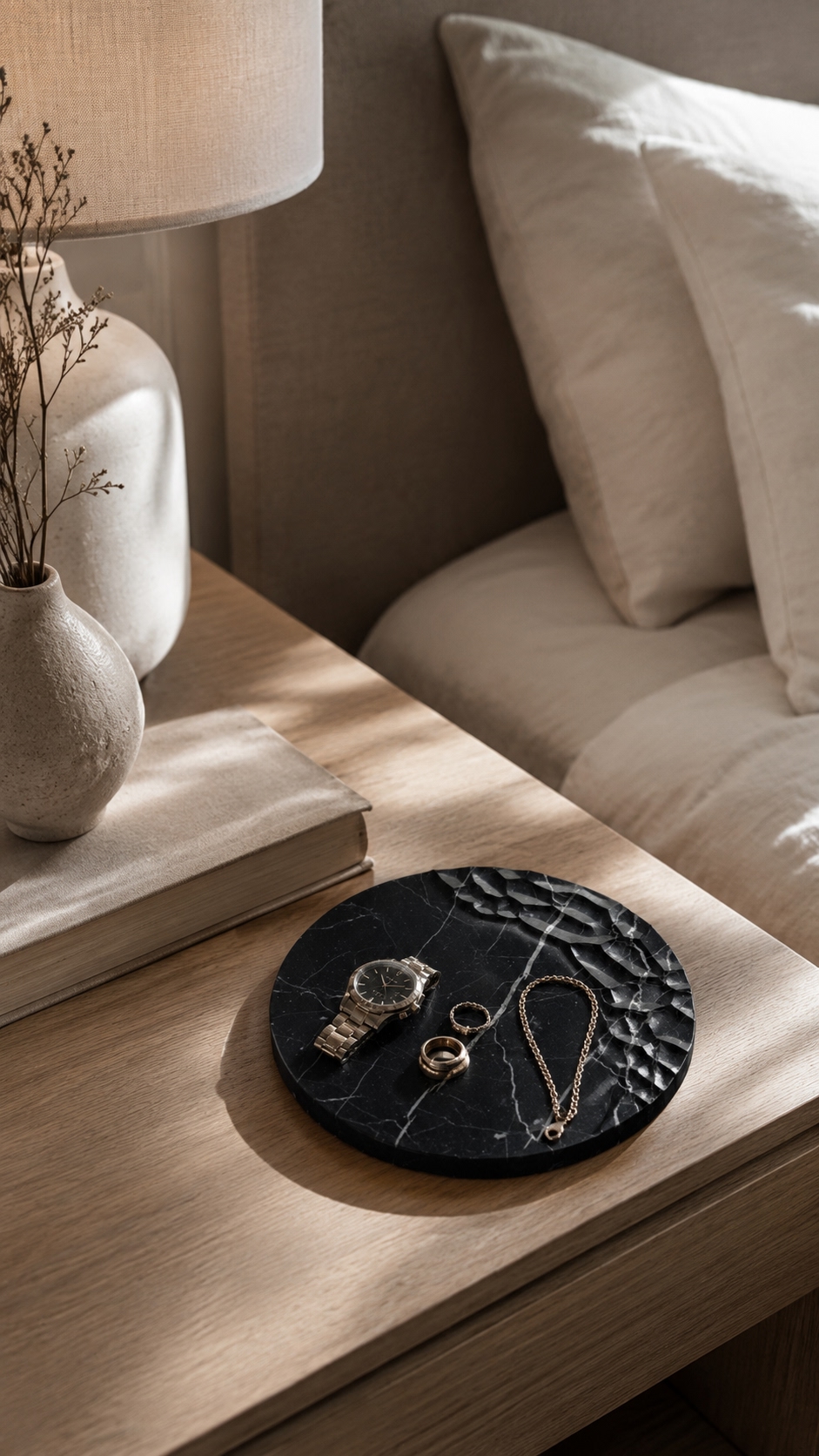
Sculpted Relief
The carved bas-relief surface has varying depths of texture. Use the same soft brush technique, working in the direction of the carving pattern. For deeper cleaning, a slightly damp microfiber cloth pressed gently into the crevices (not scrubbed) will lift residue. Dry immediately.
Dealing with Common Issues
Water Spots
If hard water has left spots on your marble, gently buff the area with #0000 super-fine steel wool using very light pressure and circular motions. This should only be done on polished surfaces. Follow with a sealer application.
Etching (Dull Spots from Acid)
Etching appears as a dull, slightly rough patch where the polished shine has been chemically eroded. Minor etching can sometimes be buffed out with marble polishing powder and a soft cloth. For deeper etches, professional re-polishing may be required – which is why prevention is so important.
Oil-Based Stains
If oil from skincare products or food penetrates the surface, create a poultice: mix baking soda with just enough water to form a thick paste. Apply to the stain, cover with plastic wrap, tape the edges, and leave for 24-48 hours. The poultice draws the oil out of the stone. Remove, clean, and reseal.
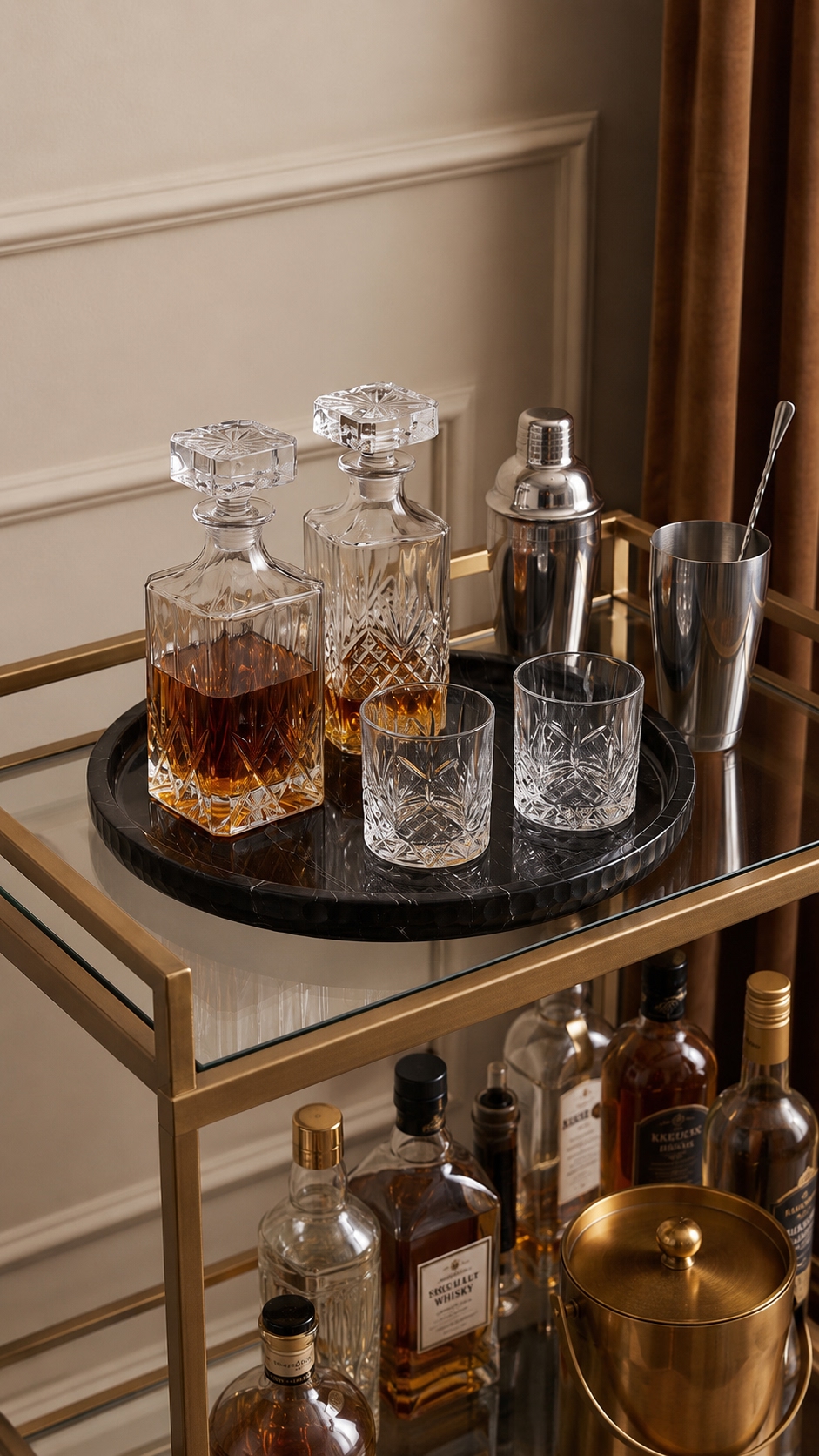
Long-Term Perspective
Marble is not a material that demands perfection – it rewards presence. Small signs of use over the years are not flaws; they are patina. The ancient marble floors of European cathedrals are beautiful precisely because they show the passage of time. Your Quarra Home marble piece will develop its own story. With these simple care habits, that story will be one of enduring beauty, not neglect.
Quick Reference Card
| Task | Frequency | Tool |
|---|---|---|
| Daily wipe-down | After each use | Dry microfiber cloth |
| Damp clean | Weekly or as needed | Slightly damp microfiber + dry cloth |
| Texture dusting | Weekly | Soft-bristled brush |
| Sealing | Every 6-12 months | Penetrating stone sealer |
| Deep polish | Annually or as needed | Marble polishing powder + soft cloth |
Have questions about caring for your Quarra Home marble piece? Get in touch – we are happy to help.
Stone-by-stone care notes
Every stone on this site is natural, honed and unsealed, which is what gives it the matte finish and the real veining. The rules below are the same ones our workshop follows. When in doubt, test anything new on the underside first.
- Carrara White — The most forgiving of the group. A damp cloth and a pH-neutral cleaner is normally all it needs.
- Nero Marquina — Dark stone shows dust, water spots and fingerprints first, so dry it after wiping rather than letting it air-dry.
- Beige Travertine — Open pores are what give travertine its texture, and they also hold spills. Blot rather than rub, and never let wine or citrus sit.
- Emerald Green — A dense, deeply coloured stone. Keep abrasive pads away from it and use a soft cloth only.
- Bulgari Pink — Warm-toned and relatively hard-wearing. Coasters under glasses will prevent the rings that show most on pale pink.
- Wave Grey — The veining hides everyday marks well, which makes it the easiest of the greys to live with in a bathroom.
Three rules that cover almost everything
- Acid is the enemy. Vinegar, lemon, wine and most bathroom sprays are acidic, and acid etches calcium-based stone. Use a pH-neutral cleaner.
- Blot, do not rub. Rubbing pushes a spill deeper into the pores. Lift it with a soft cloth or paper towel, then wipe the area clean.
- Dry it after wiping. Standing water leaves marks on dark and light stone alike. A quick pass with a dry cloth is the single habit that keeps a stone surface looking new.
Pieces that make care easier
Stone lasts longer when small things stop landing on it directly. These are the pieces that do that job:
- Hotel-Style Marble Vanity Tray 30x20x3cm — 4 Stones for Bath & Washstand
- Natural Marble Tissue Box Cover, 17x13x9cm
- Natural Marble Round Soap Dish – 10×1.7cm Bathroom Soap Holder & Tray (5 Stones) – Quarra Home
- Marble Vanity Tray 25x12cm, Stone Catchall
- Natural Marble Soap Dish with Drainage
For a fuller treatment — sealing, etching, hard water and stain removal by stain type — read the complete marble care guide.